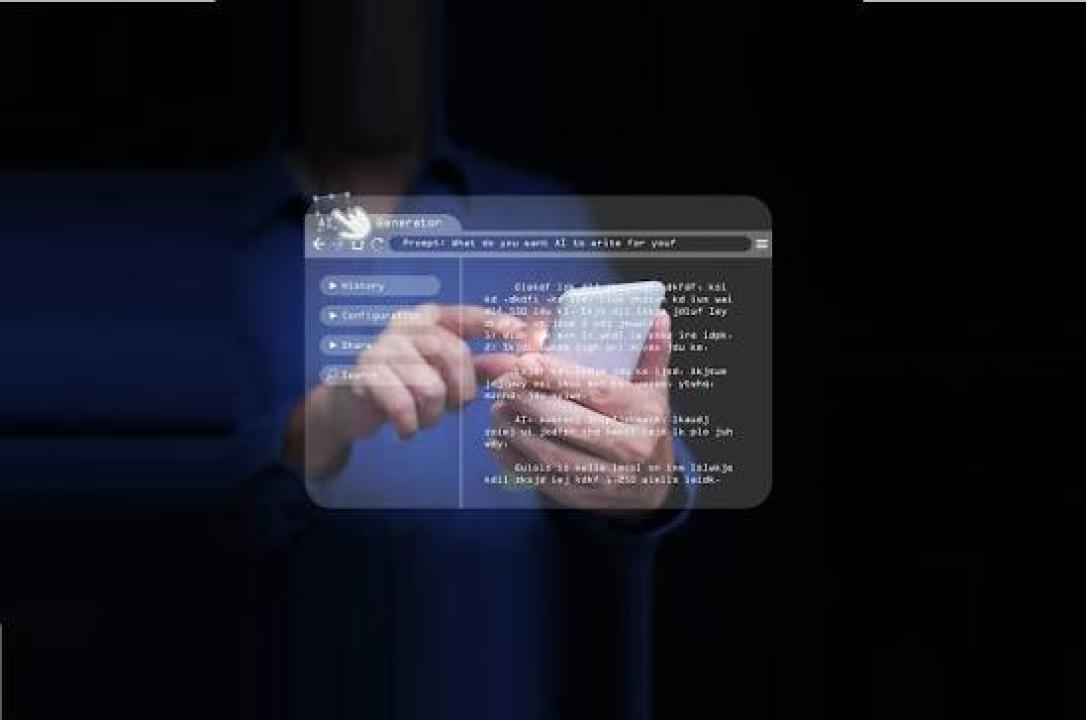

A few years ago, most people could read an article without thinking much about how it was written. Today, AI writing tools can produce emails, essays, product descriptions, and complete blog posts in minutes. This convenience has created a new challenge: how can we evaluate written content when its quality alone does not reveal whether a human or an AI system produced it?
An AI detector offers one way to investigate. By analyzing patterns in text, these tools estimate whether artificial intelligence may have contributed to a document. For teachers, editors, students, and businesses, the results can provide useful information when reviewing content, provided they are interpreted with care.
What Does an AI Detector Look For?
AI detection tools examine characteristics of language that may differ between human-written and machine-generated text. These can include sentence structure, word predictability, phrasing, and the way ideas connect throughout a passage.
Rather than relying on a single expression, a detector evaluates patterns across the submitted text and produces an assessment. Some tools also identify individual sentences that contribute to the result, helping users understand which sections deserve closer attention.
Recognizing Patterns in Written Language
AI models learn to generate language from large collections of text. Their output can sometimes contain predictable transitions, repeated sentence structures, or consistently organized explanations.
A detector looks for patterns like these alongside other linguistic signals. However, professional writers also use established structures, particularly in academic, technical, and business writing. No individual characteristic can reliably prove that a passage was generated by AI.
Understanding Mixed Content
Many writers use AI for limited tasks rather than producing an entire document with it. Someone might brainstorm an introduction with an AI tool, write the main discussion independently, and use software to check grammar.
Some detectors can highlight passages that appear to contain different writing patterns. This can help reviewers examine individual sections instead of treating the entire document as entirely human-written or entirely AI-generated.
Who Can Benefit From AI Detection?
Students and Educators
AI detection can support discussions about academic integrity when schools and universities have clear policies regarding AI-assisted work. An instructor might use a detection result to decide whether an assignment requires further review.
However, a score should never be treated as conclusive evidence of misconduct. Drafts, research notes, version history, and conversations with the student can provide important context before any decision is made.
Writers and Content Editors
Editors often need to review articles quickly without overlooking problems with originality, consistency, or quality. An AI detector tool provide another perspective during this process.
If a passage receives a high AI-related score, the editor can examine its accuracy, sourcing, and relevance. The goal is to ensure that the finished article offers useful information and reflects the publication's editorial standards, not simply to chase a particular score.
Businesses and Marketing Teams
Companies increasingly use AI to prepare routine communications and develop initial content drafts. Detection tools can help teams review material as part of their broader quality-control process.
Clear internal guidelines remain essential. Businesses should decide when AI assistance is acceptable, how information must be verified, and when human review is required before publication.
How to Use an AI Detector Effectively
Getting useful results involves more than submitting text and checking a percentage.
First, select a tool that supports your language and content type. Paste or upload the document, run the analysis, and review the overall result. If the tool offers sentence-level insights, examine the highlighted passages individually.
Next, consider the context. Does the text contain unsupported claims, repetitive explanations, or vague wording? Are the sources reliable? Does the document accurately communicate what the writer intends to say?
These questions help distinguish genuine editorial concerns from assumptions based solely on a detection score.
Exploring AI Detection With Isgen
For people who need a closer look at written content Isgen offers an AI detection platform with support for more than 80 languages. Its tool provides an overall assessment alongside sentence- and phrase-level analysis, helping users identify passages that influence the result.
The process is straightforward: submit the text, run the scan, and review the findings. Rather than immediately accepting the classification, examine the highlighted sections and consider whether additional review is necessary.
This approach can be useful for multilingual content teams, educators, and writers who want more insight into their documents before making editorial decisions.
Can AI Detection Be Completely Accurate?
No detector can guarantee a correct result for every document. Human-written content may be flagged incorrectly, while AI-generated passages may not always be identified.
Text length, language, subject matter, and editing history can all affect results. Formal writing may appear predictable even when a person wrote every sentence, while substantial human editing can change the patterns found in AI-generated text.
For that reason, detection should support human judgment rather than replace it, especially when the outcome could affect someone's academic or professional reputation.
Conclusion
An AI detector can help people examine digital content more carefully in a world where human and machine-assisted writing increasingly overlap. From academic assignments to business articles, these tools provide an additional perspective that can guide further review.
Their value, however, depends on how the results are used. A detection score cannot independently establish authorship, and it should always be considered alongside context, supporting evidence, and the quality of the writing itself.
With tools such as Isgen, users can investigate writing patterns and make more informed decisions about the content they review. Ultimately, responsible AI detection is not about judging text by a number; it is about combining useful technology with careful thinking and fair evaluation.