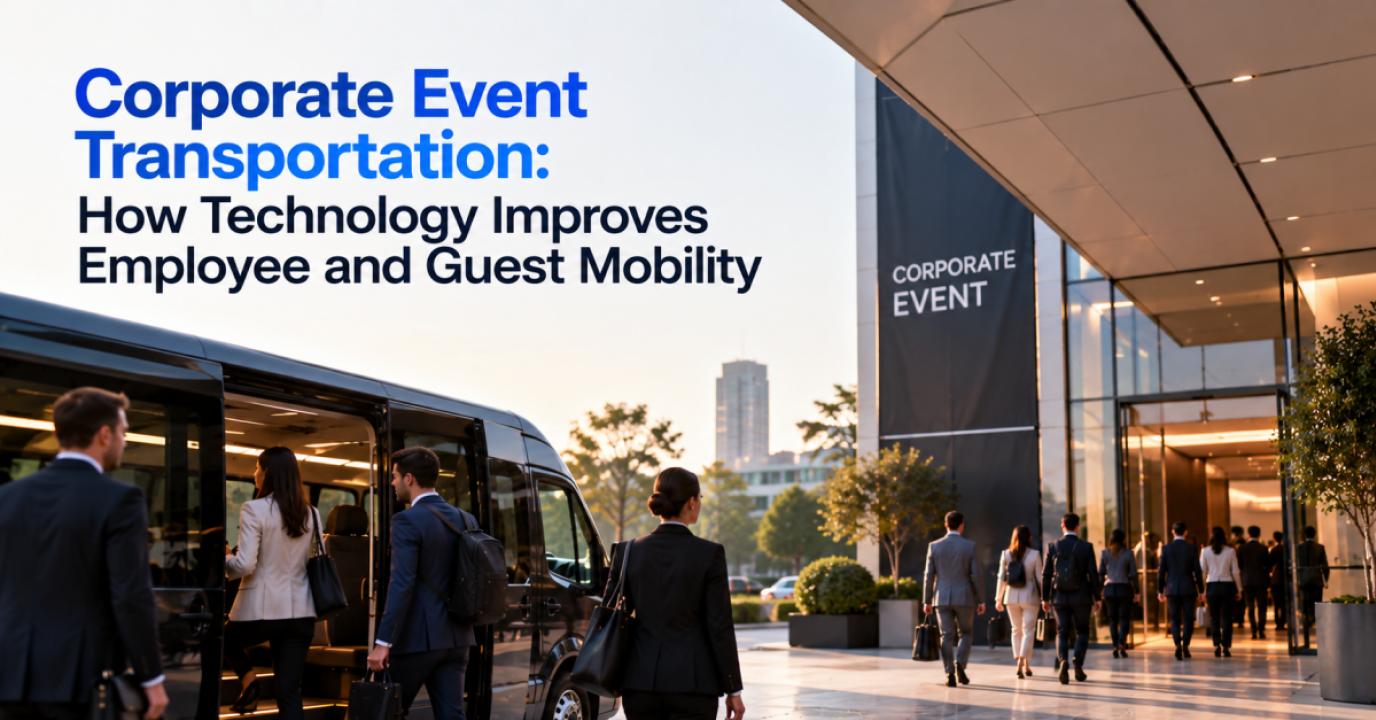
Corporate events often involve more transportation complexity than attendees see. Employees and guests may need to travel between airports, hotels, offices, conference centers, event venues, and off-site activities within tightly coordinated schedules. Managing these movements manually can create delays, communication gaps, and unnecessary operational work. Modern corporate event transportation technology helps planners centralize transportation scheduling, vehicle coordination, dispatch, tracking, and passenger communication to create a more reliable mobility experience.
Whether you are organizing an annual company meeting, executive summit, conference, product launch, employee gathering, or multi-day corporate event, transportation can influence both attendee satisfaction and operational efficiency. The right technology gives event planners, HR teams, and travel managers greater visibility and control over how people move throughout the event.
Why Corporate Event Transportation Is Becoming More Complex
Corporate events often bring together people from different cities, offices, departments, and organizations. Some attendees may arrive by air, while others travel from local offices or hotels.
This creates multiple transportation requirements at the same time.
For example, a single corporate conference may require:
Airport-to-hotel transfers
Hotel-to-venue shuttles
Transportation between multiple event locations
Executive and VIP transportation
Employee group transfers
Evening event transportation
Return trips to hotels and airports
Special transportation arrangements
Coordinating these movements manually can quickly become difficult, particularly when schedules change throughout the event.
Flight delays, late meetings, traffic congestion, venue changes, and unexpected passenger demand can all affect the transportation plan.
Technology helps corporate event teams manage these changes without losing visibility across the overall operation.
How Technology Improves Corporate Event Mobility
1. Centralizes Transportation Planning
One of the biggest advantages of digital transportation management is having a centralized view of event mobility.
Instead of maintaining separate spreadsheets for vehicles, drivers, passengers, hotels, routes, and schedules, planners can manage transportation information through a single platform.
A centralized system can help teams monitor:
Scheduled trips
Vehicle assignments
Driver assignments
Pickup and drop-off locations
Passenger groups
Route information
Trip status
Transportation changes
This creates a shared operational view for event planners, travel managers, dispatch teams, and other stakeholders.
It also reduces the risk of conflicting information being shared through emails, spreadsheets, phone calls, and messaging applications.
2. Simplifies Employee and Guest Scheduling
Corporate events often have strict schedules. Employees may need to arrive before sessions begin, executives may have specific meeting times, and guests may need transportation aligned with flight schedules.
Manual scheduling can become challenging when dozens or hundreds of people have different transportation requirements.
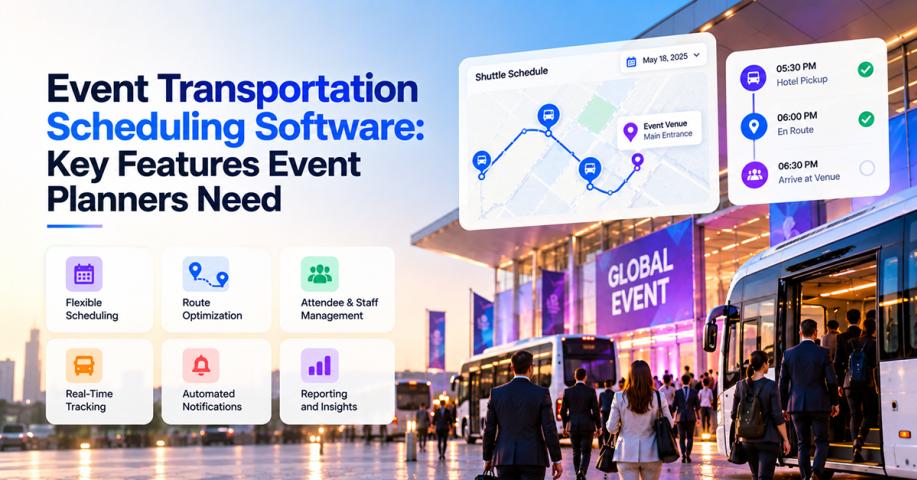
Modern event transportation scheduling software helps planners create and manage transportation schedules based on passenger demand, vehicle availability, routes, and timing.
Teams can organize scheduled trips while maintaining the flexibility to modify them when requirements change.
For example, if a keynote session is extended by 30 minutes, planners can adjust transportation schedules instead of relying on multiple manual communications to coordinate the change.
3. Improves Airport Transfer Management
Airport transportation is often one of the most time-sensitive components of corporate events.
Employees and guests may arrive on different flights throughout the day. Some may require individual transfers, while others can share group transportation.
Technology can help planners organize airport pickups based on arrival information, passenger groups, vehicle availability, and scheduled event activities.
Real-time transportation visibility can also help teams respond when flights are delayed or arrival times change.
This creates a more flexible experience for guests while reducing the manual effort required from travel and event teams.
4. Makes Hotel-to-Venue Transportation More Efficient
Hotel shuttles are common for conferences, employee gatherings, and multi-day corporate events.
When attendees stay across several hotels, transportation teams need to coordinate routes, pickup points, departure times, and vehicle capacity.
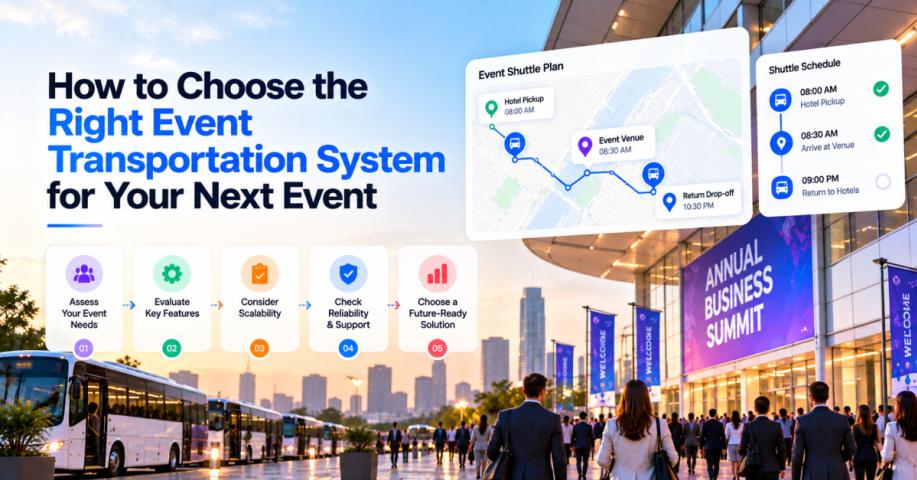
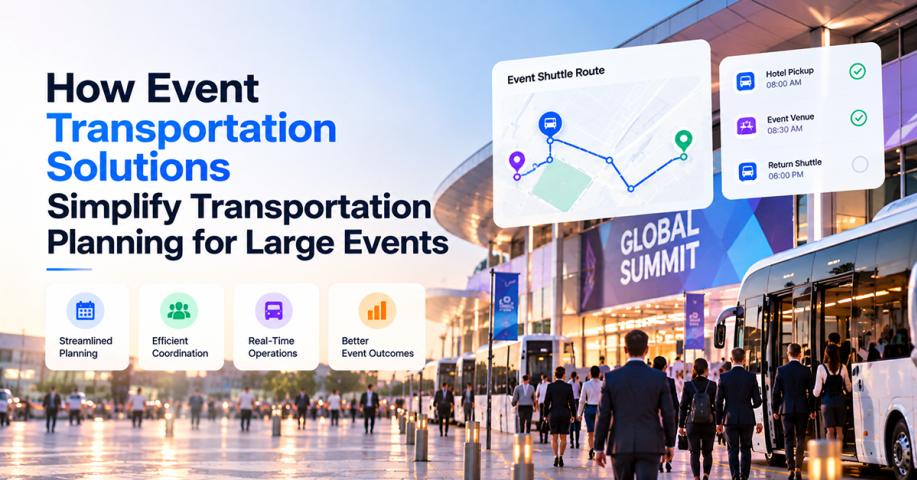
Dedicated Event Shuttle Software can help manage shuttle routes, stops, schedules, and transportation activity across multiple locations.
This gives planners greater visibility into recurring shuttle operations and makes it easier to coordinate employee and guest movement throughout the event.
For attendees, clear pickup information and real-time transportation updates can also reduce uncertainty when traveling between hotels and event venues.
5. Provides Real-Time Vehicle Tracking
A transportation schedule provides a plan, but event teams also need to know what is happening during active trips.
Traffic congestion, road closures, unexpected stops, and passenger delays can all affect transportation schedules.
Real-time vehicle tracking allows operations teams to monitor vehicle locations and identify potential delays while trips are underway.
This information can help planners:
Monitor active transportation
Identify delayed vehicles
Estimate arrival times
Coordinate with drivers
Adjust schedules
Inform passengers about changes
For large corporate events, this level of visibility can help prevent small transportation issues from becoming larger operational disruptions.
6. Improves Communication With Employees and Guests
Transportation information needs to reach passengers at the right time.
Sending individual messages manually can become difficult when hundreds of employees and guests are traveling through different routes.
Technology can support automated notifications for transportation-related updates, such as:
Pickup reminders
Vehicle arrival notifications
Route changes
Delays
Updated pickup locations
Schedule changes
Trip cancellations
Clear communication gives employees and guests better visibility into their transportation plans.
It also reduces the pressure on event staff to answer repeated questions about where and when transportation will arrive.
7. Supports Executive and VIP Transportation
Corporate events frequently involve executives, speakers, clients, partners, and other high-priority guests.
These individuals may require dedicated vehicles, specific pickup arrangements, flexible schedules, or priority transportation.
A centralized transportation platform can help planners manage these requirements alongside standard employee and guest transportation.
Teams can assign specific vehicles and drivers to priority trips while maintaining visibility across the wider transportation operation.
This allows planners to provide a more personalized transportation experience without creating a completely separate manual process.
8. Helps Optimize Vehicle Utilization
Corporate events may require different types of vehicles depending on passenger volume and transportation requirements.
Using a large vehicle for a low-demand route can lead to inefficient resource utilization. On the other hand, using a vehicle with insufficient capacity can create overcrowding or require additional trips.
Technology helps planners understand vehicle availability and capacity when assigning transportation.
By connecting scheduling information with vehicle data, teams can make more informed decisions about which vehicles should serve specific routes.
This can help improve fleet utilization while supporting more efficient transportation planning.
9. Enables Faster Response to Schedule Changes
Corporate events rarely follow the original plan perfectly.
A meeting may run late. A speaker may arrive later than expected. Traffic conditions may change. A venue may modify its pickup area.
The ability to respond quickly is therefore an important part of effective transportation management.
Modern event transport solutions allow planners and dispatch teams to modify trips, communicate changes, and coordinate transportation resources as conditions evolve.
Instead of rebuilding an entire spreadsheet or contacting every driver individually, teams can make updates through a centralized transportation workflow.
10. Connects Event Transportation With Hospitality Operations
Transportation is often closely connected with hotels, guest services, travel management, and event hospitality.
Guests may move between airports, hotels, conference venues, restaurants, entertainment locations, and other destinations throughout the event.
Integrating transportation with broader Event Hospitality & Tourism Solutions can help organizations create a more connected guest mobility experience.
This approach allows transportation to become part of the broader event journey rather than being treated as an isolated operational function.
Why Corporate Event Transportation Should Be Part of the Digital Event Strategy
Corporate events are increasingly managed through connected digital platforms. Registration, communication, scheduling, hospitality, travel, and attendee engagement can all involve technology.
Transportation should not remain an isolated manual process.
Connecting transportation planning with the broader event operation can help organizations improve visibility, reduce repetitive administrative work, and respond faster when circumstances change.
For corporate event planners, HR teams, and travel managers, this means transportation can become a measurable and manageable part of the overall event strategy.
Make Corporate Event Mobility More Predictable
Managing employee and guest transportation requires coordination across people, vehicles, schedules, routes, and locations. As corporate events become larger and more complex, manual processes can make it harder to maintain visibility and respond to change.
Technology provides a more structured approach.
From centralized scheduling and real-time tracking to shuttle management, automated notifications, fleet coordination, and post-event reporting, modern event transportation solutions can help corporate teams manage mobility more efficiently.
The right technology does not simply help you move people from one location to another. It helps create a transportation operation that is more visible, responsive, and aligned with the overall event experience.
For organizations managing recurring conferences, executive events, employee gatherings, or large corporate meetings, investing in the right transportation technology can turn a complex mobility challenge into a more predictable and scalable operation.