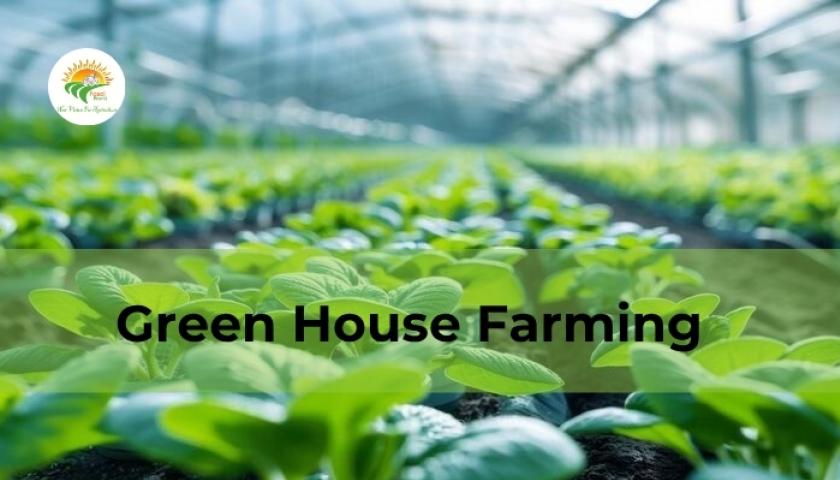

Imagine being a
farmer in Haryana who no longer worries about unseasonal rains or scorching
heat ruining crops. That’s not a dream anymore it is a reality made possible by
green house farming. Especially for farmers under the Intra Haryana
scheme, this method offers a fresh start with better control, higher yields,
and year-round income.
Farmers across
Haryana are waking up to the fact that traditional open-field farming is
becoming increasingly risky. Erratic rainfall, pest outbreaks, and declining
soil health leave little room for error. On the other hand, green house farming
empowers growers to create a micro-climate for crops ensuring consistency,
safety, and profits.
If you have
ever looked at your neighbor’s lush green house farming and wondered, “Could I
do this too?” the answer is yes. With the right approach and guidance, even
small landholders can start small and grow big. Let’s explore seven smart,
behavior-driven steps tailored to the real lives of farmers in Haryana.
Step 1: Understand Intra Haryana’s Climate & Market
Why Farmers Must Think Before They Build
Human behavior
often leans toward rushing in when something seems profitable. But in green house
farming, smart preparation beats quick decisions.
Start by
understanding your region’s natural climate. Haryana’s semi-arid zone means
summers are hot and winters chilly, but green house systems can be tailored
with cooling fans or heaters. However, if you're unaware of your local
temperature or sunlight pattern, you risk building the wrong kind of structure.
Know What Your Customers Want
Intra Haryana is markets fluctuate just like the weather. Visit local mandis or talk to grocery
vendors. What do customers ask for in winter? Which vegetables go out of stock
during the monsoon? Match these gaps with crops you can grow off-season.
Behavior Tip: Don’t grow what you like grow
what sells.
Step 2: Choose the Right Type of Green house farming
Don't Let Fancy Tech Fool You
Don’t get swayed by flashy online videos showcasing high-tech glass houses what looks impressive isn’t always practical. The smart approach is to choose a greenhouse that suits your specific needs, environment, and budget. Polyhouses are cost-effective and ideal for growing vegetables like tomatoes and capsicum. Net houses work well in hot, pest-prone areas, offering protection without breaking the bank. Glasshouses deliver high performance and are suitable for cooler climates or floriculture but come with a hefty price tag. The best choice is the one that fits your farming goals, not someone else's life>
Think Local, Act Smart
In regions like
Sirsa, Hisar, and Rohtak, polyhouses work well due to high sunlight. Farmers
here have successfully grown capsicum and leafy greens year-round. Start
simple. Master one setup before expanding.
Step 3: Select High-Profit Crops for Green house farming
Let Demand Guide You
Many farmers
make the mistake of growing exotic crops like broccoli or kale without checking
if local buyers want them. High-profit crops like tomatoes, lettuce, coriander,
and strawberries are both popular and profitable.
Plan for Rotation and Seasonality
Crop rotation
isn’t just a fancy term it’s key to long-term soil health. Smart farmers rotate
between leafy greens and fruit vegetables to keep disease and fatigue away.
Behavior Tip: Think like a shopkeeper what sells
quickly, and how often can you restock?
Step 4: Plan Infrastructure and Budget Wisely
Sketch Before You Spend
Your green house
is far more than just a shed it's a mini production unit that requires
thoughtful planning. Design a clear layout that includes designated zones for
drip irrigation, organized storage for fertilizers and tools, and ample space
for storing harvested crops. This strategic setup not only streamlines daily
operations but also prevents confusion and inefficiencies in the future.
Watch Where Your Money Goes
Here’s a quick
budget guide:
|
Component |
Cost (INR/sq.m) |
|
Polyhouse
Setup |
₹600–₹1,200 |
|
Net House
Setup |
₹200–₹300 |
|
Irrigation
Systems |
₹50–₹100 |
|
Seeds &
Nutrients |
₹15–₹30 |
Now the good
news: Intra Haryana supports up to 60% subsidy under MIDH and other schemes.
Visit your district horticulture office for assistance.
Step 5: Adopt Smart Irrigation & Climate Control
Let Machines Do the Hard Work
Gone are the
days of manually watering rows of plants. Drip irrigation saves water and
effort by targeting only the roots.
Add misting
systems to maintain moisture, especially if you're growing strawberries or
lettuce.
Climate Control Is Key
Use these
simple tools:
- Shade nets
- Exhaust fans
- Temperature sensors
- Auto vents
These tools
help you sleep easy during sudden heatwaves or cold snaps.
Behavior Tip:
Monitor your green house daily just like checking your mobile. Small changes can
make big differences in crop health.
Step 6: Source Quality Seeds and Nutrients
Don’t Fall for Cheap Offers
Your success in
green house farming begins with quality seeds. Always buy from certified suppliers
in Haryana like those in Ambala, Rohtak, or Gurgaon. These seeds are designed
for protected environments.
Feed Your Crops Right
Adopt a
nutrition plan with:
- Water-soluble fertilizers
- Biofertilizers and micronutrients
- Organic pest control
Don’t
experiment with low-grade chemicals. They may save money today but cause losses
tomorrow.
Behavior Tip: Be consistent with plant care crops
react positively to routine and attention.
Step 7: Join Farmer Networks and Cooperatives
Why Community Beats Isolation
Many farmers
fail because they try to do everything alone. Intra Haryana promotes FPOs (Farmer
Producer Organizations) to bring growers together.
Benefits
include:
- Bulk purchase discounts
- Shared transport and storage
- Easier access to markets and
training
Learn from Other Farmers
Whether it's
WhatsApp groups or monthly meetings, hearing real stories helps you avoid
mistakes. Learn what others are growing, which tools they’re using, and how
they sell produce directly to retailers.
Behavior Tip: Be open to learning even young
farmers have something to teach.
Bonus Tips to Boost Greenhouse Profits
To boost
profits in green house farming, smart diversification is key don’t stick to just
one crop. Incorporate high-demand herbs or seasonal flowers to spread risk and
keep your income steady. Make the most of your vertical space by using
trellises for crops like cucumbers and tomatoes, allowing you to grow more
within the same area. Additionally, explore direct-to-consumer sales by
partnering with local grocery stores or launching a weekly farm box delivery.
These strategies cut out middlemen and increase your returns while building a
loyal customer base..
Government Support & Subsidies
- MIDH (Mission for Integrated
Development of Horticulture): 50–60% subsidy for polyhouse and equipment
- Haryana State Horticulture Mission: Financial aid for drip systems,
climate tools, and training
Common Mistakes to Avoid in Greenhouse Farming
- Starting without a climate plan
- Choosing high-tech tools you can't
maintain
- Growing unfamiliar crops
- Skipping regular checks on
equipment
Environmental Benefits of Greenhouse Farming
- 70% less water use than open
fields
- Fewer chemicals due to enclosed
growing
- Reduced emissions through local,
year-round production.
Final Thoughts
Green house farming is more than a trend it’s a life>
Start small,
ask questions, and connect with others. The path is already built all you need
is to take the first step. And remember, in farming, consistency, curiosity,
and community are your best tools.
FAQs
Q1. What is
green house farming?
Green house farming is a technique where crops are grown inside a protected
structure with controlled temperature, humidity, and light.
Q2. Is green house
farming good for small farmers?
Absolutely. Small farmers can earn more by growing high-value crops year-round,
especially with state subsidies.
Q3. How much
does it cost to set up a green house?
Depending on the structure, costs range between ₹200 to ₹1,200 per sq.m.
Government schemes reduce startup expenses significantly.
Q4. Which crops
are best for Haryana?
Tomatoes, capsicum, coriander, lettuce, and strawberries are excellent
greenhouse crops in Haryana.
Q5. Where can I
get greenhouse seeds and fertilizers?
Use certified stores and government-registered suppliers in Ambala, Karnal, or
Rohtak.
Q6. Can I
expand my greenhouse later?
Yes. Many farmers begin with a small area and scale up as profits grow.