Scalp Microbiome Shampoo Market Research Report
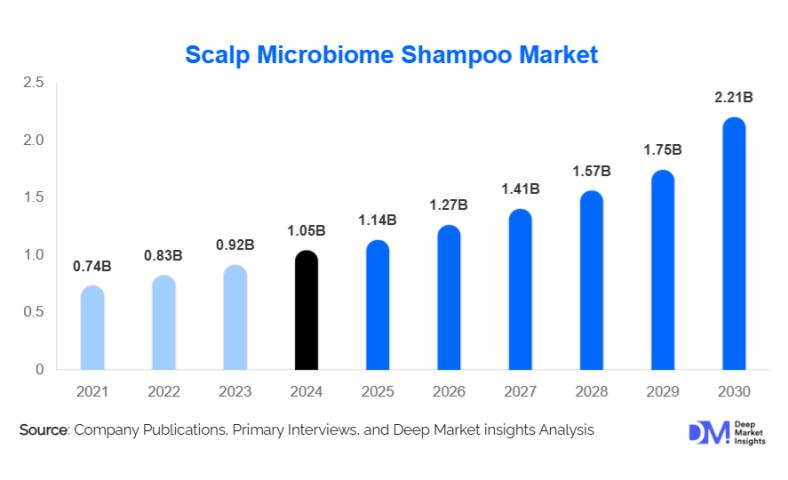
The global Scalp Microbiome Shampoo Market is experiencing accelerated growth as consumers and dermatologists recognize the importance of maintaining a balanced scalp microbiome for hair health and skin wellness. Innovations in probiotic formulations and personalized haircare routines are transforming this niche segment into a mainstream beauty essential.
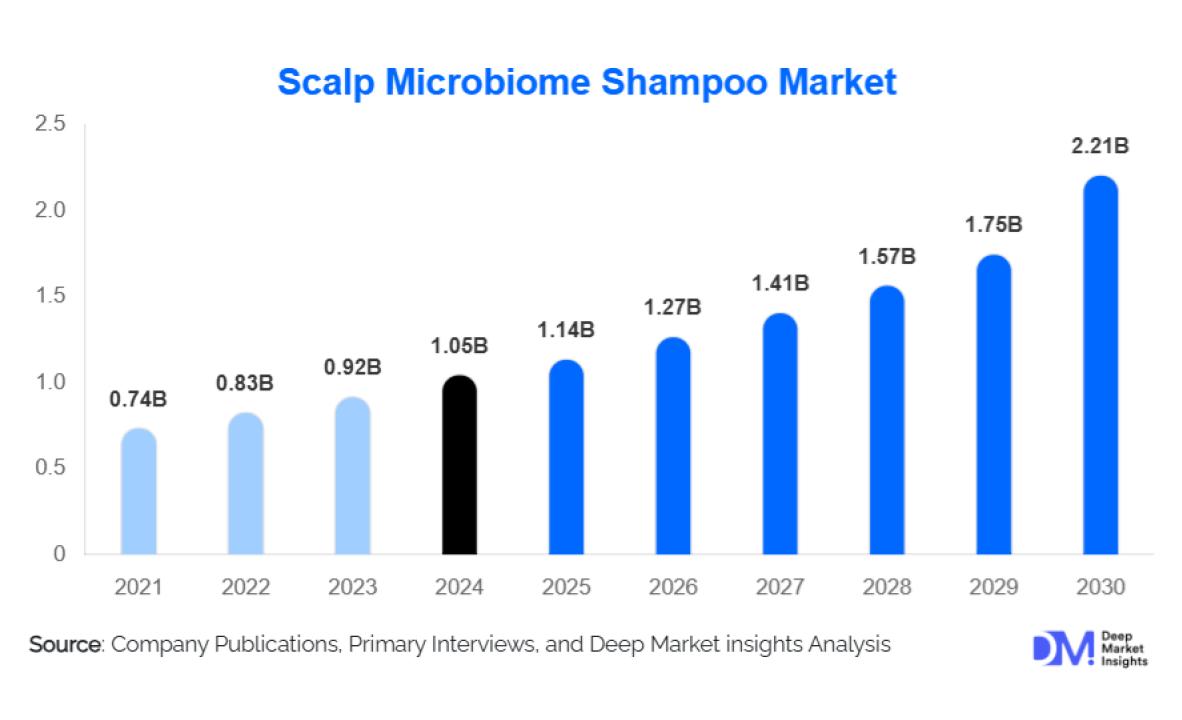
Market Size 2024 – USD 150.3 million
Market Size 2025 – USD 180.7 million
Market Size 2030 – USD 400.5 million
CAGR (2025–2030) – 18.2%
Request your sample report here: https://deepmarketinsights.com/report/scalp-microbiome-shampoo-market-research-report/request-sample
Market Drivers
Rising Awareness of Scalp Health: Increasing consumer education on the link between a balanced microbiome and hair strength drives demand for specialized shampoos containing prebiotics, probiotics, and postbiotics.
Dermatologist Endorsements: Clinical studies demonstrating reduced inflammation, itch relief, and improved hair density foster dermatologist recommendations, boosting product credibility.
Clean Beauty Movement: Preference for sulfate-free, paraben-free formulations aligns with scalp microbiome shampoos’ gentle, natural ingredient profiles.
Personalization & Direct-to-Consumer Models: Brands offering online scalp assessments and tailored formulations cater to individual microbial imbalances, enhancing customer loyalty and repeat purchases.
Market Challenges
Regulatory Complexity: Varying cosmetic regulations across regions complicate claims verification for live cultures and microbial ingredients, delaying product launches.
Formulation Stability: Ensuring probiotic viability and stability of live cultures in liquid formulations poses technical hurdles and increases production costs.
Consumer Skepticism: Limited consumer understanding of the scalp microbiome concept and concerns about efficacy delay mass-market adoption, requiring substantial education efforts.
High Price Points: Premium pricing relative to conventional shampoos restricts penetration in price-sensitive segments, especially in emerging markets.
Purchase the full research here: https://deepmarketinsights.com/report/scalp-microbiome-shampoo-market-research-report/buy-now
Segmentation Overview
By Product Type
– Probiotic Shampoos (dominant, live microbial cultures for scalp restoration)
– Prebiotic Shampoos (nutrient-rich formulations supporting beneficial microbes)
– Postbiotic Shampoos (metabolite-enriched extracts promoting scalp barrier function)By Distribution Channel
– Online Retail (leading, due to personalized ordering and global reach)
– Dermatology Clinics & Spas
– Pharmacies & Health Stores
– Mass Market RetailBy End-User
– Professional Haircare (salon and clinic use)
– Homecare (DIY scalp treatment)By Region
– North America (largest share, driven by early adopters and dermatologist recommendations)
– Europe (stringent clean beauty standards encourage innovation)
– Asia-Pacific (fastest growth, fueled by rising disposable incomes and interest in K-beauty scalp trends)
– Latin America & MEA
Top Players Analysis
BIOME Beauty Inc. – Pioneers of scalp microbiome care with patented probiotic strains and AI-driven scalp assessment tools.
Dermashield Laboratories – Offers clinically validated postbiotic shampoos backed by dermatological trials for sensitive scalp conditions.
PureProbiome LLC – Specializes in customizable prebiotic–probiotic blends through a subscription-based direct-to-consumer model.
GreenRoots Cosmetics – Combines botanical extracts with live cultures, focusing on sustainable sourcing and eco-friendly packaging.
ScalpaCare Technologies – Integrates scalp microbiome diagnostics wearable devices with shampoo kits for precision formulation updates.
Frequently Asked Questions (FAQ)
Q1: What is the scalp microbiome shampoo market size for 2024, 2025, and 2030?
Market Size 2024 – USD 150.3 million; Market Size 2025 – USD 180.7 million; Market Size 2030 – USD 400.5 million.
Q2: What is the expected CAGR for the scalp microbiome shampoo market?
The market is projected to grow at a CAGR of 18.2% from 2025 to 2030.
Q3: Which regions lead and grow fastest?
North America leads due to dermatologist endorsements; Asia-Pacific grows fastest driven by K-beauty scalp trends.
Q4: What drives demand for microbiome shampoos?
Scalp health awareness, clean beauty preferences, personalized formulations, and clinical validations.
Q5: What are the main challenges in the market?
Regulatory hurdles, formulation stability, consumer education, and high price points.