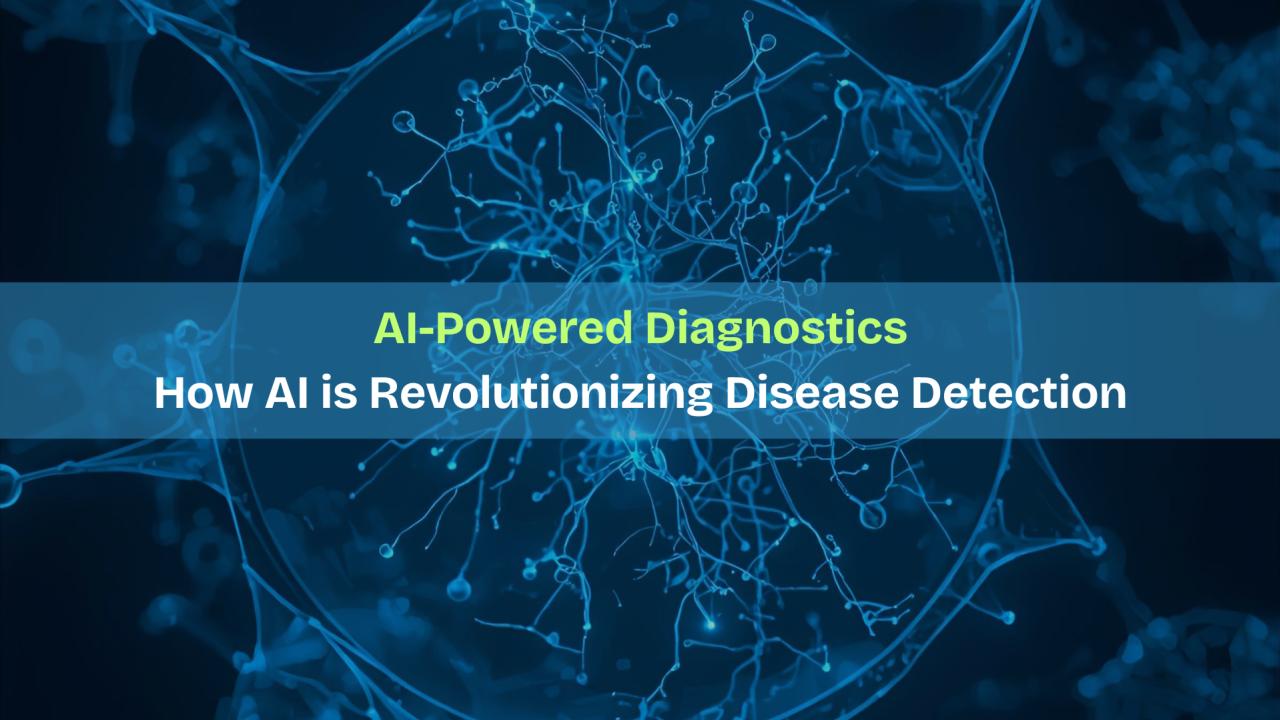
Artificial Intelligence (AI) is changing the healthcare industry like never before. One of the most impactful applications of AI is in diagnostics and disease detection, where speed, accuracy, and efficiency can literally save lives. From analyzing medical images to predicting diseases early, AI-powered diagnostics is transforming the way healthcare professionals diagnose and treat patients.
In this article, we’ll explore how AI is revolutionizing disease detection, key technologies involved, real-world use cases, and the benefits and challenges that come with it.
Why AI in Diagnostics?
Traditional diagnostic methods rely heavily on human expertise, which, although effective, can be time-consuming and prone to human error. With AI in healthcare, providers can leverage machine learning algorithms, deep learning models, and natural language processing (NLP) to analyze massive datasets and deliver faster, more accurate results.
Key Technologies Driving AI in Disease Detection
- Machine Learning (ML): Enables AI systems to learn from large datasets and improve prediction accuracy over time.
- Deep Learning (DL): Used in image recognition to detect anomalies in X-rays, MRIs, and CT scans.
- Natural Language Processing (NLP): Helps analyze unstructured data such as patient reports and research papers for diagnostic insights.
- Computer Vision: Plays a critical role in detecting tumors, lesions, and other abnormalities from medical images.
How AI is Revolutionizing Disease Detection
1. Medical Imaging Analysis
AI algorithms can process X-rays, CT scans, and MRIs faster than humans, identifying even the smallest anomalies that doctors might miss. For instance:
- Detecting lung cancer nodules in CT scans.
- Identifying breast cancer in mammograms with high precision.
2. Early Detection of Chronic Diseases
AI models can analyze historical patient data and identify patterns that indicate the onset of conditions like diabetes, heart disease, and kidney disorders, enabling preventive care.
3. Predictive Analytics for Disease Outbreaks
AI tools analyze data from multiple sources to predict disease outbreaks, helping authorities take preventive measures before the situation worsens.
4. AI in Pathology
AI-powered systems can analyze biopsy slides to detect cancer cells quickly, reducing diagnosis time from weeks to minutes.
5. AI for Rare Diseases
AI algorithms can cross-reference symptoms with vast medical databases to diagnose rare diseases that traditional methods often overlook.
Real-World Use Cases
- Google DeepMind: Detects over 50 eye conditions using retinal scans.
- IBM Watson Health: Assists doctors by analyzing patient records and suggesting diagnosis options.
- PathAI: Improves pathology diagnosis accuracy using AI-driven image analysis.
Benefits of AI-Powered Diagnostics
- Faster Diagnosis: Reduces waiting time for patients.
- Higher Accuracy: Minimizes human error in interpreting results.
- Early Disease Detection: Improves treatment outcomes and survival rates.
- Cost Efficiency: Lowers healthcare costs by reducing unnecessary tests.
Challenges and Considerations
- Data Privacy: Sensitive patient data must be protected.
- Regulatory Compliance: AI tools need approval from healthcare authorities.
- Bias in AI Models: Requires diverse and high-quality datasets for unbiased results.
The Future of AI in Diagnostics
With advancements in Generative AI, Edge AI, and explainable AI models, the future of AI-powered diagnostics looks promising. Soon, AI will assist doctors in real-time decision-making, making healthcare more accessible, accurate, and personalized.
Conclusion
AI-powered diagnostics is revolutionizing disease detection by providing speed, accuracy, and predictive capabilities. While challenges remain, its potential to transform healthcare is undeniable. Hospitals, clinics, and health-tech startups that adopt AI early will stay ahead in delivering smarter, faster, and better care. If you are looking for an AI-powered app development company for healthcare, contact IMG Global Infotech.