Introduction
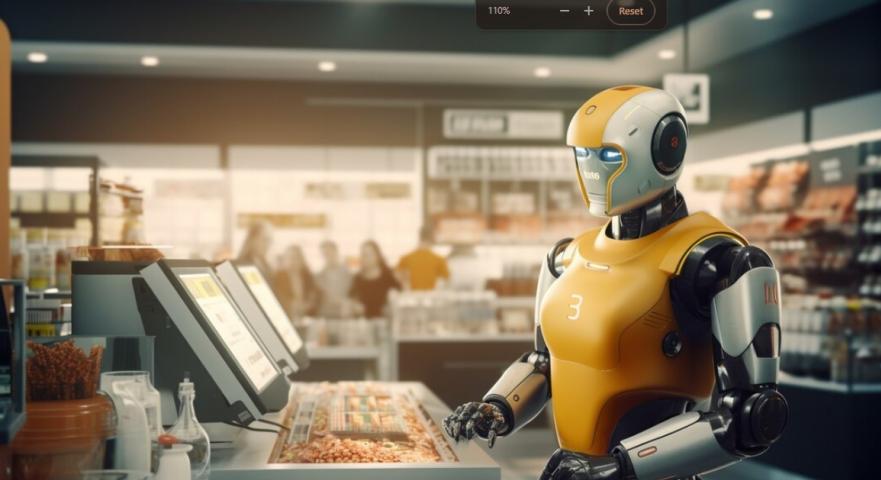
The manufacturing industry is evolving at an unprecedented pace, driven by the need for greater productivity, precision, and safety. At the core of this transformation are industrial robots. Once considered futuristic, industrial robots have now become essential in modern factories, streamlining operations and making production smarter, faster, and more cost-efficient.
What Are Industrial Robots?
Industrial robots are automated machines designed to perform repetitive, high-precision, or hazardous tasks in manufacturing and production environments. Equipped with advanced robotic arms, sensors, and controllers, they can carry out tasks like assembly, material handling, welding, packaging, and inspection with consistency and accuracy.
Benefits of Industrial Robots
- Enhanced Productivity: Operates 24/7 without fatigue, boosting output significantly.
- Precision and Quality: Delivers uniformity in tasks, reducing human error.
- Improved Safety: Takes on dangerous or labour-intensive work, protecting workers.
- Cost-Effective in the Long Run: While initial investment is high, savings from reduced labour costs and lower defect rates ensure a strong ROI.
- Flexibility: Easily reprogrammed to handle new tasks or adapt to product line changes.
Applications of Industrial Robots
Industrial robots are widely adopted across industries:
- Automotive Industry – Welding, painting, and assembling vehicle components.
- Electronics – Precise handling and placement of delicate components.
- Food and Beverage – Sorting, packaging, labelling, and palletising products.
- Pharmaceuticals – Sterile and hygienic handling of medicines and devices.
- Logistics and Warehousing – Automated sorting, picking, and palletising.
Industrial Robots in India
India is witnessing a significant rise in the adoption of industrial robots, fueled by government initiatives like Make in India and the growing demand for smart manufacturing.
From small-scale businesses to large factories, industrial robots in India are helping manufacturers:
- Increase productivity
- Reduce dependence on manual labor
- Improve product quality to global standards
With this growth, Indian companies are positioning themselves as global competitors in manufacturing excellence.
Challenges in Adopting Industrial Robots
Despite their benefits, industries often face challenges when integrating robots:
- High Initial Investment – Advanced robotics requires upfront capital.
- Workforce Training – Skilled operators and engineers are needed.
- Integration with Legacy Systems – Older machinery may require modifications.
However, these challenges are steadily being addressed with affordable solutions, skill development programs, and modular robot designs.
The Future of Industrial Robots
The future of industrial robots is defined by innovation and intelligence. Trends include:
- AI and Vision Systems – Smarter robots with real-time defect detection.
- Collaborative Robots (Cobots) – Designed to work safely alongside humans.
- IoT Integration – Real-time monitoring and predictive maintenance.
- Energy-Efficient Designs – Sustainability-focused automation.
These advancements will make industrial robots even more accessible and effective across industries.
Delta Stark Engineering: Your Industrial Robotics Partner
At Delta Stark Engineering, we deliver world-class industrial robots tailored for diverse industries in India. Our solutions are built to ensure speed, accuracy, and reliability, helping manufacturers embrace automation with confidence.
Our offerings include:
- Robots for moulding, packaging, and material handling
- Customised automation systems for specific industry needs
- Durable designs with low maintenance
- Complete support: installation, training, and after-sales service
Conclusion
The adoption of industrial robots is no longer optional—it’s essential for businesses aiming to thrive in today’s competitive environment. From improving efficiency to ensuring quality and safety, industrial robots are shaping the future of smart factories. With trusted partners like Delta Stark Engineering, manufacturers can achieve automation excellence and long-term success.