
Search behavior is undergoing one of its most profound transformations since the birth of the internet. For decades, the web revolved around the search engine results page: a list of links that users could scan, evaluate, and choose from. Now, with the rapid adoption of artificial intelligence–powered summaries, that familiar model is shifting. Instead of visiting multiple sites, many people expect a single, synthesized response—fast, direct, and seemingly complete.
This raises an important question: what role do websites play when AI can deliver answers in seconds? Some fear that the traditional function of a website—as the destination for searchers—will diminish. Yet the reality is more nuanced. Far from being obsolete, websites remain the foundation of online knowledge, and their relevance depends on how well they adapt to this new environment.
The Hidden Dependency of AI on Websites
AI summaries may appear autonomous, but they are built on the vast reservoir of information created by websites. Large language models cannot invent reliable knowledge out of thin air; they learn patterns and gather insights from existing content. Every concise summary generated by an AI system is, in some form, indebted to the websites that provide depth, accuracy, and context. Without fresh and credible sources, AI-driven search would stagnate.
This reliance highlights a paradox: while users may interact less directly with websites, the value of those sites as original sources has never been greater.
Adapting Content for the AI-First Era
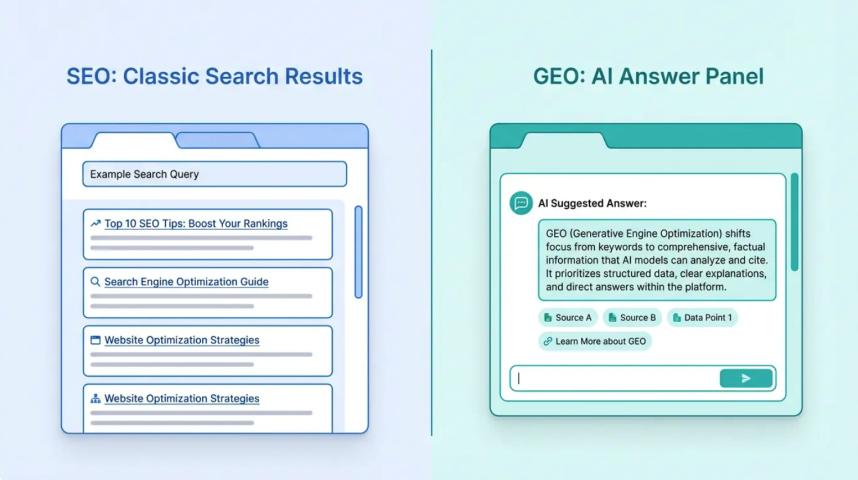
To remain visible and influential, websites must evolve their strategies. Traditional SEO, which focused on keywords and ranking within search results, now needs to expand toward information optimization—structuring content in ways that make it more accessible and useful for AI systems. Clear headings, precise explanations, transparent citations, and well-maintained metadata can increase the likelihood that content will be included in summaries or referenced as an authoritative source.
Moreover, authenticity and expertise are emerging as critical differentiators. AI tools are good at rephrasing existing knowledge, but they struggle with providing unique insights, original research, or lived experience. Websites that offer these elements can stand out, both in AI summaries and when users seek deeper engagement beyond the surface-level answer.
Beyond Summaries: The Value Only Websites Provide
While AI summaries are efficient, they cannot replicate the richness of a full digital experience. A well-designed website offers more than facts—it provides narratives, multimedia, community, and interactivity. Long-form articles, data visualizations, podcasts, and videos deliver layers of meaning that a short summary simply cannot capture.
In addition, websites allow for trust-building. A user who repeatedly encounters reliable information on a site is more likely to return directly, subscribe, or share its content. That relationship between creator and audience cannot be replaced by an AI-generated paragraph.
Reframing the Challenge as an Opportunity
It is tempting to see AI summaries as competition, but they can also be viewed as distribution partners. Just as social media platforms once became amplifiers for web content, AI-driven tools can serve as gateways—introducing new audiences to a website’s expertise. The challenge lies in ensuring that the site is strong enough to attract and retain visitors once they move beyond the instant answer.
For organizations, businesses, and independent creators, this means doubling down on quality, distinctiveness, and user experience. Instead of chasing clicks, the goal becomes building authority and offering something that no summary alone can provide.
A Future Built on Collaboration
Websites are not disappearing; they are evolving. Their role in the digital ecosystem may shift from being the first stop in a search journey to being the foundation upon which AI interactions are built. By embracing clarity, authenticity, and innovation, websites can secure their relevance in a landscape where information is increasingly filtered through artificial intelligence.
The internet has always thrived on change, and this era is no exception. Those who adapt will not only remain visible—they will become indispensable.