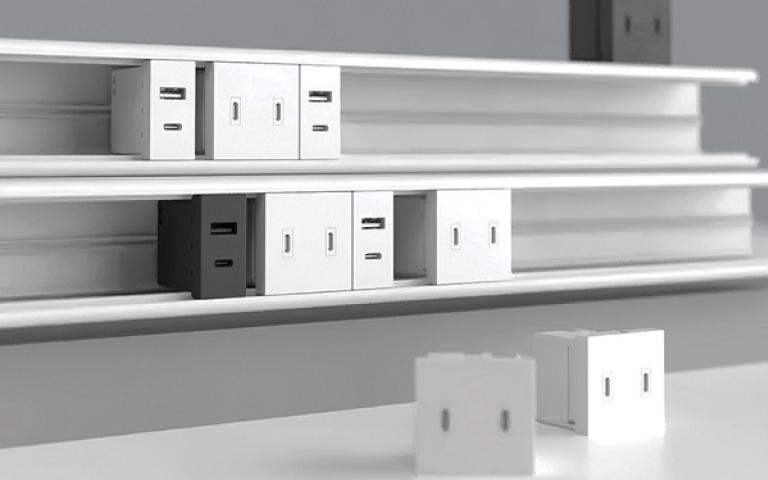
A USB socket module represents the integrated charging solution built directly into electrical installations. This essential component enables safe, efficient device charging without external adapters cluttering outlets.
Industry professionals recognize several critical advantages:
- Standardized modular design fits seamlessly into existing electrical infrastructure
- Devices charge faster through intelligent Power Delivery technology
- Multiple ports serve various device types simultaneously
- Space-efficient installation eliminates bulky wall chargers
- Universal compatibility supports smartphones, tablets, and laptops
- Built-in safety features protect against electrical hazards
Modern electrical installations increasingly rely on USB charging modules to meet evolving power demands throughout residential and commercial spaces.
Key Takeaways
- USB socket modules are integrated charging units installed directly into wall boxes, providing permanent USB charging infrastructure
- These modules follow strict international safety standards including CE marking, RoHS compliance, and IEC 60884-1 certification
- USB charging modules range from 18W basic models to 140W high-performance units supporting laptop charging
- Power Delivery (PD) technology enables intelligent voltage negotiation, delivering optimal charging speed for each connected device
- Modular sizing standards (half-module through 2-module) ensure compatibility with dado trunking sockets and mosaic socket systems
- Proper terminal selection—screw or screwless—affects installation efficiency and long-term reliability
- High-quality materials like flame-retardant plastics and corrosion-resistant contacts extend operational lifespan
- Regular inspection and proper circuit planning prevent overloading and maintain safe operation
What Is a USB Socket Module?
Basic Structure
A USB socket module is a compact power conversion device designed to fit standard electrical mounting systems. Manufacturers engineer these modules using high-grade flame-retardant plastics and precision-machined metal contacts. Each module weighs approximately 50-120 grams depending on power capacity and features integrated circuit boards managing power conversion. The outward-facing surface presents USB ports—Type-A, Type-C, or combinations—while the rear includes standardized terminal connections for mains power input. USB charging modules convert AC voltage to the DC voltage required by modern devices, incorporating sophisticated control circuitry to regulate output safely.
The design allows seamless integration into wall boxes, surface-mount enclosures, and modular electrical systems. Engineers position internal components to maximize heat dissipation while minimizing physical dimensions. This compact arrangement enables installation in standard electrical spaces without requiring oversized boxes.
Note: USB socket modules must maintain minimum clearances from adjacent devices. Proper spacing ensures adequate ventilation and prevents thermal interference between components.
| Component/Characteristic | Description |
Materials Used | Flame-retardant PC/ABS plastic, copper alloy contacts |
Port Types | USB-A, USB-C single or combined configurations |
Terminal Types | Screw terminals, screwless push-in terminals |
Voltage Input | AC100-250V 50/60Hz universal compatibility |
Safety Features | Overcurrent, overvoltage, thermal, short-circuit protection |
Standards | CE, RoHS, IEC 60884-1, USB-IF certification |
Cooling Design | Ventilated housing with thermal management |
Mounting | Fits standard electrical boxes and frames |
Placement in Electrical Installations
USB socket modules install at strategic locations throughout buildings where device charging needs are highest. In residential applications, bedrooms, kitchens, living rooms, and home offices represent primary installation points. Commercial environments benefit from modules in conference rooms, reception areas, waiting rooms, and collaborative workspaces.
The modules mount directly into electrical boxes using standardized fixing methods. Installers position them within wall cavities for flush-mounted applications or use surface-mount boxes for retrofit projects. Dado trunking sockets offer another installation option, particularly in office environments where flexible power distribution supports changing workspace configurations.
| Location Type | Recommended Quantity | Typical Use Case |
Bedrooms | 2-4 per room | Bedside charging for phones, tablets |
Kitchen | 2-3 countertop locations | Small appliance areas, breakfast bars |
Living Areas | 2-4 distributed locations | Seating areas, entertainment centers |
Home Offices | 3-6 locations | Desk surfaces, equipment zones |
Conference Rooms | 4-8 table positions | Laptop charging during meetings |
Hotel Rooms | 3-5 per room | Bedside, desk, and convenience locations |
Proper placement considers both user convenience and electrical code requirements. Installers maintain appropriate spacing from water sources in bathrooms and kitchens. They avoid locations where heat sources or direct sunlight might affect module operation.
Key Functions
USB charging modules perform several critical roles within electrical systems. The primary function involves converting standard AC mains voltage to regulated DC voltage suitable for USB-powered devices. This conversion process includes:
- Power Factor Correction: Improves electrical efficiency and reduces harmonic distortion on building circuits
- Voltage Regulation: Maintains stable output voltage despite input voltage fluctuations or load changes
- Current Limiting: Protects devices from excessive current that could damage batteries or circuitry
- Protocol Communication: Negotiates charging parameters with connected devices through USB Power Delivery protocols
USB socket modules also provide convenience benefits. Users charge devices without carrying separate adapters or occupying traditional outlets with charging bricks. Multiple ports allow simultaneous charging of different device types. The permanent installation reduces cable clutter and maintains cleaner visual aesthetics.
Tip: Position USB charging modules near seating areas, workspaces, and bedside locations where occupants typically use mobile devices. This placement maximizes utility and user satisfaction.
Modern modules incorporate smart features detecting connected device requirements. When multiple devices connect simultaneously, intelligent power distribution allocates available capacity based on each device's needs. This optimization prevents port blocking and ensures efficient use of the module's total power budget.

Importance
Structural Role in Electrical Systems
USB charging modules integrate into building electrical infrastructure as permanent fixtures. These components connect directly to building wiring through standardized terminals, becoming part of the overall power distribution network. The installation creates dedicated USB power points independent of traditional outlets.
Quality USB socket modules use robust construction to withstand years of regular use. Internal components mount securely within the housing, resistant to vibration and mechanical stress. Terminal connections maintain secure contact with building wiring despite thermal cycling. The housing materials resist yellowing, cracking, and deformation over extended periods.
Proper integration supports building electrical code compliance. Certified modules meet safety standards for residential and commercial installations. This certification ensures the electrical system maintains its integrity and safety rating when USB charging modules become part of the infrastructure.
Note: Building electrical systems benefit from properly specified USB charging modules that match the installation environment. Overloading circuits with excessive USB charging capacity can create code violations and safety hazards.
Safety in Electrical Applications
USB socket modules play a vital role in electrical safety by eliminating improvised charging solutions. When users rely on low-quality adapters or overload traditional outlets, fire risks increase. Permanent USB charging modules undergo rigorous testing and incorporate multiple safety features:
- Isolation: Internal transformers or isolated converters separate USB circuits from mains voltage
- Ground Fault Protection: Proper grounding prevents shock hazards during fault conditions
- Thermal Cutoffs: Temperature sensors disconnect power if overheating occurs
- Surge Protection: Internal components withstand voltage spikes from lightning or switching events
Installers verify proper operation before commissioning. They check for correct voltage output, secure mounting, and proper grounding. Only modules meeting certification standards should be installed. This attention to quality prevents accidents and protects building occupants.
Facilities conduct regular electrical inspections that include USB charging modules. Inspectors look for signs of overheating, loose connections, or physical damage. Early detection prevents failures that could disrupt service or create hazards.
Universal Compatibility and Future-Proofing
USB charging modules support standardized charging protocols ensuring compatibility across device manufacturers. The USB Power Delivery specification enables modules to work with smartphones from any brand, tablets, laptops, and other USB-powered devices. This universal compatibility simplifies infrastructure planning—one installation serves all device types.
The modular nature supports system updates as technology evolves. When faster charging standards emerge, facilities can replace individual modules without rewiring entire installations. This upgradeability protects infrastructure investments and extends system lifespan.
Tip: Selecting USB-C equipped modules with Power Delivery support provides the best long-term value. USB-C increasingly dominates new device designs, making Type-A ports less relevant over time.
How They Work
Power Conversion and Voltage Regulation
USB charging modules employ switch-mode power supply technology to convert AC mains voltage to DC USB voltage efficiently. The process begins when AC voltage enters through the module's terminals. Internal circuitry rectifies the AC waveform to DC, then uses high-frequency switching to step down voltage to USB levels.
A feedback control loop continuously monitors output voltage and adjusts switching timing to maintain regulation. When devices draw current, the controller compensates to prevent voltage sag. During light loads, the controller reduces switching frequency to improve efficiency. This dynamic regulation ensures consistent charging performance across varying conditions.
Power Delivery Negotiation
Modern USB charging modules implement the USB Power Delivery protocol enabling intelligent communication with connected devices:
- Initial Connection: Module provides 5V default voltage for compatibility
- Capability Exchange: Device and module communicate supported voltage profiles
- Profile Selection: System negotiates optimal voltage for fastest safe charging
- Active Monitoring: Module continuously verifies safe operation and adjusts if conditions change
This negotiation happens automatically within milliseconds of device connection. Users experience optimal charging without manual configuration or settings adjustment.
Terminal Connection Methods
USB socket modules connect to building wiring through specialized terminals designed for reliable long-term service. Two primary terminal types serve different installation requirements:
Screw Terminals feature threaded connections where stripped wire ends insert into openings. Installers tighten screws to clamp wires securely. These terminals accept wire sizes typically from 1.5mm² to 2.5mm². The screw mechanism provides visible confirmation of secure connection and allows easy wire positioning during installation.
Screwless Terminals use spring mechanisms or lever-actuated clamps. Installers strip wires to the specified length, then push wires directly into the terminal opening or use a lever to open the clamp. Once inserted, springs or levers secure the wire automatically. This design significantly reduces installation time and provides consistent clamping force.
| Terminal Type | Wire Capacity | Installation Time | Best Application |
Screw | 1.5-2.5mm² | Moderate | Residential, small projects |
Screwless Push-In | 1.5-2.5mm² | Fast | Large commercial installations |
Screwless Lever | 2.5mm² (2 conductors) | Fastest | High-density installations |
Multi-Port Power Distribution
USB charging modules with multiple ports incorporate intelligent distribution systems managing total available power. Several implementation approaches exist:
Fixed Allocation: Each port receives a dedicated power budget. A 45W dual-port module might provide 27W on one port and 18W on the other. This approach ensures predictable performance but may underutilize capacity when ports serve different device types.
Dynamic Allocation: The module's controller monitors each port's power demand continuously and adjusts distribution in real-time. If one device requires 45W and another needs 15W, a 65W module provides both simultaneously. When demands exceed capacity, the controller prioritizes based on connection order or implements proportional reduction.
Priority-Based Systems: Some advanced modules allow configuration where specific ports receive priority. In conference room applications, the primary port might receive guaranteed power for laptop charging while secondary ports share remaining capacity.
Note: Dynamic power allocation provides the best user experience by maximizing utility of the module's total capacity. This intelligence prevents situations where connecting a low-power device to a high-power port blocks that capacity from other users.
Types and Power Ratings
Power Output Categories
USB socket modules are classified by maximum power delivery, directly impacting device compatibility and charging speed:
Entry Level (18-20W): These modules typically feature one USB-A port and one USB-C port. Output voltage profiles include 5V/3A, 9V/2A, and 12V/1.67A. This capacity suffices for smartphone and basic tablet charging but cannot power laptops. Entry-level modules fit half-module or single-module form factors, suitable for bedroom or bathroom installations where laptop charging is unnecessary.
Standard Capacity (45W): Mid-range modules support most user devices including lightweight laptops. Typical configurations include:
- Single USB-C: 5V/3A, 9V/3A, 12V/3A, 15V/3A
- Dual USB-C: Dynamic distribution up to 45W total
- USB-A + USB-C combinations for broad compatibility
These modules fit single-module dimensions and represent the most versatile choice for general-purpose installations.
High Performance (65W): Professional-grade modules charge full-size laptops at maximum speed. Single USB-C outputs deliver 5V/3A through 20V/3.25A profiles. Dual-port configurations provide 65W total with intelligent distribution. The 1-module or 1.5-module form factor accommodates the increased power conversion components.
Premium Capacity (100-140W): Top-tier modules serve demanding applications like conference rooms, airports, and co-working spaces. A 140W dual-port module delivers:
- Per port: 5V/3A, 9V/3A, 12V/3A, 15V/3A, 20V/5A, 28V/5A
- Simultaneous: 65W + 65W or 100W + 40W depending on device requirements
These modules require 1.5-module to 2-module dimensions to house robust power components and thermal management systems.
Modular Form Factors
Standardized dimensions ensure USB charging modules fit existing electrical infrastructure:
Half-Module (22.5 x 45mm): Ultra-compact format for space-constrained applications. Typically limited to 20W output. Fits alongside standard switches and outlets in mosaic socket configurations. Ideal for retrofitting existing installations with minimal modification.
Single Module (45 x 45mm): Standard size matching most electrical wall boxes. Accommodates 20-65W modules depending on efficiency and thermal design. The most common format for residential and light commercial use. Compatible with universal wall box mounting systems.
1.5-Module (67.5 x 45mm): Extended format providing additional space for high-power components. Enables 65-100W charging capacity in a single unit. Slightly wider footprint requires compatible wall boxes but delivers professional laptop charging capability.
2-Module (90 x 45mm): Premium format housing the most advanced USB charging modules. Supports 140W dual-port configurations with full-speed simultaneous laptop charging. Best suited for dedicated charging stations where the wider format fits available space.
Wall-Mounted Variants
In addition to flush-mounted modules, several surface-mount options serve retrofit and special-purpose applications:
Standard Wall-Mount: Self-contained units with integrated mounting plate. These modules install directly on wall surfaces without requiring boxes. Output capacities range from 18W to 65W. Particularly useful in areas where flush mounting is impractical such as finished spaces or locations requiring temporary charging infrastructure.
Keystone Format: Specialized modules fitting keystone jack openings common in structured cabling systems. These 20W modules integrate USB charging into data jack faceplates. Ideal for office environments with existing structured cabling where adding charging capability requires minimal modification.
TAE Format: European standard modules designed for telephone connection boxes. These units repurpose legacy telephone outlets as modern USB charging points, particularly useful in buildings with extensive existing telephone infrastructure no longer needed for traditional voice service.
Materials and Build Quality
Housing Construction
Quality USB charging modules use engineered thermoplastics selected for specific performance characteristics:
Polycarbonate (PC): High-impact resistance and excellent heat tolerance make PC the premium choice for module housings. This material withstands mechanical stress during installation and maintains dimensional stability across temperature extremes. PC naturally resists yellowing from UV exposure, maintaining appearance over years of service.
PC/ABS Blend: Combining polycarbonate with acrylonitrile butadiene styrene creates a material balancing performance with cost. The blend retains much of PC's heat resistance while improving surface finish and moldability. This composition suits mid-range modules where moderate mechanical demands allow the slight compromise compared to pure PC.
Flame Ratings: All quality modules use UL94 V-0 rated materials—the highest flame resistance classification. This rating means the material self-extinguishes within seconds of ignition and produces no flaming drips. Electrical safety standards mandate this protection level for components connecting to mains voltage.
The housing design incorporates ventilation features managing heat generated during high-power operation. Strategic vent placement creates convection currents drawing cool air in while exhausting warm air. Proper ventilation extends component lifespan and maintains safe surface temperatures.
Contact and Terminal Quality
Internal and external metal components significantly affect reliability and longevity:
USB Port Contacts: High-grade copper alloy contacts with gold or nickel plating provide the optimal combination of conductivity and corrosion resistance. Gold plating offers superior performance but increases cost. Nickel plating provides good performance at lower cost, suitable for most applications. The contact design includes spring elements maintaining consistent pressure despite thousands of insertion cycles.
Terminal Contacts: Brass or copper-tin alloy construction ensures low-resistance connections to building wiring. Screwless terminals use stainless steel springs maintaining constant pressure as materials expand and contract with temperature. Quality terminals accommodate slight wire movement without loosening, critical for long-term reliability.
Plating Quality: Manufacturers apply plating using electroless or electroplating processes. Minimum plating thickness specifications ensure adequate protection. Insufficient plating allows base metal oxidation, increasing contact resistance and generating heat during operation.
Circuit Board Design
Internal printed circuit boards (PCBs) house the power conversion electronics. Several design factors indicate quality:
Board Material: FR-4 glass-reinforced epoxy laminate serves as the industry-standard substrate. Higher glass transition temperature (Tg) grades perform better in high-temperature environments. Quality modules use boards rated for continuous operation at elevated temperatures.
Copper Weight: PCB copper thickness affects current-carrying capacity and heat dissipation. Heavier copper (2oz/ft² or greater) reduces resistance and improves thermal performance in high-power modules. Budget modules may use minimum copper weights limiting power handling.
Component Selection: Premium modules incorporate name-brand semiconductor devices from established manufacturers. These components offer tighter specifications, better temperature performance, and longer lifespans. Budget alternatives may use generic parts with wider tolerance variations affecting reliability.
Conformal Coating: Some manufacturers apply protective coatings to circuit boards guarding against humidity, dust, and contaminants. This coating proves particularly valuable in harsh environments or coastal locations where salt air accelerates corrosion.
Tip: Examining a module's circuit board reveals quality levels. Look for clean solder joints, organized component layout, adequate component spacing for heat dissipation, and quality capacitors (Japanese brands indicate premium specifications).
International Standards and Certification
CE Marking Requirements
The CE mark indicates conformity with European Union safety and electromagnetic compatibility standards. USB charging modules must meet several directives:
Low Voltage Directive (LVD): Ensures electrical safety for equipment operating between 50V and 1000V AC. Testing verifies insulation integrity, protection against electric shock, and safe operation under normal and fault conditions. Manufacturers must document design review and testing results.
Electromagnetic Compatibility (EMC) Directive: Limits electromagnetic emissions preventing interference with other equipment. Testing measures conducted and radiated emissions across frequency ranges. The directive also requires immunity testing ensuring the module operates properly when exposed to electromagnetic fields.
CE marking represents a manufacturer's declaration of conformity. While self-certification is permitted, reputable manufacturers use third-party testing laboratories to verify compliance. Documentation must be available demonstrating how the product meets applicable standards.
RoHS Compliance
The Restriction of Hazardous Substances directive limits use of specific materials in electrical equipment. RoHS restricts:
- Lead (Pb): < 0.1% by weight
- Mercury (Hg): < 0.1% by weight
- Cadmium (Cd): < 0.01% by weight
- Hexavalent chromium (Cr6+): < 0.1% by weight
- Polybrominated biphenyls (PBB): < 0.1% by weight
- Polybrominated diphenyl ethers (PBDE): < 0.1% by weight
- Additional phthalates: Various limits
Compliance requires controlling material sources throughout manufacturing. Quality manufacturers maintain detailed bills of materials documenting component composition. Periodic testing verifies compliance as suppliers and processes change.
IEC 60884-1 Standard
The International Electrotechnical Commission standard IEC 60884-1 covers plugs and socket-outlets for household and similar purposes. While USB modules aren't traditional sockets, the standard provides relevant safety requirements:
- Rated voltage and current specifications
- Temperature rise limits during operation
- Contact resistance thresholds
- Insulation resistance and dielectric strength
- Mechanical strength and durability testing
- Terminal capacity and wire securing methods
- Marking and instruction requirements
Manufacturers design USB socket modules considering IEC 60884-1 principles even when the standard doesn't directly apply. This approach ensures compatibility with building electrical systems designed around these established safety criteria.
USB-IF Certification
The USB Implementers Forum (USB-IF) administers compliance programs for USB products. Certification verifies that USB charging modules correctly implement USB specifications including:
USB Power Delivery Specification: Ensures proper protocol implementation for voltage negotiation and power management. Testing includes compatibility with various device types, correct voltage profile support, and safe handling of protocol violations.
USB Type-C Specification: Verifies mechanical and electrical characteristics of USB-C ports. Testing covers connector dimensions, contact plating, insertion force, retention strength, and electrical continuity.
USB-IF certified products receive Trademark ID numbers (TIDs) and appear in the organization's integrator list. This certification provides confidence that modules work reliably with the broad ecosystem of USB-powered devices.
| Certification | Scope | Verification Method |
CE Mark | EU safety and EMC compliance | Self-declaration with testing documentation |
RoHS | Hazardous substance restrictions | Material composition testing and documentation |
IEC 60884-1 | Electrical safety principles | Third-party laboratory testing |
USB-IF | USB protocol implementation | USB-IF authorized test laboratory |

Practical Installation Applications
Residential Installations
Home environments benefit from strategically placed USB charging modules throughout living spaces. Electricians install modules during new construction by incorporating them into outlet and switch planning. Retrofit projects add charging capability to existing locations by replacing traditional outlets or installing modules in vacant gang positions.
Bedroom Applications: Bedside installations enable overnight phone charging without adapter clutter. Dual-port 20W or 45W modules serve couples charging separate devices. Consider positioning modules on both sides of the bed for convenience. Some homeowners prefer wall-mounted units on the wall above nightstands avoiding cable runs to floor-level outlets.
Kitchen Implementations: Countertop locations support phone and tablet use while cooking or during meals. Install modules within designated appliance zones following code requirements for spacing from sinks and other water sources. The half-module format works well in kitchens where standard outlet space is limited.
Living Room Solutions: Entertainment centers and seating areas benefit from multiple charging points. Position modules near couches, recliners, and side tables where occupants use devices. Consider 45-65W modules supporting laptop use alongside phone charging.
Home Office Requirements: Dedicated workspaces need higher-capacity modules. Install 65W units at desk locations supporting laptop, tablet, and phone charging simultaneously. Multiple modules throughout the office prevent cable stretching and support flexible workspace arrangement.
Commercial and Hospitality Projects
Business environments demand robust installations serving diverse users with varying device types:
Hotel Room Installations: Modern travelers expect convenient charging access. Install modules at bedside locations (both sides in double rooms), desk surfaces, and bathroom counters where code permits. The 45-65W range provides laptop charging capability business travelers require. Wall-mounted units work well in renovation projects avoiding extensive electrical modifications.
Conference Room Deployments: Meeting spaces need high-capacity modules supporting multiple laptop users. Install 65-100W dual-port modules at regular intervals around conference tables. Consider 2-module 140W units at head table positions where presenters connect multiple devices. Integrate modules into cable management systems or dado trunking sockets for clean installations in professional settings.
Airport and Transportation Facilities: High-traffic charging stations require durable, high-capacity modules. Deploy 100-140W units serving multiple simultaneous users. Surface-mounted configurations simplify installation and maintenance in public areas. Consider vandal-resistant housings in unsupervised locations.
Office Workspace Installations: Open-plan environments benefit from flexible charging infrastructure. Dado trunking sockets with integrated USB charging modules support evolving workspace configurations. Install modules at regular intervals along trunking runs enabling power access anywhere along the system. The 45-65W range suits most office applications supporting laptop and personal device charging.
Specialized Environment Considerations
Certain applications require attention to specific environmental factors:
Healthcare Facilities: Hospitals and clinics need modules meeting stringent electromagnetic compatibility requirements. Medical device interference prevention requires proper filtering and shielding. Select modules certified for healthcare environments. Position installations considering patient monitoring equipment proximity. Typically 20-45W capacity suffices for medical staff personal devices while avoiding interference with critical equipment.
Educational Institutions: Schools require durable installations withstanding high-cycle use. Mechanical robustness becomes paramount in classrooms and student areas. Consider tamper-resistant designs in unsupervised locations. The 45-65W range supports teacher laptops and student tablets. Install adequate quantity preventing students from clustering around limited charging points.
Industrial Settings: Factories and warehouses may require specialized enclosures protecting modules from dust, moisture, or chemicals. Standard modules suit office areas within facilities. Production zones need industrial-rated enclosures with appropriate IP ratings. Consider 20-45W capacity for mobile device charging supporting barcode scanners, tablets, and communication devices.
Integration with Building Systems
Modern USB charging modules can integrate with broader building management systems:
Smart Home Integration: Some modules include communication capabilities enabling remote monitoring and control. Integration with home automation systems allows scheduling charging times, monitoring energy consumption, and receiving notifications about charging status or faults.
Building Management Systems: Commercial installations may connect modules to centralized monitoring. This integration enables facility managers to track usage patterns, identify maintenance needs before failures occur, and optimize charging infrastructure placement based on utilization data.
Energy Management: Integration with building energy management systems allows load shedding during peak demand periods. Intelligent systems can temporarily reduce charging capacity or disable non-critical charging points during high electrical consumption periods, supporting demand response programs and reducing utility costs.
Maintenance and Troubleshooting
Identifying Quality Installations
Proper installation ensures safe, reliable operation throughout the module's service life. Electricians should verify several aspects during and after installation:
Secure Mounting: Modules must sit firmly in electrical boxes without excessive gaps or movement. Loose mounting allows vibration potentially degrading wire connections over time. Check that mounting screws engage properly and that the module sits flush with the wall surface or mounting frame.
Proper Terminal Connections: Inspect wire connections carefully. Stripped conductors should insert fully into terminals with no exposed copper visible outside the terminal opening. For screw terminals, verify adequate tightness without overtorquing which can damage strands. Screwless terminals should capture wires securely with no movement when tugged gently.
Adequate Clearance: Verify sufficient space around the module within the electrical box. Crowded boxes where wires bunch behind modules restrict airflow and increase fire risk. High-power modules require deeper boxes accommodating components plus wire bending radius.
Correct Circuit Assignment: Confirm modules connect to appropriately rated circuits. Multiple high-power modules on a single circuit can cause overloading and nuisance tripping. Calculate total continuous load including USB modules when designing circuit distribution.
Tip: Document USB charging module locations, specifications, and circuit assignments during installation. This information proves valuable during future maintenance, troubleshooting, or renovation projects.
Common Issues and Solutions
Even quality modules occasionally experience problems. Understanding common issues enables quick resolution:
No Power Output: When modules fail to charge devices, first verify input power. Test voltage at the module's terminals using a multimeter—should read appropriate mains voltage (120V or 230V depending on locale). If input voltage is absent, check circuit breakers and upstream wiring. If input voltage exists but modules produce no output, internal component failure likely requires module replacement.
Slow Charging Speed: Devices charging slower than expected may indicate several issues. Verify the connected device supports fast charging protocols—older devices may charge slowly regardless of module capability. Test with a different cable as low-quality or damaged cables significantly limit charging speed. If multiple devices charge slowly, the module may have degraded internal components reducing output capacity.
Intermittent Operation: Charging that starts and stops repeatedly suggests loose connections or failing components. Examine terminal connections for tightness. Thermal cycling can loosen screw terminals over time. Check for signs of overheating such as discolored housings or burnt smells indicating inadequate ventilation. Intermittent operation sometimes results from borderline low input voltage—verify mains voltage remains within specification under load.
Port Damage: Physical damage to USB ports prevents proper device connection. Bent or broken contacts result from excessive insertion force or foreign objects forced into ports. Damaged ports typically require module replacement as individual port repair proves impractical. In high-traffic public installations, consider modules with reinforced ports or protective covers.
Overheating During Operation: Modules becoming excessively hot indicate problems. Normal operation produces warmth but surfaces should never become too hot to touch comfortably. Overheating suggests overloading, inadequate ventilation, or failing components. Verify connected device power draw doesn't exceed module capacity. Check that electrical box depth provides adequate ventilation space. Persistent overheating requires module replacement to prevent fire hazards.
Preventive Maintenance Schedule
Regular maintenance extends USB socket module service life and prevents unexpected failures:
Annual Inspection: Conduct yearly visual inspections of all USB charging modules. Look for physical damage, discoloration, or deformation. Test charging function using known-good devices. Verify output voltage using a USB power meter—readings should match module specifications. Check terminal connections remain tight, particularly screw terminals subject to loosening through thermal cycling.
Cleaning: Dust and debris accumulation within USB ports impedes proper device connection and may cause arcing. Clean ports annually using compressed air to dislodge particles. Avoid inserting metal objects which might damage contacts. For heavily contaminated ports, use electronic contact cleaner and allow complete drying before restoring power.
Thermal Imaging: In commercial installations with numerous modules, periodic thermal imaging surveys identify overheating units before failure. Hot spots indicate overloading, poor ventilation, or component degradation. Address issues found during thermal surveys promptly to prevent failures.
Load Testing: Periodically verify modules deliver rated power by connecting appropriate test loads. USB power meters with load capability enable accurate testing without requiring actual devices. This testing identifies modules with degraded output capacity requiring replacement.
Documentation Updates: Maintain current records of all USB charging modules including locations, specifications, installation dates, and maintenance history. Note any issues encountered and resolutions applied. This documentation helps identify recurring problems and informs replacement decisions.
When to Replace Modules
USB socket modules have finite service lives. Several indicators suggest replacement:
- Age: Most modules provide reliable service for 10-15 years under normal conditions. Consider proactive replacement of modules approaching 15 years regardless of apparent operation.
- Reduced Capacity: When modules no longer deliver rated power output despite proper operation, internal component degradation has occurred.
- Physical Damage: Cracked housings, broken mounting tabs, or damaged terminals compromise safety requiring immediate replacement.
- Repeated Failures: Modules experiencing recurring problems despite repairs should be replaced rather than continuing problematic service.
- Obsolescence: As charging standards evolve, older modules may lack capability supporting current devices. Upgrading to modules with modern USB-C PD support provides better user experience.
Note: Always use qualified electricians for USB charging module replacement. These devices connect directly to mains voltage requiring proper electrical knowledge and adherence to local codes.
Selecting a Reliable Custom Power Module Supplier
The USB charging module market includes numerous manufacturers with varying quality standards and capabilities. Professional installations demand consistent quality, reliable supply, and responsive technical support. Several factors distinguish dependable suppliers:
Manufacturing Capability: Established manufacturers operate their own production facilities with controlled processes and quality systems. This vertical integration ensures consistent product specifications and enables rapid response to technical issues. Suppliers lacking manufacturing capability rely on third parties with less control over quality and delivery.
Certification Documentation: Reputable suppliers readily provide complete certification documentation including test reports, declarations of conformity, and RoHS compliance statements. This transparency demonstrates commitment to quality and regulatory compliance. Suppliers reluctant to provide certification details should raise concerns.
Technical Support: Complex installations sometimes encounter unexpected challenges requiring manufacturer assistance. Quality suppliers maintain knowledgeable technical staff who can address specification questions, provide application guidance, and troubleshoot problems. This support proves invaluable during design and commissioning phases.
Product Range: Comprehensive product offerings indicate mature development capabilities. Suppliers offering multiple form factors and power ratings demonstrate understanding of diverse application requirements. Limited product ranges may force compromises during design to accommodate available options rather than optimal solutions.
Customization Capability: Some projects require non-standard configurations addressing unique requirements. Custom power module suppliers with engineering resources can develop tailored solutions when standard products don't fit. This flexibility supports innovative designs and specialized applications.
When specifications matter and projects demand reliable outcomes, Glob-el provides USB socket modules meeting international safety standards while delivering consistent performance across diverse applications. The comprehensive product range spans 20W entry-level modules through 140W high-performance units, all manufactured to stringent quality standards in company-owned facilities.
For electrical professionals managing multiple projects, partnering with an established custom power module supplier streamlines procurement, ensures technical compatibility, and provides confidence in long-term product availability. Glob-el's engineering team supports custom development when projects require specialized solutions beyond standard offerings.
Conclusion
USB socket modules have evolved from optional amenities to essential electrical infrastructure components. Understanding power output classifications, installation requirements, material quality indicators, and certification standards enables professionals to specify appropriate solutions for any application environment.
Whether designing residential installations requiring basic smartphone charging or complex commercial systems demanding multi-device high-power capabilities, selecting modules with proper certifications, adequate power capacity, and reliable construction ensures successful outcomes. The standardized modular formats integrate seamlessly with existing electrical infrastructure including mosaic socket systems and dado trunking sockets, supporting both new construction and retrofit applications.
As device ecosystems continue evolving toward USB-C and higher power requirements, investing in quality USB charging modules with robust Power Delivery support protects installations against near-term obsolescence while meeting immediate user needs. Regular maintenance and proper circuit planning maximize service life and maintain safe operation throughout the installation's lifespan.
Professionals should prioritize:
- Certified products meeting CE, RoHS, and USB-IF standards
- Appropriate power capacity matching actual device requirements with headroom for growth
- Quality construction using flame-retardant materials and corrosion-resistant contacts
- Proper installation practices including adequate ventilation and secure terminal connections
- Reliable supplier partnerships ensuring consistent quality and long-term product availability
Experts recommend sourcing USB socket modules from established manufacturers with proven track records and comprehensive technical support capabilities. For guidance on selecting optimal charging solutions or questions about specific application requirements, consulting experienced custom power module suppliers helps ensure safe, reliable electrical infrastructure serving modern device charging demands.
FAQ
What is the main difference between a USB socket module and a wall adapter?
A USB socket module installs permanently into electrical infrastructure, connecting directly to building wiring through standardized terminals. Wall adapters plug into traditional outlets and can be removed easily. Modules provide cleaner aesthetics, free up traditional outlets, and offer more robust construction for long-term service.
How can someone identify a quality USB charging module?
Inspectors look for several quality indicators: proper certification markings (CE, RoHS, USB-IF), flame-retardant housing materials rated UL94 V-0, gold or nickel-plated USB contacts, secure terminal construction, and complete technical documentation. Quality modules include manufacturer identification and specification labels. Avoid products lacking certification marks or detailed specifications.
Are all USB socket modules the same physical size?
No. USB charging modules follow standardized modular dimensions ranging from half-module (22.5x45mm) through 2-module (90x45mm) formats. Each size accommodates different power capacities and port configurations. Installers must verify module dimensions match available electrical box and mounting frame openings before purchase.
How often should USB socket modules be inspected?
Residential installations benefit from annual visual inspections checking for physical damage and testing charging function. Commercial installations in high-traffic environments warrant more frequent inspection—quarterly or semi-annually. Immediate inspection is necessary if users report problems or if modules show visible damage or discoloration.
What materials are most common for quality module housings?
No. Modules failing to deliver rated power output indicate internal component degradation or damage. Continued use risks overheating, complete failure, or insufficient charging for connected devices. Replace degraded modules promptly to maintain safe, reliable operation.
What materials are most common for quality module housings?
Manufacturers typically use flame-retardant polycarbonate (PC) or PC/ABS blends. These materials resist impact, maintain dimensional stability across temperature ranges, and meet UL94 V-0 flame ratings. Quality housings resist yellowing and cracking over extended service. Avoid modules using non-flame-retardant plastics that pose fire hazards.
Why do some modules have USB-C ports while others have USB-A?
USB-C represents the current standard supporting Power Delivery fast charging and serving modern devices including laptops. USB-A remains common on older devices and accessories. Modules with both port types provide broadest compatibility. Pure USB-C modules offer best future-proofing as device manufacturers increasingly adopt this standard exclusively.
Can USB socket modules work with international voltage standards?
Quality modules specify wide input voltage ranges (AC100-250V 50/60Hz) supporting both North American 120V and European/Asian 230V systems without modification. Always verify a module's input voltage specification matches the installation location's mains voltage before installation. Modules rated only for specific voltages require careful application to avoid damage or safety hazards.
Tip: When specifying USB charging modules for projects, prioritize units with USB-C Power Delivery support, adequate power capacity for intended devices, proper certifications for the installation locale, and sourcing from manufacturers providing comprehensive technical documentation and support.