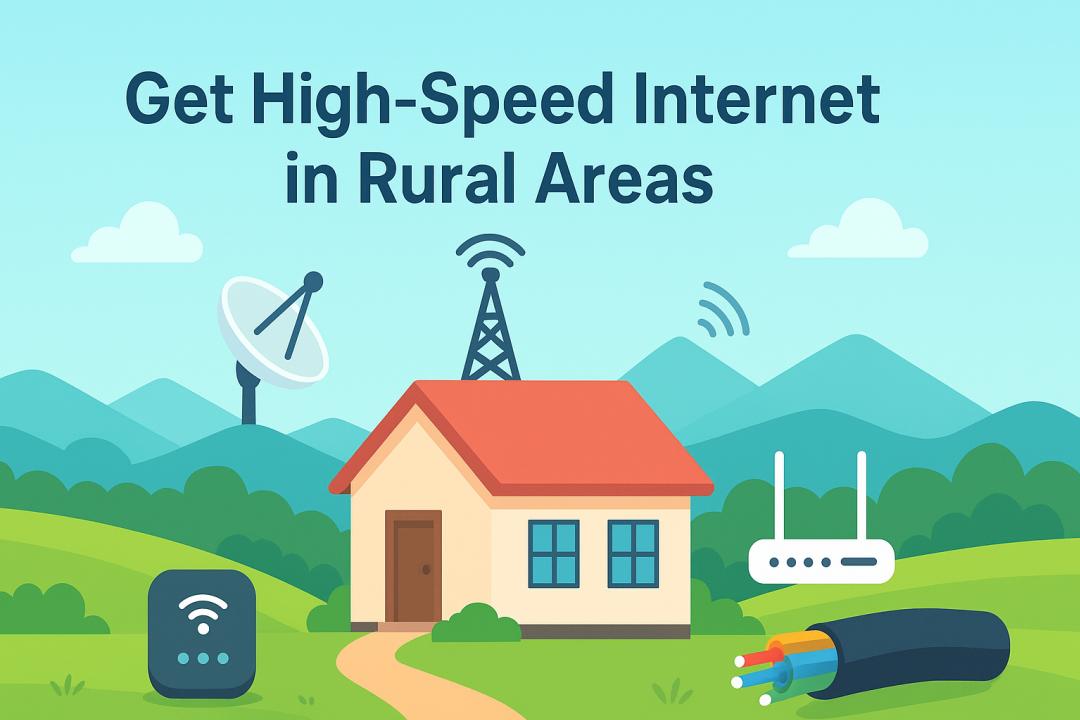
Living in a rural area has its benefits, like peaceful surroundings, open spaces, and a slower pace of life. However, staying connected can quickly become frustrating. Slow speeds, frequent disconnections, and limited service options make working, streaming, or even browsing the web a daily struggle.
So, how can you get fast and reliable internet in rural areas? The good news is that technology has improved significantly. Whether you’re working from home, running a small business, or trying to watch your favorite show, there are several effective ways to access dependable internet, no matter where you live.
Let’s explore the 10 best ways to get reliable internet in rural areas, along with tips on how to choose the right option for your needs.
1. 5G Home Internet – Fast, Wireless, and Expanding
If 5G coverage has reached your area, you’re in luck. 5G home internet is one of the fastest and most reliable options available in rural areas. It uses cellular towers to send high-speed data directly to your home through a wireless receiver or router.
Why it’s great:
- Speeds range from 100 Mbps to 1 Gbps, depending on coverage.
- No cables or phone lines required.
- Easy, self-install setup with minimal equipment.
Providers like T-Mobile Home Internet, Verizon 5G Home, and AT&T Internet Air are rapidly expanding, delivering fast, low-latency connections to rural regions that previously had limited options. If your cell phone has a strong 5G signal, this option will likely work well for you.
2. 4G LTE Internet – Reliable and Widely Available
For areas where 5G isn’t available yet, 4G LTE internet is still a solid choice. It operates through existing cellular towers, similar to your smartphone, but with specialized routers designed for better reception.
Why it’s effective:
- Available in more rural areas than 5G.
- Delivers steady speeds of 25–100 Mbps.
- Ideal for streaming, video calls, and browsing.
Providers like UbiFi, Nomad Internet, and other LTE-based ISPs use major carrier networks such as AT&T, Verizon, or T-Mobile to deliver high-speed service where cable or fiber lines are not available. This option works well for rural homeowners, RV travelers, and remote workers.
3. Fixed Wireless Internet – A Stable, Tower-to-Home Solution
Fixed wireless internet connects mobile data with wired connections. It relies on a nearby tower that sends a direct wireless signal to a small antenna installed on your home.
What makes it reliable:
- Consistent speeds (25–250 Mbps) with low latency.
- Doesn’t rely on cell towers or wired infrastructure.
- Suitable for homes within a few miles of a provider’s tower.
Companies like Rise Broadband and Nextlink lead in fixed wireless coverage across the U.S., especially in small towns and semi-rural communities. If you live within 10 miles of a provider’s tower, this option can provide excellent performance.
4. Satellite Internet – Available Almost Anywhere
If you live off the grid or deep in the countryside, satellite internet may be your only choice. Modern satellite services have significantly improved, offering better speeds and reliability.
Why it’s worth considering:
- Works virtually anywhere in the U.S.
- No reliance on ground-based infrastructure.
- Ideal for extremely remote areas.
Starlink, operated by SpaceX, is currently at the forefront with low-earth orbit satellites that provide faster speeds ranging from 50 to 250 Mbps and lower latency than older satellite networks like HughesNet and Viasat. Although satellite internet can be affected by weather and has higher latency, it remains a key option for those far from any cell tower or wired connection.
5. DSL Internet – Traditional but Still Useful
DSL may not be the latest technology, but in some rural towns, it’s still a reliable choice. It runs on standard telephone lines and can offer speeds from 10 Mbps to 100 Mbps, depending on your distance from the provider’s hub.
Pros:
- Reliable connection with decent stability.
- Usually more affordable than satellite.
- Available in many small towns.
If you're within the range of providers like Frontier, CenturyLink, or Windstream, DSL could provide a budget-friendly way to stay online. It’s not super fast, but for browsing, email, and standard definition streaming, it works fine.
6. Fiber Internet – The Gold Standard for Speed
While fiber is still uncommon in deeply rural areas, it's slowly expanding due to government broadband initiatives and local cooperatives. Fiber-optic internet delivers unmatched speed and reliability, often exceeding 1 Gbps.
Why it’s ideal:
- Virtually no lag or buffering.
- Perfect for streaming, gaming, and remote work.
- Usually includes unlimited data.
If your rural community has fiber coverage or will soon, consider it the best long-term investment for your home or business. Check with providers like AT&T Fiber, Frontier Fiber, or your local ISP.
7. Mobile Hotspots – A Portable Connection
When nothing else works, a mobile hotspot can be a lifesaver. These small devices connect to 4G or 5G networks, sharing the signal with your laptop or other devices through Wi-Fi.
Why it’s helpful:
- Great for temporary setups or travel.
- Can serve as backup during outages.
- Works anywhere there’s cell service.
You can use a dedicated hotspot device or even your smartphone, if your carrier allows it. While it's not meant for heavy streaming or multiple users, it’s a reliable short-term solution.
8. Community Broadband or Co-Op Internet
In some areas, local cooperatives or municipalities have stepped up to offer broadband access where big companies won’t. These community internet projects are usually funded by grants and provide affordable, high-speed service to residents.
Advantages:
- Locally owned and operated.
- Often more affordable than major ISPs.
- Focused on long-term service quality rather than profits.
If your area has a rural broadband co-op, consider supporting it as it can improve infrastructure and give you more control over your internet access.
9. Boost Your Existing Connection
Sometimes the best solution is to improve what you already have. You can boost your signal strength and internet performance with affordable tools.
Tips to boost your rural internet:
- Install an external antenna or signal booster.
- Place your router near windows or higher areas for better reception.
- Use Wi-Fi extenders for large properties.
- Limit background downloads and smart devices that eat bandwidth.
These small tweaks can significantly enhance speed and reliability, especially for LTE and fixed wireless setups.
10. Combine Multiple Connections
For the most reliable service, consider using two internet sources, creating a hybrid setup. Many rural users combine LTE or fixed wireless as their main connection with satellite or DSL as a backup.
Why it works:
- Ensures uptime even during network outages.
- Balances speed and reliability.
- Ideal for home offices and online businesses.
A backup connection can make all the difference when internet stability is critical for work or communication.
Final Thoughts
Getting reliable internet in rural areas doesn't have to be impossible anymore. With the rise of 5G, fixed wireless, and satellite services, staying connected is now achievable for almost everyone. The key is to find what works best for your location—consult coverage maps, test signal strength, and feel free to mix solutions if necessary.
Whether you’re streaming, working, or staying in touch with loved ones, a stable connection can greatly improve your rural life>
FAQs: FAQs: Best Ways to Get Internet in Rural Areas
Q1. What is the best internet option for rural areas?
The best rural internet options include 5G home internet, LTE, fixed wireless, and satellite. The right choice depends on your location, signal strength, and data needs.
Q2. Can I get high-speed internet in a remote location?
Yes! Services like Starlink and LTE-based providers such as UbiFi now offer high-speed connections to remote and underserved areas that previously had no access.
Q3. Which is better for rural areas — satellite or fixed wireless?
If you have line-of-sight access to a nearby tower, fixed wireless usually provides faster speeds and lower latency. Satellite is better for extremely remote or off-grid homes.
Q4. How can I improve my rural internet speed?
You can boost performance by using a signal booster, external antenna, or Wi-Fi extender, and positioning your router where it gets the strongest signal.
Q5. Are there government programs that help with rural internet access?
Yes. Programs like the FCC’s Affordable Connectivity Program and state-funded broadband initiatives help expand high-speed internet to rural and low-income communities.