As Bangalore continues to evolve into one of India’s largest technology and
cloud hubs, enterprises are increasingly adopting Cisco ACI (Application
Centric Infrastructure) to modernize their data center networks. With rapid
growth in hybrid cloud environments, disaster recovery needs, and distributed
workloads, ACI Multi-Site has become a popular architectural choice. Many
professionals searching for CCIE Data Center Bangalore now aim
to specialize in ACI Multi-Site designs due to their rising demand across MNCs,
service providers, and enterprise data centers in the city.
This blog explores the technical foundations, deployment models, and
real-world use cases of Cisco ACI Multi-Site in Bangalore-based data
centers—presented in a clear, neutral, and SEO-optimized manner.
What Is Cisco ACI Multi-Site?
Cisco ACI Multi-Site is an advanced architecture that interconnects multiple
ACI fabrics while maintaining independent control planes and separate APIC
clusters. It provides:
·
Enhanced scalability
·
High availability across physical locations
·
Unified policy governance
·
Disaster recovery capabilities
·
Application mobility across sites
In Bangalore—where enterprises often maintain multiple data center locations
(Electronic City, Whitefield, Manyata Tech Park, and nearby regions)—Multi-Site
offers the flexibility and resilience required for distributed IT operations.
How Multi-Site Differs from Other ACI Deployment Models
To understand ACI Multi-Site clearly, it's essential to differentiate it
from similar architectures:
1. ACI Multi-Pod
·
Single APIC cluster
·
A common control plane
·
Ideal for campus-scale fabrics within a metro
city
2. ACI Multi-Site
·
Independent APIC clusters
·
Separate control planes
·
Dedicated Inter-Site Network (ISN)
·
Best for geographically separated sites or
large-scale enterprise networks
3. ACI Remote Leaf
·
Lightweight architecture
·
Ideal for remote offices requiring ACI-based
connectivity
In Bangalore’s context, Multi-Site is particularly valuable for enterprises
operating multiple large data centers for redundancy and workload distribution.
Key Components of ACI Multi-Site Architecture
A Multi-Site deployment involves several essential components:
1. APIC Clusters
Each site maintains its own APIC controller cluster, ensuring:
·
Independent fabric control
·
Localized security and policy enforcement
2. Spine Nodes + ISN
Backbone
ACI spines connect to an Inter-Site Network (ISN) that carries overlay
traffic between sites. ISN can be:
·
MPLS WAN
·
Dedicated L3 backbone
·
ISP-managed service
3. Multi-Site Orchestrator
(MSO)
Also called NDO – Nexus Dashboard Orchestrator, MSO
manages:
·
Centralized templates
·
Global policies
·
Tenant configurations
·
Inter-site networking
In Bangalore, MSO enables enterprises to manage multiple DCs deployed across
neighboring tech parks effortlessly.
Benefits of ACI Multi-Site for Bangalore Businesses
1. Business Continuity and High
Availability
Bangalore’s large IT enterprises often require zero downtime. Multi-Site
ensures:
·
Seamless application mobility
·
Geo-redundancy
·
Policy consistency across sites
2. Scalable Multi-DC
Architecture
Enterprises with rapidly growing workloads—especially in fintech, SaaS, and
e-commerce—benefit from:
·
Distributed fabrics
·
Consistent policy management
·
Simplified scale-out architecture
3. Centralized Policy
Control
Instead of managing each DC separately, MSO enables:
·
Unified tenant policy
·
Centralized templates
·
Automated configuration propagation
4. Support for Hybrid Cloud
Integrations
As Bangalore companies migrate toward hybrid cloud, ACI Multi-Site supports:
·
AWS, Azure, and GCP cloud APIC
·
Secure inter-site connectivity
·
Governance across cloud + on-prem DCs
5. Faster Disaster Recovery
(DR)
With multiple DCs around Bangalore, Multi-Site enables:
·
Faster failover
·
Synchronous and asynchronous replication
·
Application-level resilience
Common Use Cases in Bangalore Data Centers
1. Dual Data Center Strategy
Many large enterprises in Bangalore operate at least two major data centers
for resilience—Multi-Site provides unified control.
2. Cloud + On-Prem
Connectivity
Companies using Azure Bengaluru region or AWS Mumbai region connect cloud
APIC with local DCs.
3. Multi-Tenant SaaS
Platforms
Startups running large SaaS infrastructures use Multi-Site for tenant
isolation and unified policies.
4. Financial Sector High
Availability
Fintech companies use Multi-Site to ensure low latency and continuous
operations.
Technical Considerations for Deploying ACI Multi-Site
1. Inter-Site Network (ISN)
Requirements
·
Must support IP reachability between spines
·
Must maintain MTU > 1550
·
Should support low-latency transport
2. Template Design in
MSO/NDO
Proper template hierarchy helps manage:
·
Tenants
·
VRFs
·
BDs
·
Contracts
·
EPGs
3. Policy Replication
Strategy
Decide what gets stretched across sites:
·
VRFs and BDs (stretched or localized?)
·
EPGs and contracts
·
Security policies
4. Traffic Flow Analysis
Understanding east-west vs. north-south traffic is essential to avoid:
·
Suboptimal routing
·
Excessive inter-site bandwidth usage
Challenges in Multi-Site Deployments
Despite its benefits, Multi-Site brings certain challenges:
·
Complexity in design
·
Inter-Site latency issues
·
Template misconfiguration risks
·
Need for skilled engineers
·
Troubleshooting across fabrics
This is why Bangalore companies frequently hire engineers with advanced ACI
knowledge or CCIE-level expertise.
Why ACI Multi-Site Skills Are Valuable in Bangalore
Demand for ACI-skilled professionals is rising due to:
·
Large-scale ACI deployments in MNCs
·
Cloud integrations requiring policy-driven
networks
·
Data center modernization initiatives
·
Automation-first strategies
Professionals with Multi-Site expertise often move into:
·
DC Architect roles
·
Senior ACI Engineer roles
·
SDN Consultant positions
· Hybrid Cloud Network Architect roles
Conclusion
Cisco ACI Multi-Site has become a core architecture for Bangalore’s
expanding data center ecosystem, offering scalability, unified policy control,
and high availability. As enterprises operate multiple data centers across the
city and increasingly adopt hybrid cloud models, Multi-Site skills are in high
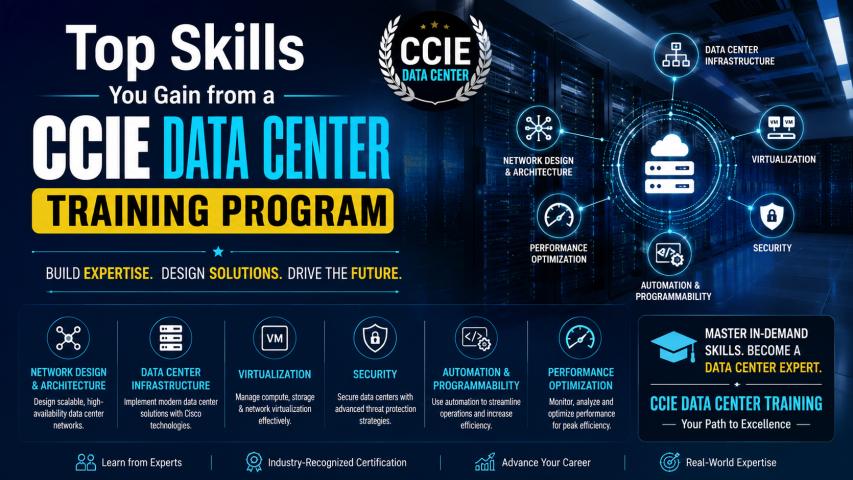
demand. In conclusion, mastering ACI Multi-Site—supported by expert-level
learning and structured guidance through CCIE Data Center Training—positions
professionals for strong career growth in Bangalore’s competitive tech
landscape.