As Bangalore rapidly expands its digital footprint across fintech, SaaS, IT
services, and enterprise cloud sectors, the need for secure, scalable, and
multi-tenant data center architectures has never been greater. Cisco ACI
(Application Centric Infrastructure) has become a preferred solution for modern
Bangalore enterprises due to its policy-driven architecture and ability to
support multiple tenants securely and efficiently. With many professionals
searching for CCIE Data Center Bangalore to strengthen their
ACI expertise, understanding how to build secure multi-tenant ACI fabrics has
become essential.
This SEO-optimized, neutral blog explores advanced techniques for designing
multi-tenant ACI environments tailored to the needs of Bangalore’s high-growth
data centers.
Why Multi-Tenant Security Is Critical in Bangalore’s Data Centers
Bangalore hosts a unique mix of:
·
Large IT service delivery centers
·
Multi-client outsourcing operations
·
Cloud-native SaaS enterprises
·
Fintech companies with strict compliance needs
·
Co-location and managed data center environments
These organizations often share infrastructure resources across different
business units, customers, or application teams. Multi-tenancy allows them to
isolate workloads, enforce strong security boundaries, and manage diverse
networks within a single ACI fabric.
Ensuring secure segmentation and controlled communication is vital to
prevent lateral movement, protect sensitive workloads, and meet global
compliance standards.
ACI Multi-Tenant Architecture: A Quick Overview
Cisco ACI supports multi-tenancy through a hierarchical network model
defined by:
·
Tenants – Logical containers
for isolating workloads
·
VRFs (Virtual Routing and Forwarding)
– Routing-level segmentation
·
Bridge Domains (BDs) – Layer 2
forwarding constructs
·
EPGs (Endpoint Groups) –
Policy-driven endpoint classification
·
Contracts – Security rules
defining communication between EPGs
This model ensures strict isolation of network domains while enabling
granular control when communication is required.
Advanced Techniques for Building Secure Multi-Tenant ACI Fabrics
Below are the best practices and advanced methods that Bangalore enterprises
use to secure multi-tenant ACI deployments.
1. Implement Strict Tenant-Level Segmentation
Ensure each tenant has:
·
Independent VRFs
·
Separate bridge domains
·
Unique application profiles
·
Dedicated EPGs
This prevents cross-tenant visibility and ensures applications operate
within isolated boundaries.
Best Practice:
Avoid sharing VRFs across tenants unless absolutely necessary, especially in
fintech or regulated environments.
2. Use Contracts to Enforce Zero-Trust Communication
Instead of allowing any-to-any communication:
·
Use contracts to explicitly define allowed
traffic
·
Apply filters for permitted L4/L7 protocols
·
Enable micro-segmentation within tenants
·
Ensure deny-all is the default posture
Contracts create strict access pathways, ensuring zero-trust security.
3. Enable Micro-Segmentation for Application-Level Security
Micro-segmentation isolates workload tiers such as:
·
Web
·
App
·
Database
·
Logging
·
API
Benefits:
·
Prevents lateral movement
·
Restricts unnecessary traffic
·
Improves threat containment
ACI EPG-based segmentation simplifies policy enforcement across workloads.
4. Use Multi-Site Architecture for Geo-Secure Deployments
Bangalore-based enterprises often run multiple data centers (Whitefield,
Electronic City, Manyata Tech Park, etc.).
Using ACI Multi-Site, organizations can:
·
Maintain tenant segmentation across sites
·
Enforce consistent contracts
·
Support DR and active-active deployments
·
Ensure centralized policy management
This improves resilience while maintaining tenant security.
5. Apply L4-L7 Service Insertion for Advanced Security
Integrate security appliances like:
·
Next-Generation Firewalls (NGFW)
·
Load balancers
·
Intrusion prevention systems
Through service graphs, traffic between EPGs can be steered through these
services for enhanced security.
Common Integrations in Bangalore:
·
Palo Alto
·
F5
·
Check Point
·
Cisco Firepower
This is essential for enterprises with regulatory or compliance-driven
workloads.
6. Utilize RBAC and APIC Security Hardening
Role-based access control ensures that:
·
Tenant administrators only manage their own
domain
·
Global admins maintain oversight
·
Unauthorized personnel cannot modify critical
policies
Additional hardening steps:
·
Enable HTTPS-only access
·
Use Multi-Factor Authentication (MFA)
·
Apply certificate-based access policies
·
Enable audit logs and syslog integration
This ensures operational security for multi-admin environments.
7. Monitor ACI Traffic with Telemetry & Analytics
Bangalore enterprises rely heavily on monitoring tools to ensure security
and visibility.
Enable:
·
ACI integrated telemetry
·
Nexus Dashboard Insights
·
Flow analytics
·
Threshold-based alerts
These tools help detect anomalies, configuration drifts, or suspicious
traffic patterns across tenants.
8. Configure VRF and Tenant-Level Route Leaking Securely
In some use cases, limited cross-tenant communication is required.
Best practices include:
·
Only leaking required subnets
·
Using explicit route target import/export
·
Restricting route visibility
·
Applying contracts to secure communication
This ensures connectivity without compromising isolation.
9. Automate Tenant Deployment with Ansible & Python
Automation reduces human error and improves consistency.
Common automated tasks:
·
Tenant creation
·
VRF and BD provisioning
·
EPG policy deployment
·
Contract enforcement
·
Security baseline configurations
Bangalore companies use automation to scale multi-tenant fabrics rapidly
across multiple locations.
10. Validate Security Posture with Periodic Audits
Enterprises should perform:
·
Policy compliance checks
·
Contract validation
·
Tenant isolation audits
·
Security graph verification
·
API-based drift detection
This ensures a continuously secure ACI environment.
Conclusion
Building secure multi-tenant ACI fabrics is essential for Bangalore’s rapidly
expanding digital ecosystem. By leveraging advanced segmentation techniques,
micro-segmentation, Zero Trust contracts, automation, monitoring, and strong
policy governance, enterprises can deliver scalable and secure infrastructure
for diverse business units and customers. In conclusion, mastering secure
multi-tenant ACI deployments is crucial for engineers aiming to excel in modern
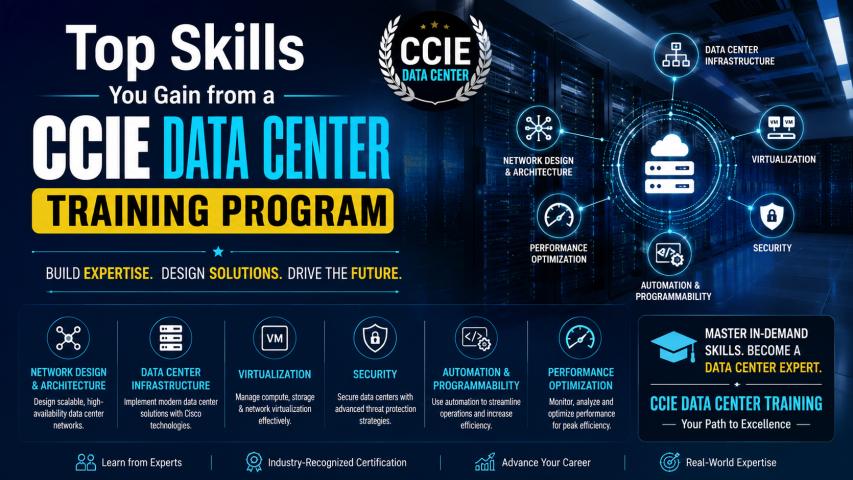
enterprise environments—especially when empowered through advanced CCIE Data Center Training.