Enterprise networks are becoming increasingly complex as organizations adopt
cloud services, automation, remote work, and advanced security frameworks. In
this evolving environment, clear and accurate network documentation is no
longer optional—it is a critical operational requirement. For professionals
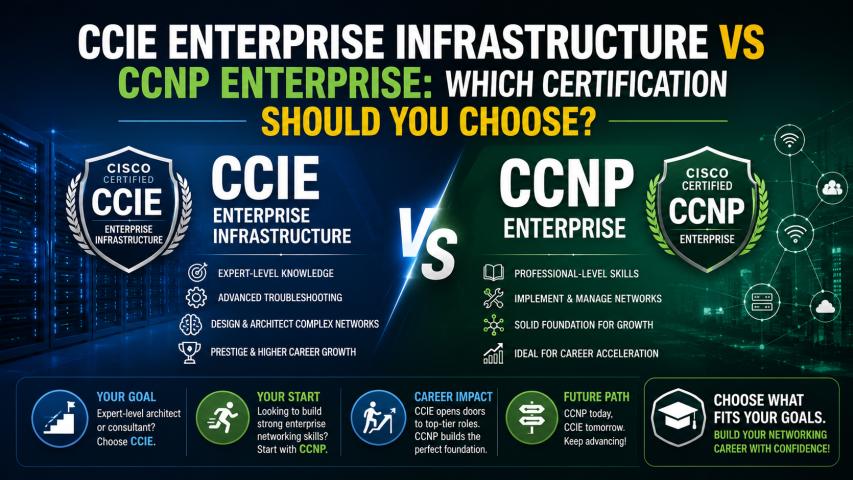
pursuing CCIE Enterprise Infrastructure training, enterprise documentation is a foundational skill that
directly impacts troubleshooting efficiency, security posture, and long-term
network scalability. In fact, modern “CCIE
Enterprise Training,” now emphasizes structured documentation as a
core professional competency rather than a secondary administrative task.
Enterprise network documentation goes far
beyond basic diagrams. It serves as the single source of truth for the entire
network ecosystem and plays a vital role in daily operations, audits, and
disaster recovery.
What Is Enterprise Network Documentation?
Enterprise network documentation is the
organized collection of technical details that describe how a network is
designed, configured, secured, and maintained. It includes logical diagrams,
physical layouts, IP address schemes, device inventories, routing policies,
security rules, and operational procedures.
Good documentation enables engineers to
understand not only what the
network looks like, but also why
it was designed in a particular way. This clarity is essential for long-term
success in large-scale enterprise environments.
Why Network Documentation Is Critical for
Enterprises
Poor documentation leads to longer downtimes,
security risks, and costly operational errors. Well-maintained documentation,
on the other hand, delivers multiple benefits:
·
Faster issue resolution during outages
·
Improved onboarding for new engineers
·
Stronger security compliance
·
Safer network changes and upgrades
·
Better disaster recovery preparedness
·
Reduced dependency on specific individuals
For enterprises that operate 24/7,
documentation becomes a business continuity asset, not just a technical
reference.
Core Components of Enterprise Network
Documentation
1. Physical Network Diagrams
Physical diagrams show the actual placement of
devices, racks, cables, and connections across data centers, branches, and
campus locations. These diagrams are crucial during hardware failures and
equipment replacement.
2. Logical Network Diagrams
Logical diagrams illustrate how the network
functions at the design level. They include:
·
VLAN and VRF segmentation
·
Routing protocol domains
·
WAN and cloud connectivity
·
Redundancy paths
·
Security zones
Logical diagrams help engineers understand
traffic flow and dependency relationships across the enterprise.
3. IP Addressing and Subnet Plans
IP documentation provides visibility into:
·
IPv4 and IPv6 addressing schemes
·
Subnet allocations
·
Gateway mappings
·
Reserved address ranges
Without proper IP documentation,
troubleshooting often turns into time-consuming guesswork.
4. Device Inventory and Asset Records
Every enterprise network should maintain a
centralized inventory of:
·
Routers, switches, firewalls, and wireless
controllers
·
Device models and serial numbers
·
Software versions
·
License details
·
Support contract status
This information is essential for lifecycle
management and audit compliance.
5. Configuration Backups and Version Control
Accurate configuration documentation ensures
that:
·
Devices can be rapidly restored after failures
·
Unauthorized changes are detected
·
Configuration drift is controlled
·
Compliance audits are simplified
Modern best practices also integrate
configuration management with automation and version control systems.
Best Practices for Enterprise Network
Documentation
1. Standardization Across the Organization
Documentation must follow consistent
formatting, naming conventions, and version controls across all departments and
locations. Standardization reduces confusion and allows any engineer to
understand the environment quickly.
2. Keep Documentation Updated in Real Time
Outdated documentation is often worse than no
documentation. Enterprises should implement processes that ensure documentation
is updated immediately after:
·
Network upgrades
·
Policy changes
·
Security updates
·
New branch deployments
·
Cloud integrations
Automation tools can assist by syncing
real-time data into documentation repositories.
3. Maintain Centralized and Secure Access
All network documentation should be stored in
centralized platforms with:
·
Role-based access control
·
Version history
·
Audit logging
·
Secure backups
This prevents data loss and unauthorized
access while ensuring global availability for authorized teams.
4. Separate Design Documentation from
Operational Guides
Enterprise documentation should be categorized
into:
·
High-level architecture documents
·
Detailed implementation guides
·
Daily operational runbooks
·
Incident response procedures
This layered approach allows different teams
to access the information most relevant to their responsibilities.
5. Integrate Documentation with Security and
Compliance
Documentation must support compliance with
industry standards and regulatory frameworks. This includes:
·
Access policies
·
Logging requirements
·
Encryption standards
·
Change management records
Well-structured documentation simplifies
audits and reduces compliance-related risks.
Role of Documentation in Enterprise Network
Security
Security teams rely heavily on documentation
to:
·
Identify attack surfaces
·
Enforce access policies
·
Track segmentation boundaries
·
Validate firewall rules
·
Support forensic investigations
In the event of a security breach, accurate
documentation enables faster containment and root cause analysis.
Documentation in the Age of Automation and
AIOps
With the rising adoption of automation and
AI-driven network operations, documentation is also evolving. Modern
enterprises increasingly use:
·
Auto-discovered network inventories
·
API-driven documentation updates
·
Real-time topology mapping
·
Telemetry-based performance records
This shift ensures documentation stays dynamic
and reflects the actual network state at all times.
Why Documentation Skills Matter for CCIE
Professionals
At the CCIE level, engineers are expected to
operate as senior architects and enterprise decision-makers. Strong
documentation skills are essential for:
·
Designing scalable architectures
·
Leading infrastructure migrations
·
Supporting multi-vendor environments
·
Managing hybrid cloud networks
·
Ensuring operational consistency
Expert-level certification environments
increasingly test a candidate’s ability to interpret, validate, and design
around network documentation.
Conclusion
Enterprise network documentation is the
foundation that supports secure operations, efficient troubleshooting,
regulatory compliance, and long-term infrastructure scalability. As enterprise
networks become more software-driven and automation-focused, accurate and
continuously updated documentation becomes even more critical. From physical
diagrams and IP plans to security policies and configuration archives, every
layer of documentation plays a direct role in operational success.
For professionals looking to build
expert-level enterprise design and operational skills, structured documentation
is a must-have competency—and mastering it through the right CCIE Enterprise Training can
significantly accelerate long-term career growth.