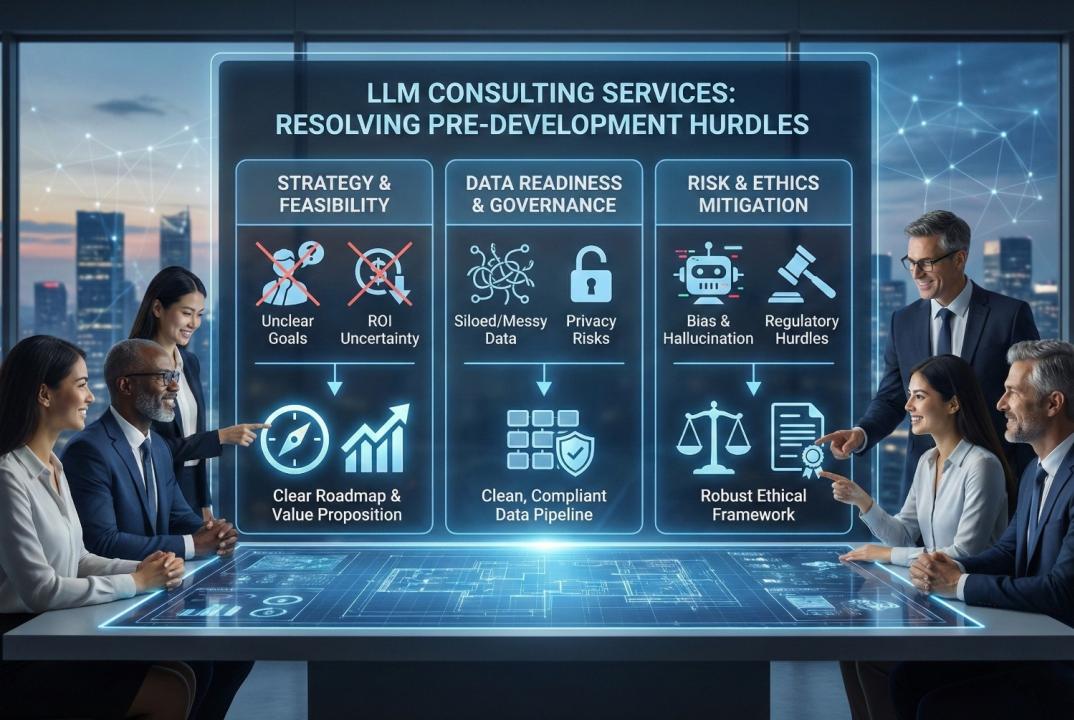
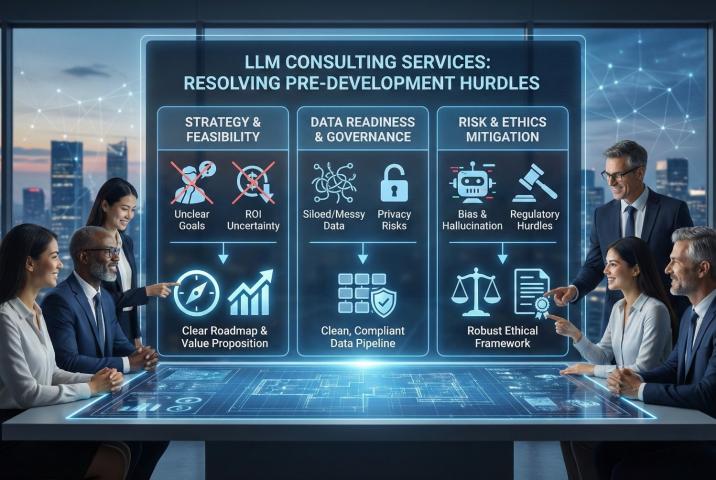
Enterprises and high-growth startups increasingly recognize the value of Large Language Models in improving productivity, reducing manual effort, and supporting data-driven decisions. Yet the path from idea to implementation is rarely straightforward. Many organizations face hidden gaps in data, infrastructure, compliance, user workflows, and internal capabilities. LLM Consulting Services help address these challenges before development begins, creating clarity around what the business needs and how to deliver it. This early preparation ensures that investments in LLM Development Services are well planned, strategically aligned, and grounded in realistic expectations.
Understanding enterprise readiness for development
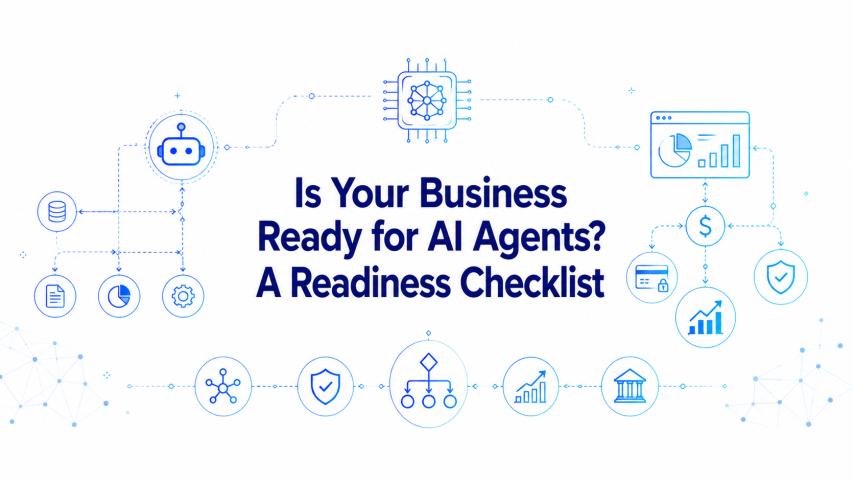
Before moving into technical planning, the first step involves evaluating the organization’s current ecosystem. This process helps leadership understand whether the environment can support advanced AI capabilities. Readiness assessments reveal internal limitations that may slow or complicate development later. Consultants examine how well systems, teams, data streams, and security measures will support the eventual deployment of AI tools.
Several areas are typically assessed during this stage:
- Data availability and accuracy across departments
- Infrastructure maturity in terms of cloud and compute resources
- Level of documentation within technical workflows
- Existing security controls and governance models
- Dependencies between applications
- Access permissions for sensitive information
- Awareness of AI capabilities among internal teams
This step is particularly important for enterprises exploring Custom LLM Development, as the level of readiness directly influences feasibility. The insights gained from these assessments allow teams to avoid rushed architectural decisions and create a structured roadmap that reduces operational risks.
How consultants help clarify business goals and ROI expectations
Many organizations start with broad ambitions such as improving customer service, automating research, or enhancing knowledge management. These goals are valid, but they often lack specific outcomes. Consulting teams help refine these ideas into clear objectives that support measurable results. This clarity prevents misalignment between leadership expectations and what LLM technologies can realistically achieve.
During this phase, enterprises often uncover challenges such as:
- Goals that are too wide to measure effectively
- Unclear ownership of AI initiatives
- Conflicting expectations between departments
- Mismatch between expected accuracy and available training data
- Underestimated cost or resource requirements
- Missing adoption and rollout planning
- Lack of detailed workflows for post-deployment phases
Consultants also evaluate which use cases provide the strongest short-term and long-term returns. Instead of building every idea at once, enterprises get guidance on which areas will produce meaningful outcomes early in the journey. This prioritization helps keep budgets under control and ensures internal teams focus on tasks that support real business value.
Identifying and resolving data challenges early
Data often presents the biggest barrier to any large-scale AI project. Many enterprises have years of accumulated information spread across systems and formats. Some datasets are accurate and well structured, while others are inconsistent or outdated. LLM Consulting Services typically begin with a structured audit to detect these issues. Most organizations discover that their data requires cleaning or restructuring before effective development can begin.
A typical data audit focuses on:
- Structure and formatting of text-based content
- Relevance of datasets to the intended use case
- Level of duplication and noise
- Data sensitivity and compliance requirements
- Need for improved access control
- Potential risks of biased content
- Long-term storage and retrieval requirements
This stage gives teams a clearer understanding of which data sources support their target capabilities. For enterprises seeking custom LLM solutions, data quality directly affects accuracy, safety, and model performance. By resolving these issues before building anything, organizations can reduce errors, limit rework, and accelerate their development timeline.
Defining the right architecture and integration path
Enterprises need clear direction on how to integrate new AI capabilities into their existing systems. Consultants help evaluate various architectural choices and determine whether new models should be trained, fine-tuned, or implemented through retrieval methods. These decisions involve understanding not only technical preferences but also long-term security and maintenance requirements.
During this planning stage, consulting teams work through several considerations:
- Cloud readiness and GPU availability
- Integration points across CRM, ERP, or internal applications
- Authentication and access layers
- Logging and observability needs
- Latency expectations for high-traffic workflows
- Security protocols for internal communication
- Backup and contingency planning
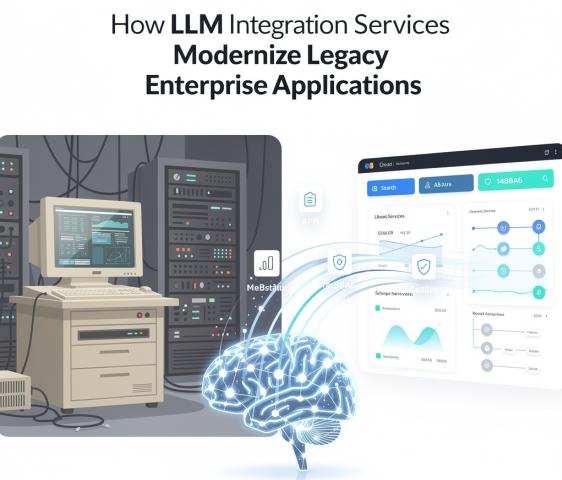
This early architectural planning creates predictability for development teams and informs cost modeling. For organizations exploring LLM Integration Services, these insights determine how new features will interact with existing infrastructure. Enterprises benefit from a technical plan that eliminates guesswork and supports ongoing reliability across departments and user groups.
Forecasting development, scaling, and long-term maintenance
Financial and operational planning are essential to reducing risk. Enterprises often underestimate the long-term effort required to maintain advanced AI features. Consulting helps create transparency around the full lifecycle, including fine-tuning, security updates, version management, and infrastructure scaling.
Consultants typically provide cost and effort projections for:
- Initial development and testing
- Data preparation and cleaning
- Model hosting
- Updates for compliance requirements
- Monitoring and performance tuning
- User adoption and training
- Long-term storage and compute needs
Organizations also gain clarity about potential ROI. Consultants calculate the expected impact of improved productivity, reduced manual work, or enhanced decision support. This information helps leadership set accurate expectations. Enterprises planning to build large-scale LLM-Powered Solutions rely on these projections to understand when benefits will materialize and what level of ongoing commitment will be required.
FAQs
1. What value do LLM Consulting Services provide before development begins?
They help enterprises identify technical, operational, data, and compliance issues early. Organizations receive a clearer path to development, which prevents delays and reduces unnecessary spending. This preparation also supports better decision-making across teams.
2. How does an LLM Development Company guide enterprise adoption?
It provides experience across architecture planning, risk assessment, data evaluation, and workflow analysis. This helps leadership select the right tools and structure for long-term success. Teams also gain visibility into required resources and expected outcomes.
3. Why do enterprises consider Custom LLM Development after consulting?
Some organizations need highly accurate or domain-specific capabilities that off-the-shelf tools cannot provide. Consulting clarifies whether internal data can support this approach and what level of effort is required to achieve consistent results.
4. How do custom LLM solutions support enterprise workflows?
They connect with internal systems, provide more reliable reasoning, and support specialized roles across departments. Many enterprises adopt them when data privacy and performance standards exceed what generic models can offer.
5. What role do LLM Integration Services play in early planning?
They help teams understand system dependencies, data movement, and user journey workflows. Early integration planning reduces future bottlenecks and improves the chances of successful deployment across departments.
Conclusion
Enterprises and well-funded startups benefit significantly from evaluating readiness, defining clear business priorities, and resolving organizational gaps before development starts. LLM Consulting Services provides a structured path that helps teams make informed decisions, allocate resources wisely, and plan for long-term adoption. By addressing data quality, architecture needs, and operational concerns early, organizations reduce risk and improve the likelihood of successful deployment. Businesses ready to move forward can explore LLM Development Services to structure their next steps and begin building AI capabilities with confidence.