
Artificial Intelligence has quickly evolved from a futuristic concept into the backbone of digital transformation worldwide—and Saudi Arabia is one of the fastest-growing AI hubs in the region. Backed by Vision 2030, massive government investments, and a strong push toward innovation, the Kingdom is accelerating its journey to becoming a global AI powerhouse. Businesses across sectors—from oil & gas and healthcare to fintech and logistics—are now adopting AI to increase operational efficiency, reduce costs, and deliver smarter services. As a result, AI software development in Saudi Arabia is booming like never before, creating new opportunities for startups, enterprises, and government entities to innovate and scale.
The demand for custom AI solutions has surged not just because of global tech trends, but because Saudi Arabia has made digital transformation its national priority. With initiatives such as NEOM, the Saudi Data & AI Authority (SDAIA), and large-scale investments in emerging technologies, the country is creating a powerful ecosystem where AI-driven innovation can thrive. For companies planning to build AI software in Saudi Arabia, this is the right moment to enter a market that is accelerating toward a technology-first future.
In this guide, you will learn exactly how AI software development works in the KSA, what regulations you must follow, the cost of development, and how to choose the right AI development partner. If you are planning to build AI-powered applications, this article will give you a complete roadmap.
Understanding Artificial Intelligence Software Development in Saudi Arabia
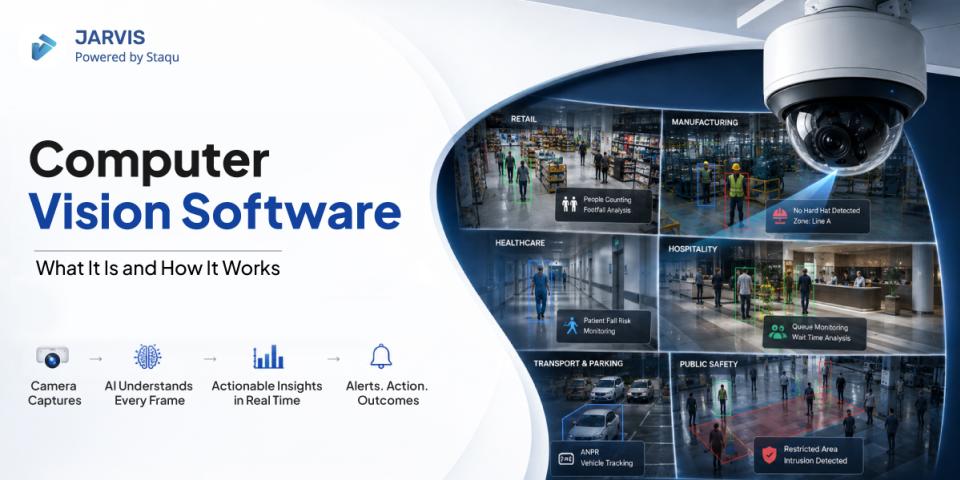
AI software refers to applications that can learn from data, make intelligent predictions, automate decision-making, or mimic human behavior. These include machine learning models, NLP applications, computer vision technologies, predictive analytics systems, and generative AI tools. In Saudi Arabia, AI systems are becoming essential for modern businesses because they directly align with the Kingdom’s mission of economic diversification and digital modernization.
Saudi organizations are focusing on solutions such as smart customer support, AI-based analytics for oil production, fraud detection in fintech, automated medical diagnostics, predictive logistics management, and more. As businesses in KSA collect massive amounts of data, AI helps them extract real value from it.
AI software development in Saudi Arabia is not just about writing algorithms—it combines strategy, data engineering, compliance, and ongoing optimization. Because Saudi businesses operate under strict regulations related to data privacy, cybersecurity, and hosting, AI development must be done with a deep understanding of local legal frameworks.
Whether it is a government entity, an enterprise, or a startup, the goal is the same: build AI solutions that are accurate, scalable, compliant, and aligned with Vision 2030.
Ready to build AI software in Saudi Arabia? Start your project today with expert guidance and proven solutions.
Key Steps to Build AI Software in Saudi Arabia
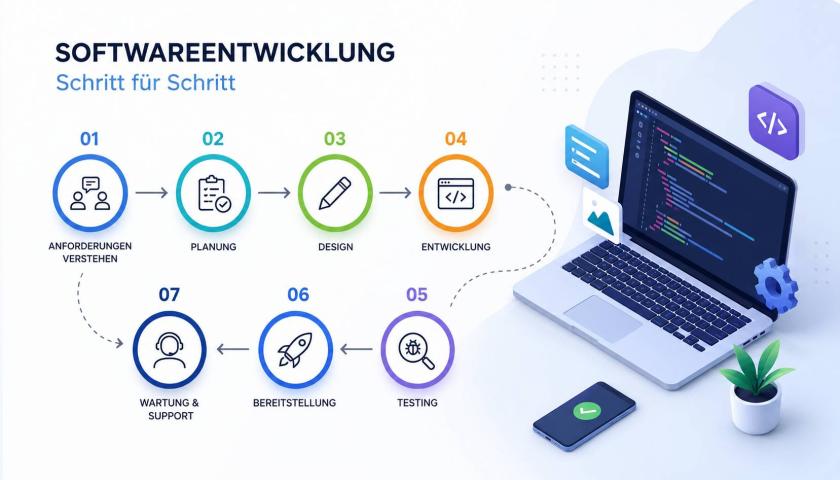
Building AI software is a multi-stage journey that requires technical expertise, business understanding, and regulatory awareness. Here is what the complete process looks like in the KSA landscape:
1. Requirement Analysis & Use-Case Identification
Every AI project begins with a deep analysis of business objectives. Companies must identify the exact outcomes they aim to achieve. In Saudi Arabia, the most common use cases include predictive maintenance, customer insights, process automation, fraud detection, and intelligent resource management.
This stage includes understanding the problem, defining KPIs, assessing feasibility, and choosing what type of AI technology is required. Proper planning ensures the model solves real business challenges rather than being built as a standalone experiment.
2. Data Collection & Preparation
AI systems learn from data. In the KSA market, this stage involves ensuring data is collected ethically, stored locally if required, and aligned with SDAIA's data privacy guidelines. Data engineers then clean, label, and structure the information to make it usable for machine learning.
The quality of the dataset directly influences model accuracy. Companies also integrate external data sources where necessary or generate synthetic data when real datasets are limited.
3. Choosing the Right AI/ML Models
Based on the use case and data, developers select the appropriate model architecture. These may include supervised learning models, unsupervised clustering, neural networks, deep learning models, large language models, or reinforcement learning systems.
Saudi businesses often require hybrid models for high accuracy and reliability because enterprise decisions, financial operations, and healthcare predictions demand near-perfect results.
4. Development, Training, and Testing
Engineers build the AI system and train it using real-time and historical data. The model undergoes continuous iterations to improve its accuracy. Once trained, the system is tested in different scenarios to evaluate performance, detect errors, and prevent bias.
For Saudi industries like healthcare and finance, testing is especially important due to strict security and compliance standards.
5. Deployment & Monitoring
After testing, the AI solution is deployed on the required infrastructure—whether cloud-based (local KSA cloud providers), hybrid, or on-premises. Once in production, monitoring becomes essential. Models must be updated regularly to handle new data patterns and maintain accuracy over time.
Saudi Arabia's AI landscape moves fast, so continuous optimization ensures your software stays future-proof.
Curious how AI can work for your business? Request a demo and see it in action today.
Technical + Legal Requirements You Must Follow in Saudi Arabia
AI software development in Saudi Arabia comes with specific technical and regulatory obligations. These are critical for ensuring compliance, avoiding legal issues, and building trustworthy solutions.
Data Privacy & Protection Laws
Saudi Arabia enforces strict data protection regulations under SDAIA and PDPL (Personal Data Protection Law). Some key requirements include:
- Personal data should not be transferred outside the Kingdom without approval.
- Users must provide explicit consent for data usage.
- Sensitive data (health, biometric, and financial) has additional restrictions.
- Companies must maintain clear documentation of how data is used.
Hosting & Local Storage Requirements
Many AI systems—especially in government, healthcare, and finance—must host their data on Saudi-based servers. This ensures better security, compliance, and sovereignty.
Cybersecurity Guidelines
The National Cybersecurity Authority (NCA) provides frameworks that companies must follow to ensure their AI systems are secure. These guidelines focus on access control, threat detection, encryption, and secure architecture.
Sector-Specific Regulations
Industries like healthcare, fintech, education, and logistics have their own compliance rules. For example:
- Fintech apps must follow SAMA guidelines.
- Healthcare solutions must comply with the Saudi Health Information Exchange (NPHIES) regulations.
- Government AI solutions must align with Vision 2030 and ethical AI standards.
Understanding these regulations is essential for building safe, approved, and scalable AI software in the Kingdom.
Cost of Artificial Intelligence Software Development in Saudi Arabia
The cost of building AI software in Saudi Arabia varies based on complexity, data availability, development time, and team structure. On average:
AI software development in Saudi Arabia ranges from SAR 120,000 to SAR 1,200,000+, depending on:
- Complexity of the model
- Size and quality of datasets
- Integration with existing systems
- Required accuracy levels
- Cloud infrastructure and hosting
- Ongoing maintenance
Simple AI automation tools may cost less, while advanced predictive systems, enterprise analytics, or generative AI solutions fall on the higher end. The more data and customization required, the more the cost increases.
Enterprises also invest in post-launch support, ensuring the AI system keeps learning, improving, and performing accurately over time.
Build AI software in Saudi Arabia without breaking the bank — Get a cost estimate today
Industries in Saudi Arabia are Adopting AI Rapidly
AI adoption is spreading across almost every sector, but these industries are leading the transformation:
Healthcare
AI assists doctors with diagnostics, patient monitoring, medical imaging, and automated hospital workflows. With the rise of digital health, hospitals are prioritizing AI systems for accuracy and patient safety.
Fintech
Fraud detection, credit scoring, automated customer support, cybersecurity tools, and risk modeling are becoming core fintech AI applications.
Oil & Gas
Predictive maintenance, drilling optimization, real-time analytics, and reservoir modeling help oil companies reduce operational costs and improve safety.
Logistics & Transportation
Smart routing, fleet tracking, warehouse automation, and demand forecasting help logistics companies optimize resources and reduce costs.
Retail & eCommerce
AI-driven inventory management, personalized recommendations, chatbots, and dynamic pricing tools are improving customer engagement and sales.
Government & Smart Cities
Saudi Arabia is building AI-driven smart infrastructure, digital public services, and advanced governance systems under Vision 2030.
Choosing the Right AI Software Development Partner in Saudi Arabia
Building AI software requires specialized skills, certified professionals, and deep knowledge of local regulations. Businesses should look for a partner that offers:
- Proven experience in AI and ML project delivery
- Strong portfolio across multiple industries
- Expertise in data engineering, cloud computing, and model development
- Compliance with SDAIA, PDPL, SAMA, and NCA guidelines
- Transparent cost structure and clear timelines
- Ability to offer long-term support and optimization
AI development is not a one-time process. Your technology partner should be capable of updating models, scaling systems, and supporting your digital roadmap for years.
Challenges in Building AI Software in Saudi Arabia & How to Overcome Them
AI adoption in Saudi Arabia is accelerating, but companies still face several challenges:
1. Data Readiness
Many companies lack well-structured digital data. Solution: Conduct data audits and build strong data pipelines before starting AI development.
2. Talent Shortage
The demand for AI experts in KSA is growing faster than the supply. Solution: Work with experienced AI development companies with global expertise.
3. System Integration Issues
Many organizations operate on legacy software that struggles to integrate with AI tools. Solution: Choose partners skilled in API integrations and cloud modernization.
4. Regulatory Compliance
Different industries follow different national guidelines. Solution: Ensure your development partner understands PDPL, SDAIA, SAMA, NCA, and sector-specific rules.
By addressing these challenges early, companies can avoid delays and build scalable, reliable AI systems.
Why Companies Prefer Apptunix for AI Software Development in Saudi Arabia
Businesses in Saudi Arabia are increasingly adopting artificial intelligence to drive efficiency, enhance decision-making, and deliver superior customer experiences. When it comes to developing AI-powered software, selecting the right technology partner is critical for success. Apptunix**** has emerged as a preferred choice for companies across industries due to its proven expertise, innovative solutions, and deep understanding of the local market.
From startups to large enterprises, organizations rely on Apptunix for its ability to deliver end-to-end AI software development services, combining technical excellence, agile delivery, and business-focused strategies. This ensures that every AI solution not only meets functional requirements but also drives measurable business outcomes.
Apptunix’s Key Expertise in AI Software Development
- Machine Learning & Predictive Analytics: Designing algorithms that analyze data patterns and predict future trends.
- Natural Language Processing (NLP): Building AI solutions capable of understanding, interpreting, and responding to human language.
- Computer Vision & Image Recognition: Developing software that can analyze visual data for automation, security, and business insights. Read more on LinkedIn.