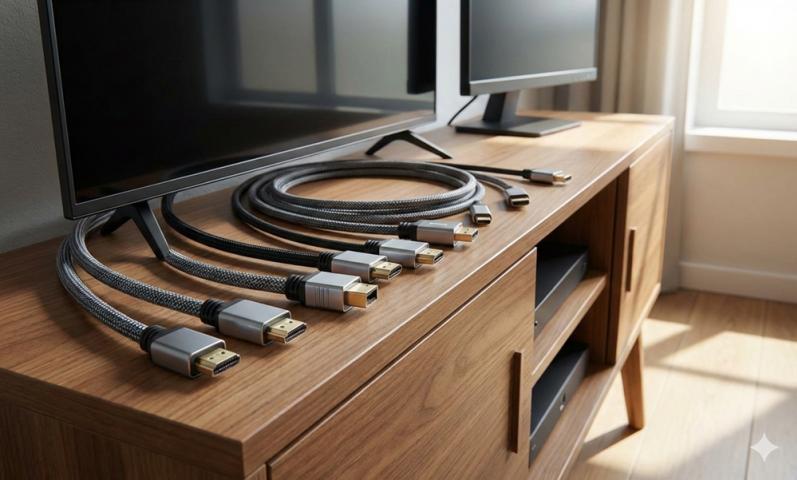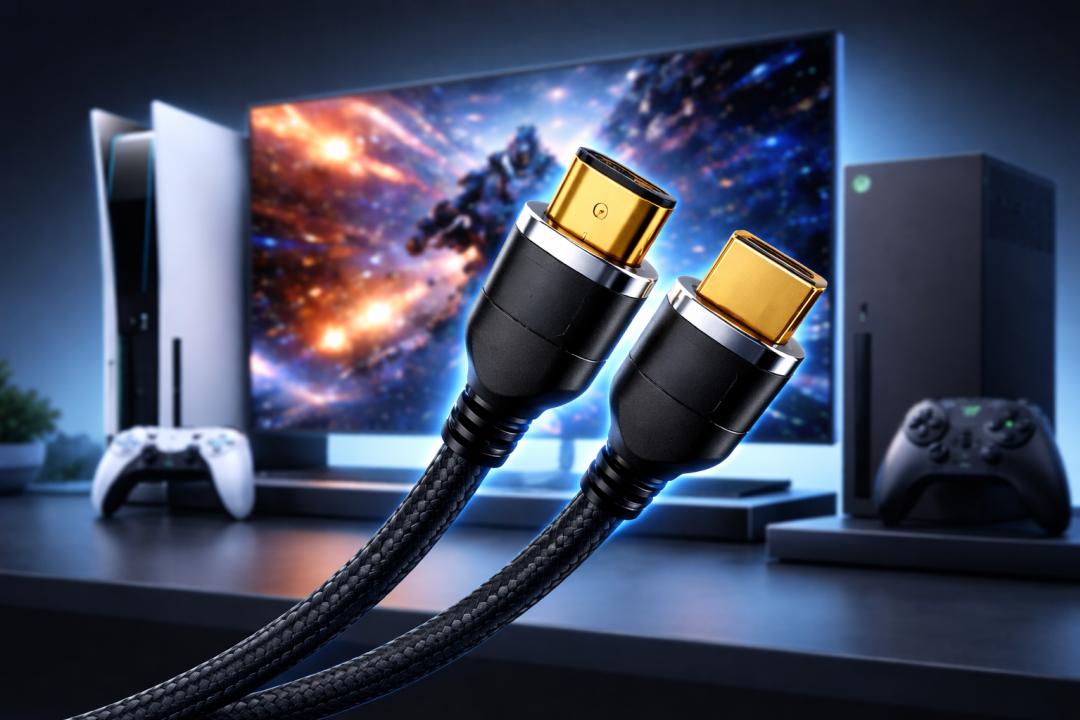
Gaming has evolved dramatically over the past decade. Modern consoles like the PlayStation 5, Xbox Series X, and even the Nintendo Switch deliver stunning visuals and immersive experiences that were unimaginable just a few years ago. However, to unlock the full potential of these powerful machines, you need more than just the console itself. The connection between your console and display matters significantly, and this is where hdmi cables come into play.
Many gamers don't realize that not all hdmi cables are created equal. While you might think any cable will work, using an outdated or low-quality cable can severely limit your gaming experience. Let's explore why modern gaming consoles demand high-speed HDMI cables and what happens when you use the wrong ones.
Understanding HDMI Cable Generations
HDMI technology has undergone several iterations since its introduction in 2002. Each generation brings improved capabilities to handle increasing bandwidth demands. The most relevant versions for modern gaming include HDMI 2.0, HDMI 2.1, and the upcoming specifications.
HDMI 2.0 cables support 4K resolution at 60Hz with HDR, which was adequate for previous-generation consoles. However, modern gaming demands have exceeded these capabilities. HDMI 2.1 cables represent a massive leap forward, supporting 4K at 120Hz, 8K at 60Hz, and bandwidth up to 48Gbps—nearly three times that of HDMI 2.0.
This increased bandwidth is crucial because modern consoles generate massive amounts of visual data every second. Using older hdmi cables creates a bottleneck that prevents your console from transmitting all this information to your display.
Resolution and Refresh Rate Requirements
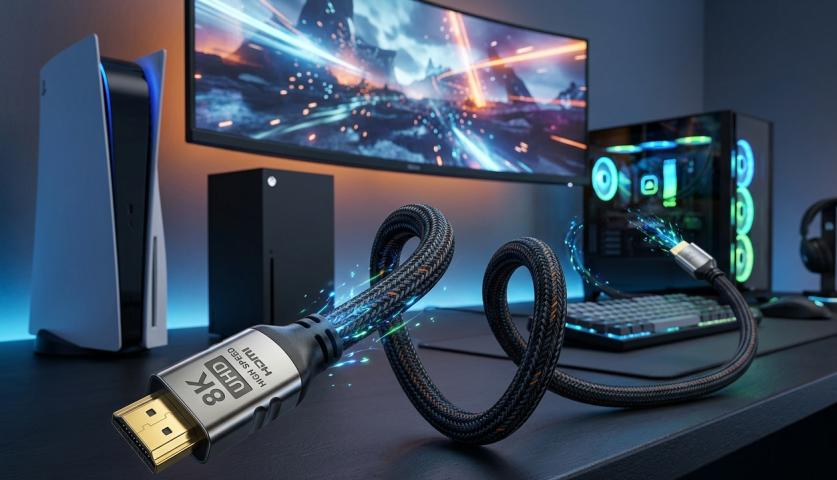
Modern gaming consoles push visual boundaries in unprecedented ways. The PlayStation 5 and Xbox Series X can output games at 4K resolution with refresh rates up to 120Hz. Some titles even support 8K output, though this remains rare.
Higher refresh rates mean smoother motion and reduced input lag, which is critical for competitive gaming. When you're playing fast-paced shooters or racing games, every millisecond counts. A 120Hz display shows 120 frames per second, doubling the 60fps standard that dominated previous generations.
However, transmitting 4K images at 120Hz requires enormous bandwidth. Standard hdmi cables simply cannot handle this data throughput. Without high-speed cables, your console automatically downscales to lower resolutions or refresh rates, meaning you're not experiencing games as developers intended.
HDR and Advanced Color Formats
High Dynamic Range (HDR) technology has transformed gaming visuals by expanding the range of colors and brightness levels displays can produce. Modern games leverage HDR to create more realistic lighting, deeper blacks, and more vibrant colors.
HDR requires additional bandwidth beyond standard resolution and refresh rate demands. Features like HDR10, Dolby Vision, and the wider color gamuts these formats support need high-speed hdmi cables to transmit properly. Using inadequate cables can result in washed-out colors, reduced contrast, or the complete inability to enable HDR features.
Additionally, advanced color formats like 4:4:4 chroma subsampling—which provides sharper text and finer details—require the bandwidth that only high-speed HDMI connections provide.
Variable Refresh Rate (VRR) Technology
One of the most significant gaming innovations in recent years is Variable Refresh Rate technology. VRR synchronizes your display's refresh rate with your console's frame output, eliminating screen tearing and reducing stuttering.
Both PlayStation 5 and Xbox Series X support VRR, which dramatically improves gameplay smoothness, especially when frame rates fluctuate. However, VRR requires HDMI 2.1 specifications to function properly. Without high-speed hdmi cables, you cannot access this feature, missing out on one of modern gaming's most impactful improvements.
Auto Low Latency Mode (ALLM)
Modern gaming consoles support Auto Low Latency Mode, which automatically switches your TV to its lowest-latency picture mode when you start gaming. This feature reduces input lag—the delay between pressing a button and seeing the action on screen.
While ALLM might seem like a minor convenience, it makes a noticeable difference in gaming responsiveness. This feature requires HDMI 2.1 capabilities, meaning older hdmi cables cannot activate it, leaving you manually adjusting TV settings or gaming with higher input lag.
Quick Frame Transport (QFT) and Quick Media Switching (QMS)
HDMI 2.1 introduces additional features that enhance the gaming experience. Quick Frame Transport reduces latency even further by optimizing how frames are transmitted. Quick Media Switching eliminates the black screen that typically appears when switching between different frame rates or resolutions.
These features work behind the scenes to create a more seamless gaming experience, but they require the bandwidth and specifications that only high-speed hdmi cables provide.
Future-Proofing Your Setup
Technology constantly evolves, and gaming consoles typically have seven to ten-year lifecycles. Investing in high-speed hdmi cables now ensures your setup remains capable as games become more demanding and new features emerge.
Game developers continuously push technical boundaries. Titles released later in a console's lifecycle often showcase capabilities not fully utilized at launch. Having proper cables ensures you're ready for these advancements without needing to upgrade your connections later.
Choosing the Right HDMI Cables
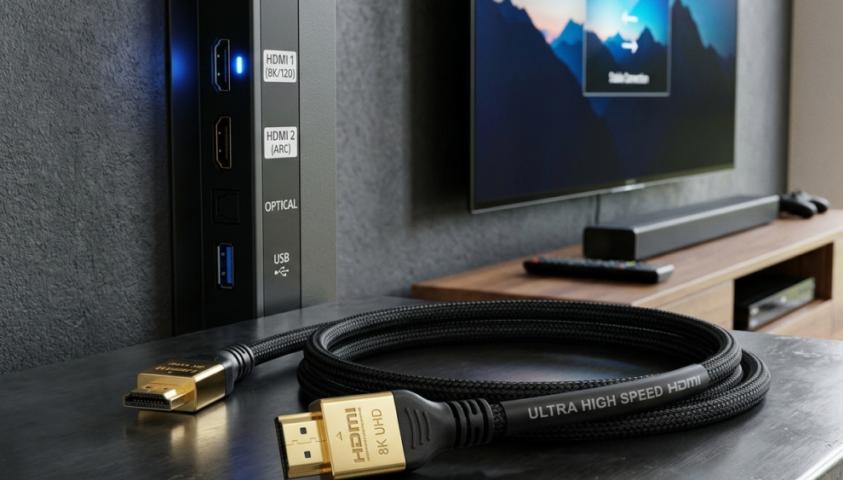
Not all cables labeled "high-speed" actually meet HDMI 2.1 specifications. Look for cables certified by HDMI Licensing Administrator and labeled as "Ultra High Speed HDMI." These cables guarantee 48Gbps bandwidth and support all HDMI 2.1 features.
Cable length also matters. Longer hdmi cables can experience signal degradation, especially at higher bandwidths. For runs longer than six feet, consider certified premium cables or active cables with signal boosters.
You don't need to spend a fortune, but extremely cheap cables often use inferior materials that can't maintain signal integrity at high speeds. Mid-range certified cables typically offer the best balance of performance and value.
Conclusion
Modern gaming consoles represent significant technological achievements, but they need appropriate hdmi cables to deliver their full potential. High-speed HDMI 2.1 cables ensure you experience games at their maximum resolution, refresh rate, and with all advanced features like VRR and ALLM enabled.
While it might seem like a minor detail, the cable connecting your console to your display directly impacts your gaming experience. Investing in proper hdmi cables is essential for anyone serious about getting the most from their modern gaming console.
Souorce: https://www.techrecur.com/why-modern-gaming-consoles-need-high-speed-hdmi-cables/