In the modern digital landscape, organizations rely heavily on cloud
computing to deliver applications, services, and experiences at scale. As
businesses migrate from traditional on-premises systems to cloud environments,
managing infrastructure efficiently while maintaining speed, reliability, and
security has become increasingly complex. This is where cloud infrastructure
management and DevOps practices play a transformative role.
Mastering these disciplines enables
organizations to build resilient systems, accelerate innovation, reduce
operational costs, and respond rapidly to changing market demands. Rather than
functioning as separate concepts, cloud management and DevOps work together to
create a streamlined ecosystem where development, operations, and
infrastructure operate in harmony.
This article explores how organizations can achieve success by mastering cloud infrastructure management and DevOps, examining key principles, benefits, challenges, strategies, and best practices for long-term growth.
Understanding Cloud Infrastructure Management
Cloud infrastructure management involves
overseeing and controlling computing resources delivered through cloud
platforms. These resources typically include virtual machines, storage systems,
networking components, databases, containers, and security services.
Effective management ensures that infrastructure:
·
Remains available and reliable
·
Scales according to demand
·
Operates efficiently
·
Stays secure and compliant
·
Supports business objectives
Unlike traditional environments, cloud
infrastructure is dynamic. Resources can be provisioned or decommissioned
within minutes, requiring continuous monitoring and automation to maintain
optimal performance.
Organizations must also manage multi-cloud or hybrid environments, where systems span multiple providers or combine cloud and on-premises resources. This adds complexity but also offers flexibility and resilience.
The Role of DevOps in Modern IT
DevOps is a cultural and technical approach
that integrates software development and IT operations. Its goal is to shorten
development cycles, improve software quality, and deliver updates continuously
without compromising stability.
Core DevOps principles include:
·
Collaboration between teams
·
Automation of processes
·
Continuous integration and delivery
·
Monitoring and feedback loops
·
Infrastructure as code
By breaking down traditional silos, DevOps enables organizations to release features faster while maintaining system reliability. When combined with cloud infrastructure, it creates a powerful foundation for innovation.
Why Integration Matters
Cloud infrastructure and DevOps are most
effective when implemented together. Cloud platforms provide scalable resources
and services, while DevOps practices ensure those resources are used
efficiently and consistently.
Integrated approaches deliver:
·
Rapid provisioning of environments
·
Automated deployments
·
Consistent configurations
·
Faster recovery from failures
·
Improved system visibility
Without DevOps, cloud environments can become chaotic and difficult to manage. Without proper cloud management, DevOps pipelines may lack the stability needed for reliable delivery.
Benefits of Mastering Cloud and DevOps
1. Faster Time to Market
Automation and continuous delivery pipelines
allow organizations to release new features quickly. Teams can test, build, and
deploy applications multiple times per day, enabling rapid innovation.
Faster releases help businesses respond to customer needs, market trends, and competitive pressures more effectively.
2. Improved Scalability
Cloud environments allow systems to scale
automatically based on demand. Whether handling sudden traffic spikes or
gradual growth, scalable infrastructure ensures consistent performance.
DevOps practices support this by enabling automated scaling policies, container orchestration, and efficient resource allocation.
3. Enhanced Reliability and Availability
Modern applications must remain operational
around the clock. Downtime can lead to revenue loss, reputational damage, and
customer dissatisfaction.
Cloud platforms offer redundancy, load balancing, and failover capabilities. DevOps adds monitoring, incident response automation, and rapid recovery mechanisms, ensuring high availability.
4. Cost Optimization
Efficient cloud management prevents
overprovisioning and resource waste. Organizations can monitor usage, adjust
capacity, and shut down idle resources automatically.
DevOps tools also help optimize build processes, deployment pipelines, and infrastructure utilization, reducing operational expenses.
5. Stronger Security Posture
Security in cloud environments requires
continuous vigilance. DevOps integrates security practices into the development
lifecycle, often referred to as DevSecOps.
Key security benefits include:
·
Automated vulnerability scanning
·
Secure configuration management
·
Identity and access control
·
Compliance monitoring
·
Rapid patch deployment
Embedding security into every stage reduces risks while maintaining development speed.
Core Components of Successful Implementation
Infrastructure as Code (IaC)
Infrastructure as Code allows teams to define
and manage infrastructure using machine-readable files. Instead of manually
configuring servers, environments can be created automatically with consistent
settings.
Benefits include:
·
Repeatable deployments
·
Version control for infrastructure
·
Reduced human error
·
Faster environment setup
·
Simplified disaster recovery
IaC is fundamental to scalable cloud operations.
Continuous Integration and Continuous Delivery (CI/CD)
CI/CD pipelines automate the process of
building, testing, and deploying applications. Code changes are validated
quickly, reducing the risk of defects reaching production.
Continuous delivery ensures that software is always in a deployable state, enabling frequent updates without downtime.
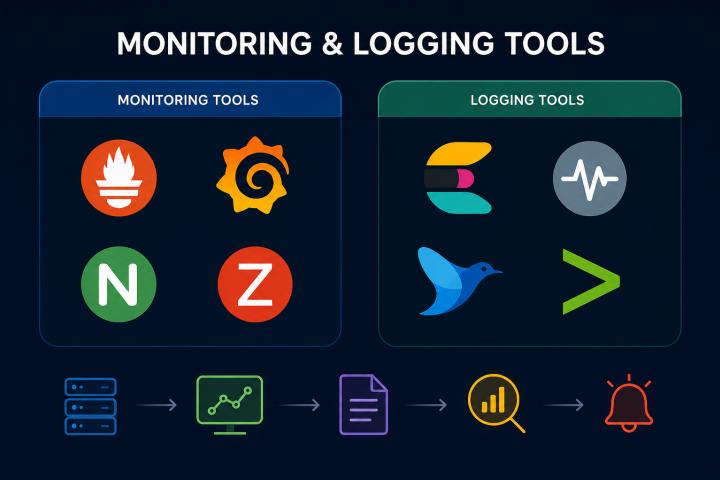
Monitoring and Observability
Visibility into system performance is
essential for proactive management. Monitoring tools track metrics such as CPU
usage, memory consumption, latency, error rates, and network activity.
Observability goes further by providing insights into system behavior through logs, traces, and analytics. This helps teams diagnose issues quickly and optimize performance continuously.
Containerization and Orchestration
Containers package applications with their
dependencies, ensuring consistent behavior across environments. Orchestration
platforms manage container deployment, scaling, and networking automatically.
These technologies improve portability, efficiency, and resilience, making them central to modern cloud strategies.
Managing Multi-Cloud and Hybrid Environments
Many organizations adopt multi-cloud or hybrid
approaches to avoid vendor lock-in and enhance resilience. However, managing
multiple platforms introduces complexity in networking, security, compliance,
and monitoring.
Successful strategies include:
·
Unified management tools
·
Standardized configurations
·
Centralized logging
·
Cross-platform automation
·
Consistent security policies
Effective governance ensures that distributed systems remain manageable and secure.
Cultural Transformation and Team Collaboration
Technology alone cannot deliver DevOps
success. Organizations must also embrace cultural changes that promote
collaboration, transparency, and shared responsibility.
Key cultural shifts include:
·
Breaking down departmental silos
·
Encouraging cross-functional teams
·
Promoting continuous learning
·
Emphasizing accountability
·
Supporting experimentation
When development and operations teams work together toward common goals, productivity and innovation increase significantly.
Challenges and How to Overcome Them
Despite its benefits, mastering cloud
infrastructure and DevOps presents several challenges.
Complexity:
Modern systems involve numerous services and dependencies.
Skill gaps: Teams may lack
expertise in cloud technologies or automation tools.
Security concerns:
Misconfigurations can expose sensitive data.
Cost management: Uncontrolled
resource usage can lead to unexpected expenses.
Resistance to change:
Organizational inertia may slow adoption.
Addressing these challenges requires strategic planning, training, governance frameworks, and gradual implementation.
Best Practices for Long-Term Success
Organizations seeking sustainable success
should adopt the following practices:
·
Automate repetitive tasks wherever possible
·
Implement robust monitoring and alerting systems
·
Use scalable architectures
·
Prioritize security at every stage
·
Maintain documentation and standards
·
Conduct regular performance testing
·
Optimize resource usage continuously
Continuous improvement is key. Cloud and DevOps ecosystems evolve rapidly, requiring ongoing adaptation.
The Future of Cloud and DevOps
Emerging technologies are shaping the next
generation of infrastructure management.
Artificial
intelligence and machine learning are enabling predictive analytics,
automated anomaly detection, and intelligent scaling.
Serverless computing reduces
infrastructure management overhead by abstracting servers entirely.
Edge computing brings processing
closer to users, reducing latency.
Platform engineering is
improving developer productivity through internal platforms.
Organizations that stay ahead of these trends can gain significant competitive advantages.
Real-World Business Impact
Companies across industries — including
finance, healthcare, retail, manufacturing, and entertainment — rely on cloud
and DevOps to deliver mission-critical services.
Successful implementations lead to:
·
Faster product innovation
·
Improved customer experiences
·
Greater operational resilience
·
Global scalability
·
Reduced time spent on manual tasks
In many cases, these capabilities determine whether an organization thrives or falls behind in digital transformation efforts.
Conclusion
Mastering cloud infrastructure management
and DevOps is essential for organizations aiming to succeed in today’s
fast-paced technology environment. Together, these disciplines enable scalable,
reliable, secure, and cost-efficient systems capable of supporting modern
applications and business models.
By integrating automation, continuous
delivery, monitoring, and collaborative practices, organizations can accelerate
innovation while maintaining stability. Although the journey involves technical
and cultural challenges, the long-term rewards — improved performance, reduced
costs, enhanced security, and competitive advantage — make it a strategic
imperative.
As cloud technologies continue to evolve, businesses that invest in mastering infrastructure management and DevOps will be best positioned to adapt, grow, and lead in the digital era.