
In today’s fast-moving digital world, businesses are rapidly shifting toward cloud-based technologies to improve efficiency, scalability, and performance. Traditional infrastructure management methods are no longer sufficient for organizations that need faster deployments, continuous updates, and reliable system performance. This is where modern cloud infrastructure management and DevOps practices become essential.
Cloud computing enables organizations to access computing resources such as servers, storage, databases, and networking over the internet instead of relying on physical hardware. At the same time, DevOps helps development and operations teams work together through automation, collaboration, and continuous delivery practices. Together, these technologies create a strong foundation for modern digital businesses.
Organizations across industries are using cloud infrastructure and DevOps solutions to streamline operations, improve deployment speed, reduce downtime, and deliver better customer experiences. From startups to enterprise-level companies, modern cloud solutions have become a key part of digital transformation strategies.
Understanding Cloud Infrastructure Management
Cloud infrastructure management involves managing and monitoring all cloud-based resources and services used by an organization. It includes handling virtual servers, storage systems, cloud applications, databases, networking, security, and performance optimization.
Modern cloud platforms such as Amazon Web Services (AWS), Microsoft Azure, and Google Cloud Platform (GCP) provide businesses with flexible and scalable infrastructure solutions. However, managing these environments effectively requires proper planning, automation, and monitoring systems.
One of the biggest advantages of cloud infrastructure management is scalability. Businesses can easily increase or decrease resources depending on their requirements without investing heavily in physical hardware. This flexibility helps companies optimize operational costs while maintaining high performance.
Cloud infrastructure management also improves business continuity by providing backup solutions, disaster recovery systems, and real-time monitoring capabilities. Organizations can quickly identify and resolve issues before they impact users or business operations.
What is DevOps?
DevOps is a software development methodology that combines development and IT operations into a collaborative workflow. The primary goal of DevOps is to improve communication, automate repetitive tasks, and speed up software delivery while maintaining high quality and reliability.
In traditional software development environments, developers and operations teams often worked separately, leading to delays, deployment failures, and communication gaps. DevOps eliminates these issues by encouraging collaboration and automation throughout the software development lifecycle.
DevOps practices include continuous integration (CI), continuous delivery (CD), automated testing, infrastructure automation, monitoring, and feedback systems. These processes help organizations release updates faster and more efficiently.
Companies implementing DevOps practices can improve deployment frequency, reduce human errors, and ensure better application stability. This approach has become extremely important for organizations handling large-scale applications, cloud systems, and digital services.
Benefits of Modern Cloud Infrastructure and DevOps
Modern businesses gain several important advantages by implementing cloud infrastructure management and DevOps strategies. One of the biggest benefits is faster deployment cycles. Automation tools allow teams to build, test, and deploy applications quickly without relying on time-consuming manual processes.
Another major advantage is scalability. Cloud environments allow businesses to automatically scale resources according to traffic demands and application workloads. This flexibility helps maintain performance during peak usage periods.
Improved reliability is another significant benefit. Continuous monitoring and automated recovery systems help organizations identify issues early and minimize downtime. Businesses can maintain better uptime and provide smoother customer experiences.
Cost optimization is also a key advantage of cloud infrastructure management. Organizations only pay for the resources they use, reducing unnecessary infrastructure expenses. Automation further reduces operational costs by minimizing manual work.
Security also improves through modern cloud and DevOps practices. Automated security checks, access controls, encryption, and monitoring systems help organizations protect sensitive data and maintain compliance standards.
The Role of Cloud Infrastructure Management & DevOps
As businesses continue to adopt digital transformation strategies, the importance of Cloud Infrastructure Management & DevOps continues to grow. These technologies help organizations manage complex systems efficiently while improving agility, scalability, and operational performance.
Modern enterprises rely on cloud and DevOps solutions for a wide range of applications, including e-commerce platforms, SaaS products, enterprise software, AI systems, mobile applications, and data analytics services. By integrating cloud infrastructure with automated DevOps workflows, organizations can deliver software updates more frequently and respond quickly to market demands.
Businesses also benefit from improved collaboration between development, testing, security, and operations teams. This collaborative environment reduces deployment failures and improves software quality.
As competition increases in the digital market, organizations that adopt modern cloud infrastructure and DevOps practices gain a significant competitive advantage by delivering faster, more reliable, and scalable services.
Popular Tools Used in DevOps and Cloud Management
Several advanced tools help businesses manage cloud infrastructure and automate development workflows effectively. Docker is one of the most widely used containerization platforms that allows applications to run consistently across multiple environments.
Kubernetes is another popular technology used for container orchestration and automated scaling. It helps organizations manage large numbers of containers efficiently.
Jenkins is commonly used for continuous integration and automated software testing. It enables teams to automate development pipelines and deployment processes.
Terraform is a powerful Infrastructure as Code (IaC) tool that helps automate cloud infrastructure provisioning. Ansible is another automation tool widely used for configuration management and server automation.
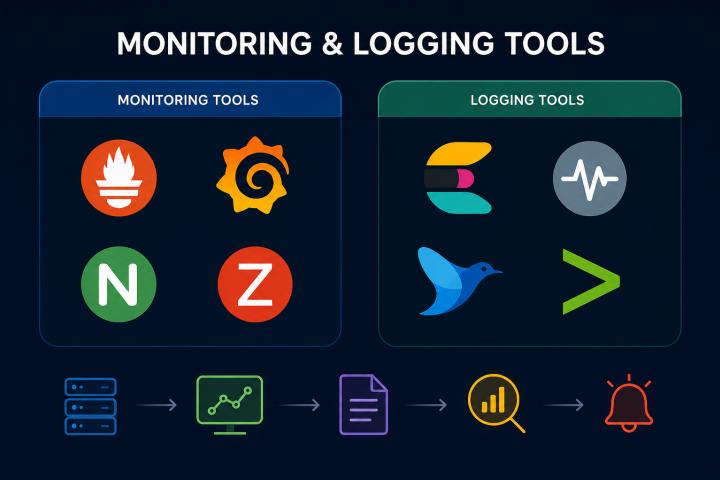
Monitoring tools such as Prometheus and Grafana provide real-time visibility into infrastructure performance and system health. These tools help organizations detect issues quickly and optimize resource utilization.
Importance of Automation in Cloud Infrastructure
Automation plays a major role in modern infrastructure management and DevOps practices. Manual infrastructure management often leads to inconsistencies, delays, and operational errors. Automation eliminates repetitive tasks and improves efficiency across development and operations workflows.
Organizations use automation for server provisioning, configuration management, software deployment, testing, security monitoring, and scaling operations. Infrastructure as Code (IaC) is one of the most important automation practices where infrastructure configurations are managed through code instead of manual setup.
Automation also improves consistency across environments. Development, testing, and production environments can be configured identically, reducing compatibility issues and deployment failures.
By reducing manual intervention, businesses can improve operational speed, reduce downtime, and allow technical teams to focus on innovation rather than repetitive maintenance tasks.
Security Challenges in Cloud Infrastructure
Although cloud computing provides many benefits, organizations must address several security challenges while managing cloud environments. Data breaches remain one of the biggest concerns for businesses handling sensitive customer information and critical systems.
Misconfigured cloud resources can create security vulnerabilities that expose applications and data to cyber threats. Organizations must regularly monitor cloud configurations and implement proper access controls.
Cyberattacks such as ransomware, malware, and distributed denial-of-service (DDoS) attacks continue to target cloud environments. Businesses need strong security monitoring systems and incident response strategies to reduce risks.
Compliance management is another important factor. Organizations must follow industry regulations and data protection standards while maintaining secure infrastructure environments.
Modern DevOps practices often include DevSecOps approaches where security is integrated directly into the development and deployment pipeline. This helps identify vulnerabilities earlier and improve overall security posture.
Future Trends in Cloud Infrastructure and DevOps
The future of cloud infrastructure and DevOps continues to evolve with emerging technologies and advanced automation systems. Artificial intelligence and machine learning are increasingly being integrated into cloud management platforms for predictive analytics, automated monitoring, and intelligent optimization.
Serverless computing is becoming more popular because it allows businesses to run applications without managing traditional server infrastructure. This approach reduces operational complexity and improves scalability.
Edge computing is another growing trend where data processing occurs closer to users and devices, improving performance and reducing latency.
GitOps practices are also gaining popularity by using Git repositories as the central source for infrastructure and deployment management. This approach improves version control, consistency, and collaboration.
Multi-cloud strategies are becoming common among enterprises looking to improve flexibility, reliability, and vendor independence by using multiple cloud providers.
Conclusion
Modern cloud infrastructure management and DevOps have transformed the way businesses develop, deploy, and manage digital systems. By combining cloud computing with automation and collaborative workflows, organizations can improve scalability, deployment speed, security, and operational efficiency.
Businesses that adopt cloud-native technologies and DevOps practices are better prepared to handle changing market demands and evolving customer expectations. These technologies help reduce operational complexity while enabling continuous innovation and faster software delivery.
As cloud computing and automation technologies continue to advance, organizations investing in modern infrastructure management strategies will gain long-term competitive advantages. Whether managing enterprise applications, e-commerce platforms, or large-scale digital services, cloud infrastructure and DevOps remain essential pillars of modern IT success.