The digital world is undergoing a massive transformation. Businesses that
once relied entirely on traditional web technologies—commonly referred to as
Web2—are now exploring the decentralized ecosystem of Web3. This shift is not
just a trend but a strategic move toward greater transparency, security, and
user empowerment.
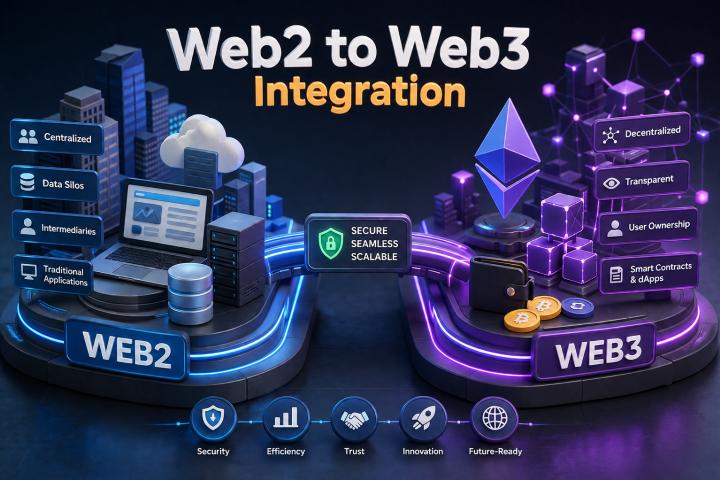
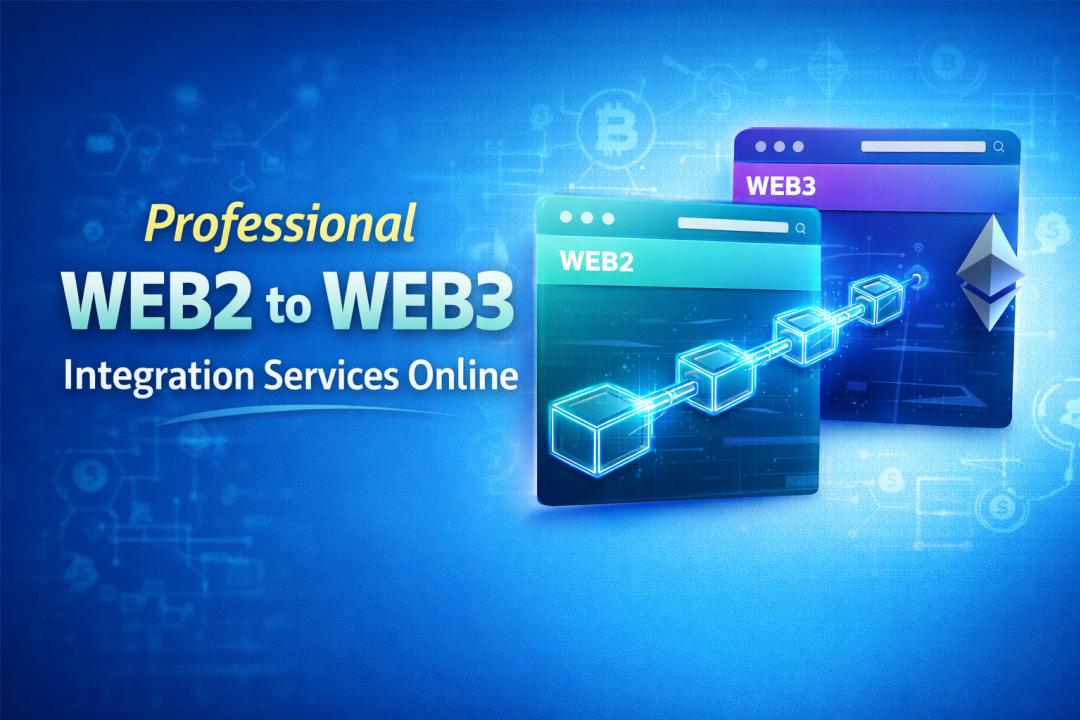
Web2 to Web3 integration services have emerged as a critical solution for organizations aiming to bridge the gap between these two paradigms. By combining the familiarity of Web2 systems with the innovation of Web3 technologies, businesses can unlock new opportunities while maintaining operational continuity.
Understanding Web2 and Web3
What is Web2?
Web2 represents the current version of the
internet, where platforms are centralized and controlled by organizations.
Examples include social media platforms, e-commerce websites, and cloud-based
services. While Web2 offers convenience and scalability, it often lacks
transparency and gives limited control to users over their data.
What is Web3?
Web3 is the next evolution of the internet, built on decentralized technologies such as blockchain. It enables peer-to-peer interactions without intermediaries, giving users ownership of their data and digital assets. Web3 introduces concepts like smart contracts, decentralized applications (dApps), and token-based ecosystems.
Why Businesses Need Web2 to Web3 Integration
Transitioning entirely to Web3 can be complex
and risky for many organizations. Integration services provide a balanced
approach by allowing businesses to adopt Web3 features without abandoning their
existing systems.
Seamless Transition
Integration ensures that businesses can
gradually adopt Web3 technologies without disrupting current operations.
Enhanced Security
Decentralized systems reduce the risk of data
breaches and unauthorized access.
Improved Transparency
Blockchain-based solutions provide a
transparent and tamper-proof record of transactions.
Future-Ready
Infrastructure
Businesses that integrate Web3 capabilities position themselves for long-term growth and innovation.
Key Components of Web2 to Web3 Integration
Blockchain Integration
At the core of Web3 lies blockchain
technology. Integration services connect existing Web2 platforms with
blockchain networks, enabling secure data exchange and decentralized
functionalities.
Smart Contracts
Smart contracts automate processes by
executing predefined conditions. They eliminate the need for intermediaries and
ensure accuracy and efficiency.
Wallet Integration
Digital wallets allow users to store and
manage their digital assets securely. Integrating wallets enables seamless
transactions within Web3 environments.
Tokenization
Businesses can create digital tokens to
represent assets, rewards, or access rights, opening new revenue streams and
engagement models.
API and Middleware
Development
Custom APIs and middleware act as bridges between Web2 systems and Web3 technologies, ensuring smooth communication and functionality.
Benefits of Web2 to Web3 Integration Services
Increased Data
Ownership
Users gain control over their personal data,
enhancing trust and engagement.
Cost Efficiency
By reducing reliance on intermediaries,
businesses can lower operational costs.
Global Accessibility
Web3 enables borderless transactions, allowing
businesses to expand their reach globally.
Enhanced User
Experience
Integration allows businesses to offer
innovative features such as decentralized identity and secure transactions.
Scalability
Modern integration solutions are designed to scale with business growth, ensuring long-term sustainability.
Use Cases Across Industries
E-commerce
Web3 integration enables secure payments,
token-based loyalty programs, and transparent supply chains.
Finance
Decentralized finance solutions allow faster
transactions, reduced fees, and improved accessibility.
Gaming
Blockchain integration introduces play-to-earn
models, digital asset ownership, and enhanced gaming experiences.
Healthcare
Secure and decentralized data management
improves patient privacy and data sharing.
Real Estate
Tokenization simplifies property transactions and enables fractional ownership.
Challenges in Web2 to Web3 Integration
Technical Complexity
Integrating decentralized systems with traditional
platforms requires specialized expertise.
Regulatory Uncertainty
Web3 technologies are still evolving, and
regulations vary across regions.
User Adoption
Educating users about Web3 features can be
challenging.
Scalability Issues
Some blockchain networks face limitations in
handling large transaction volumes.
Security Risks
While blockchain is secure, improper implementation can lead to vulnerabilities.
Role of Professional Integration Services
Professional Web2 to Web3 integration services
help businesses overcome these challenges by providing:
Expert Consultation
Understanding business requirements and
identifying the best integration strategy.
Custom Development
Building tailored solutions that align with
specific business needs.
Security
Implementation
Ensuring robust security measures to protect
data and transactions.
Compliance Support
Helping businesses navigate regulatory
requirements.
Ongoing Maintenance
Providing continuous support to ensure optimal performance.
Steps in Web2 to Web3 Integration Process
1. Requirement
Analysis
Understanding the business model, goals, and
technical requirements.
2. Strategy
Development
Creating a roadmap for integration, including
technology selection and implementation phases.
3. Design and
Development
Building the integration framework, including
smart contracts, APIs, and user interfaces.
4. Testing
Ensuring the system is secure, functional, and
user-friendly.
5. Deployment
Launching the integrated solution in a live
environment.
6. Maintenance and
Updates
Providing ongoing support and updates to keep the system efficient and secure.
Choosing the Right Integration Partner
Selecting the right service provider is
crucial for successful integration.
Experience
Look for a team with proven expertise in both
Web2 and Web3 technologies.
Technical Skills
Ensure the provider has strong knowledge of
blockchain platforms, smart contracts, and APIs.
Customization
Choose a partner who offers tailored solutions
rather than generic approaches.
Security Focus
Security should be a top priority in every
stage of integration.
Support Services
Ongoing support and maintenance are essential for long-term success.
Future of Web2 to Web3 Integration
The integration of Web2 and Web3 is expected
to redefine how businesses operate online. As technology advances, we can
expect:
- Greater adoption of
decentralized applications
- Improved scalability
of blockchain networks
- Enhanced user privacy
and data control
- Increased use of
digital assets and token economies
Businesses that embrace this transition early will gain a competitive edge in the digital marketplace.
Conclusion
Professional Web2 to Web3 integration services
provide a powerful pathway for businesses to evolve in the digital age. By
combining the strengths of traditional web systems with the innovation of
decentralized technologies, organizations can achieve greater security,
transparency, and efficiency.
As the internet continues to evolve, integrating Web3 capabilities is no longer optional—it is a strategic necessity. With the right approach and expert guidance, businesses can successfully navigate this transformation and unlock new opportunities for growth and innovation.