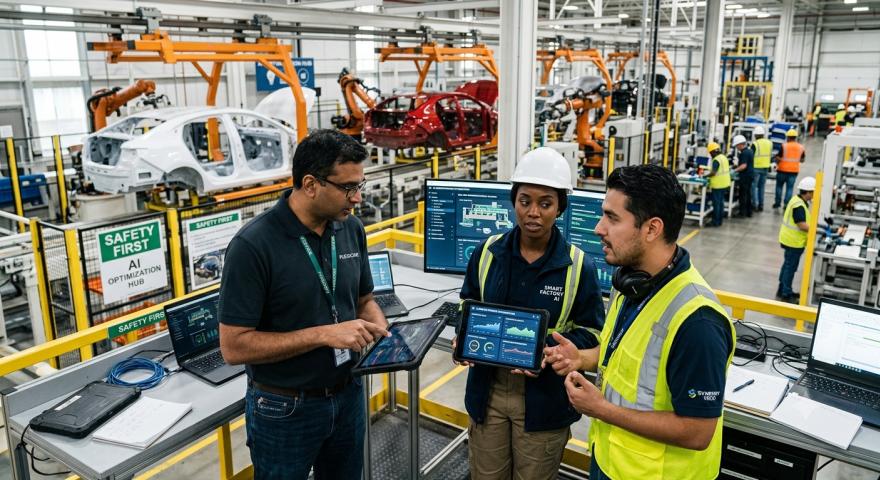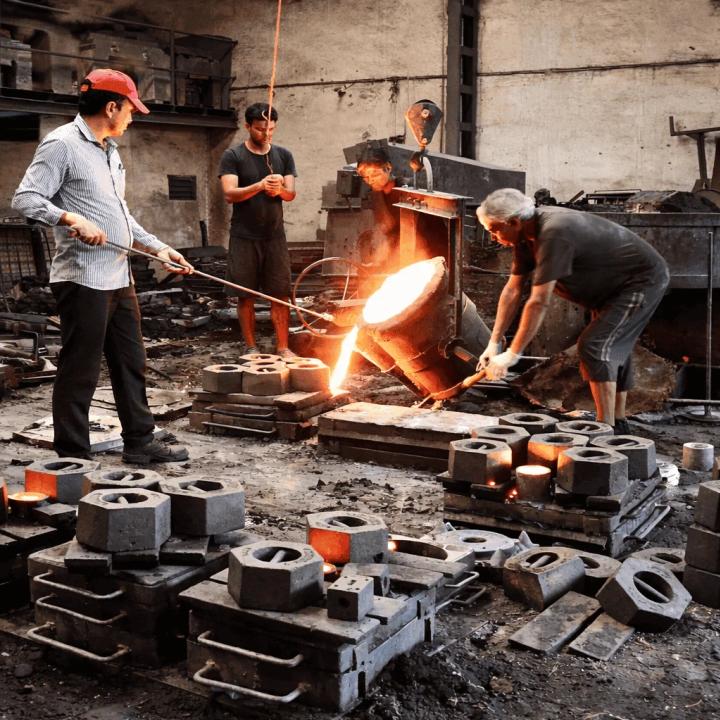
I recall visiting a foundry in Rajkot in 2018, wearing a wet shirt due to the heat and smelling the unique combination of hot sand and molten iron, that I witnessed a floor manager engaging in an intense discussion with the procurement head of a German pump company. The German guy was doubtful. His experience with the previous supplier that failed to keep the tolerances on a 4-ton casing was not good.
However, the manager immediately convinced the German by showing the casting simulation data on his tablet next to the glowing furnace. Gesturing to the thermal junctions, he explained how they had revised the gating system to avoid defects from shrinkage. This skeptical attitude was not only changed; it became a long-lasting partnership.
Here’s how it looks through my eyes - India’s industry thrives on grit shaped by decades, now sharpened by smart tech. Not just legacy, yet not only innovation either. Picture rust-resistant strength meeting laser-focused precision. Rumors spread when buyers mention sourcing tough machinery from there. Curious why more keep returning? That shift didn’t happen overnight. Something deeper pulls them back. Worth noticing.
Why the "Trusted Old" is making a Comeback: the Benefits of Sand Casting
After the arrival of 3D printing and high-precision die casting, the old sand casting method to some extent became the "old man" of manufacturing. However, frankly? For heavy-duty components like turbine housings, large engine blocks or 10-ton industrial valves, you won't find anything better than that.
It's a matter of science. Sand casting enables a higher degree of material diversity and is capable of making parts at a scale that other methods simply cannot achieve. For example, if you want to cast 5, 000 kg of ductile iron, using a pressurized die is not an option. You need the thermal stability and "give" of a sand mold.
That's why Indian Sand Casting Manufacturers have been able to establish a global position in that field. Besides sticking to the traditional ways, they also updated the "grandfather" of methods.
Material Versatility
Just consider the variety. Foundries that handle Grey Iron for vibration damping of machine tools as well as Steel Alloys for high-pressure oil and gas applications belong to India. Also, I have met facilities in Coimbatore that can easily switch between different grades of stainless steel and specialized heat-resistant alloys with such accuracy that a chemist would be impressed.
The big question: why India? The mixture of technological advancement and tradition
Nowadays, it is not only about labor costs. If you still think that the only reason to source from India is the cheap price of the invoice, you are missing the forest for the trees. The real "secret recipe" is the ecosystem.
1. Digital Twins and Simulation Tools
One thing stands out lately - how casting firms across India now run simulations for metal hardening. Most top sand foundries rely on artificial intelligence tools to predict how liquid metal will cool, long before any mold gets shaped.
This isn’t just chasing gadgets. It’s more like solving real problems using tools that actually help. What matters comes down to purpose, not the newest gadget on the shelf. Real value hides in how things work together quietly. The point shifts when results matter more than shiny parts
Fewer flaws mean costly waste from testing guesses has stopped being a problem.
First tries often work. Sometimes a second go fixes things. Getting there quickly happens more than you think.
Lots of extra cash stays in your pocket when less stuff gets thrown away. Profits grow because scraps shrink over time.
2. The "Cluster" Factor
India's foundry sector is not here and there; it is well clustered. Auto parts manufacturing in Rajkot, heavy engineering in Kolhapur, and specialized castings in Belgaum are the features of the industry map.
Apart from that, these clusters contribute to the development of a huge labor force that is highly skilled along with making the availability of the best subcontractors easier. For a foundry, if a certain heat treatment or a top-level NDT lab is required, it is usually just a few kilometres away. This is a one-of-a-kind speed-to-market advantage that is really difficult to copy.
A step-by-step guide: How to Examine Your Sourcing Partner
Ok, so you are sort of persuaded. You now want to enter the Indian market. How do you actually make sure you are picking the right one? Here is my "sourcing survival guide" to India.
Step 1: Go Further Than ISO 9001
Of course, all foundries nowadays have their ISO 9001 certification. This is, simply put, the "entry ticket" in present day manufacturing. But if you are engaged in the heavy-duty sphere, you should hunt for:
IATF 16949: If you are in the automotive sector in any way.
PED (Pressure Equipment Directive): A must for valves and pumps.
NABL Accreditation: This is to ensure that their chemical analysis reports conducted in the in-house lab are genuine.
Step 2: The "Sand Plant" Inspection
Despite the fact that you should look at the furnace during the site visiting, you should, of course, look at the sand too. Is the sand preparation system automated? Do they have sand moisture control? I stayed at a shop once where "testing" the sand was done by hand, in the sense that they were "feeling" the sand to check moisture. Well, I get it, that is "craftsmanship, " but for a production volume of 2, 000 units, I want a digital sensor. You will want to witness the automated sand mullers that produce the identical mold time after time.
Step 3: The Capacity and Casting Weight
Don't just ask about their "total capacity." Inquire about the maximum weight of the single piece they can manufacture. I have already encountered cases when buyers were surprised at the fact that the foundry's crane capacity or furnace size was not great enough to handle the final finished weight along with the gating system. It is such a rookie mistake which can cause a delay of many months.
The Financial Side: Price vs. Value in 2026
Now, let's discuss finances. Honestly, India doesn't have to be the cheapest option at all times. You might find a seller at the lowest level of the market that will beat them by 5%.
However, when considering the Total Cost of Ownership (TCO), most of the time, Sand Casting Manufacturers India come out on top. Here is why it makes sense:
Less rejections: With the advancement in the simulation technique that I mentioned earlier.
The engineering teams who can easily communicate in English: You don't even need a translator for deciphering a complicated CAD drawing.
Logistics: Due to the great port modernization at Mundra and Nhava Sheva, the "India-to-Global" linkage is better than ever.
Addressing the Issues: The "Indian Reality"
I frankly won't even try to cover advantages of sourcing from a different continent just to point out the fact that there are problems as well. To some extent, it seems to me that people often underestimate the "soft" challenges.
Production Lead Times and the "Festival Factor"
In case you are planning for a big launch in October or November, taking Diwali into account is a must. Usually, the manufacturing in major industrial belts in India becomes almost standstill for a whole week after which slow working commences.
Recommendation: Make your Q4 timelines with a 2-week buffer. A good partner will tell you this upfront, but the best partners plan their shifts months in advance so that even your delivery is not affected.
Consistency of Raw Materials Supply
Whereas the best foundries use virgin ingots, some small shops still mix scrap. This is where your auditing comes in handy. Firmly demand Spectrometer Reports for every single heat cycle. If they're not able to give you a chemical composition of the exact ladle that produced your part, then it's time to move on.
The Environmental Shift: "Green" Sand Casting?
It may seem like a contradiction in terms, right? The foundry business has always been a "dirty" industry. But sustainability is a huge purchasing factor in 2026 and will be going forward.
At present, the foremost Sand Casting Manufacturers India are seriously moving in the direction of:
Sand Reclamation: They have reached the level of recycling as much as 90-95% of their molding sand. Besides being environmentally friendly, it is a great money-saving method because they are not incurring charges for waste disposal or new sand purchase.
Solar Power: When you come across industrial parks in Gujarat, you will notice huge solar arrays that have been installed on foundry roofs. This helps them keep the costs of energy stable which means that they can also give you stable pricing in the long run.
Comparison: Sand Casting vs. Investment Casting
Sometimes folks ask me, "Why not simply do investment casting? It's quite clean."
Sure, if you are producing a small 500-gram piece of jewelry or a medical implant. But heavy-duty components? That's a totally different story.
Sand Casting India Handles Over 100 Tons While Investment Casting Stays Under 100 Kilograms. Tooling Costs Are Low With Wood Or Resin In Sand Casting But High Using Metal Dies In Investment Methods. Lead Times Favor Large Sand Cast Parts Whereas Investment Requires More Time Due To Wax Pattern Work. Surface Results Show Good Finish In Modern Sand Techniques And Superior Quality In Investment Processes
A speck of sand might kick off what grows large. Building a 200-kilogram pump casing using sand casting fits the need - smooth finish, low price, strong build. When mass piles on, durability becomes key. The process stays sturdy while avoiding high costs. Simpler steps mean lower prices in the end.
Final Thoughts on Taking the Step
Truth settles in when choices are made. Metal isn’t only material - it carries weight in how steady things run later. Who it comes from shapes whether systems hold or falter down the line.
Nowhere else does casting at such volume while staying sharp on innovation. Not only do Indian foundries deliver strength in numbers, but also precision where it counts. Heavy jobs? Handled without hesitation. What once seemed like budget-friendly shortcuts now show deep expertise. Agility meets muscle in every pour and mold. This isn’t backup supply - it’s frontline capability built over time.
When thinking through a tough part design, get in touch with some bigger foundries across India. Because quality might feel shaky compared to price, look into what each one offers before deciding. Start by requesting their test simulations - these show how parts behave under stress. While at it, pull up their NABL credentials so you know standards are actually followed. Once those details line up, trust grows easier even when costs differ.
What looks like ancient craft now runs on precision software few expect. This mix - raw heat meeting digital control - is oddly absent elsewhere in industry. Machines hum, patterns shift, formulas adapt; evolution happens quietly here. The rest of the manufacturing world just hasn’t caught up yet.
Important Points for Your Sourcing Plan
Avoid trusting claims at face value. Instead, look up whether the lab holds NABL approval for its operations.
Check the sand quality first. They should rely on machines that mix it evenly every time. Consistency matters most when preparing batches. Automated systems help avoid human error during mixing. Watch how smoothly the plant operates each cycle.
Picture this. Without solidification tools, operations stall like an old engine. Think outdated methods dragging progress down. Efficiency slips when tech stays behind. Moving forward means adopting what works now. Old habits slow everything. Tools shape outcomes more than most admit.
Finding real cost means checking more than just price tags. Think about how often items get turned down. Smooth talk with suppliers matters too. Shipping that keeps its word plays a part. What seems cheap at first might cost more over time.
When big Indian holidays come around, adjust factory schedules ahead of time. Production shifts often follow temple bells more than clocks. Festive crowds mean supply chains must bend early. Timing matters most when streets fill with lights and drums. Match output to moments families gather and eat sweets together. Let holiday rhythms guide yearly workflows. Miss the beat, delay follows like a late monsoon.
One choice can change things, sure. Still, remember that flash of clarity - spotting the German boss in 2018? Fact is, those sparks pop up daily inside Indian metal plants today. Perhaps your turn isn’t far off.