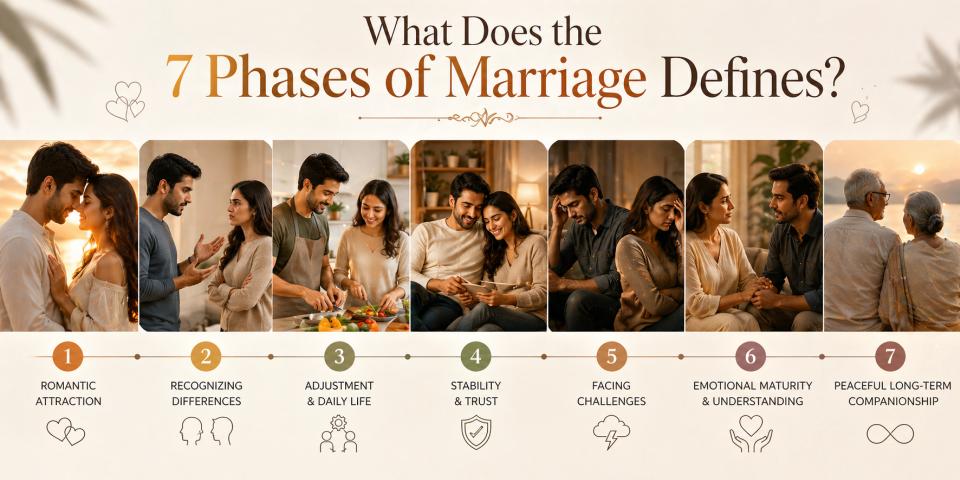
What Are the 7 Phases of Marriage?
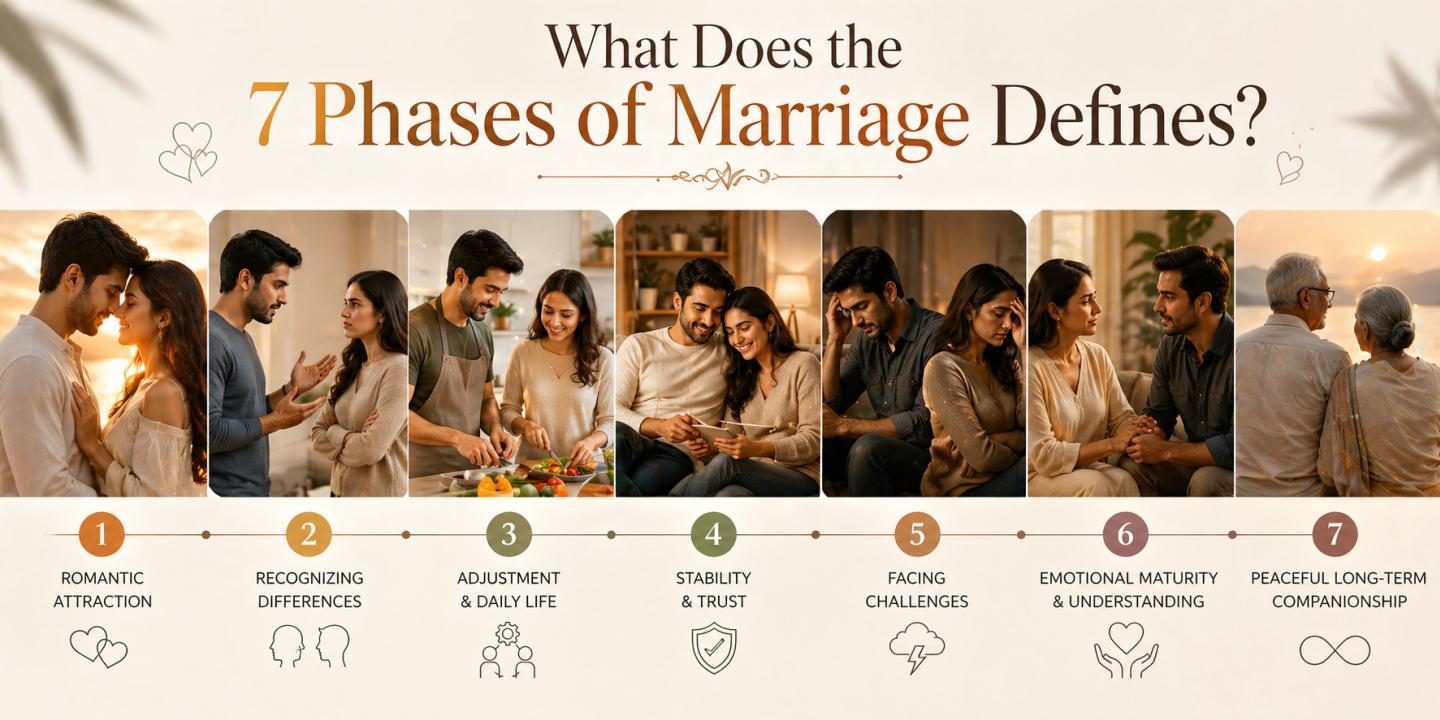
Marriage is not a single moment but a continuous journey that evolves over time. The idea of the 7 Phases of Marriage explains how relationships move through emotional, practical, and psychological stages.
Understanding these phases helps couples manage expectations, improve communication, and build a stronger bond over time.
Marriage as a Journey, Not an Event
Marriage is often seen as a beginning, but in reality, it is a process that develops gradually. Every relationship changes with time, responsibilities, and experiences.
Instead of expecting everything to remain the same, it is important to understand that growth and change are natural. The concept of the 7 Phases of Marriage helps explain these transitions in a structured way.
This understanding allows couples to stay prepared for different situations. It shifts the focus from perfection to adjustment, which is essential for long-term stability.
Phase 1: Attraction and Initial Connection
The first phase begins with attraction and emotional excitement. During this stage, partners focus on similarities and positive qualities.
This phase creates a strong emotional bond. Conversations feel easy, and both individuals make efforts to understand each other better.
However, this stage is often influenced by ideal expectations. It is important to remember that this is just the beginning of a deeper journey.
Phase 2: Understanding Differences
As the relationship grows, differences begin to appear. Habits, preferences, and thought processes may not always match.
This phase requires patience and acceptance. Instead of seeing differences as problems, they should be understood as natural variations.
Astrological insights often highlight these differences early. Many people consult experts or platforms like PawanKaushik.com to understand compatibility and emotional patterns before or after marriage.
Phase 3: Adjustment and Adaptation
Adjustment is a key part of marriage. This phase focuses on finding balance between individual habits and shared responsibilities.
Partners start learning how to manage daily life together. This includes communication, decision-making, and emotional support.
Successful adjustment creates stability. It helps couples move from emotional connection to practical partnership, which is essential for long-term harmony.
Phase 4: Building Stability and Trust
Once adjustment becomes natural, the relationship enters a stable phase. Trust becomes stronger, and responsibilities are shared more effectively.
This phase is often linked with financial planning, family responsibilities, and long-term goals. Stability becomes the foundation of the relationship.
A structured approach, similar to how a best astrologer in India analyzes compatibility and timing, can help couples understand how to maintain this stability over time.
Phase 5: Facing Challenges Together
Every marriage faces challenges. These may come from external factors like career pressure or internal differences.
This phase tests the strength of the relationship. It requires communication, patience, and mutual understanding.
Couples who handle this phase well develop a deeper connection. Challenges, when managed properly, strengthen the bond rather than weaken it.
Phase 6: Emotional Maturity and Growth
Over time, individuals grow emotionally. They begin to understand each other’s needs more clearly and respond with maturity.
This phase focuses on emotional balance. Conflicts reduce, and understanding increases.
Many individuals seek guidance from a famous astrologer in India during this phase to gain clarity about emotional patterns and long-term compatibility. This helps in maintaining harmony and avoiding misunderstandings.
Phase 7: Partnership and Long-Term Harmony
The final phase represents a mature and balanced relationship. Partners work as a team and support each other’s growth.
This stage is not about excitement but about stability and understanding. It reflects the strength developed through all previous phases.
Long-term harmony depends on consistent effort. When both partners continue to communicate and respect each other, the relationship remains strong and stable.
Role of Awareness in Marriage Phases
Understanding these phases helps couples avoid unrealistic expectations. It prepares them for changes and challenges that naturally occur over time.
Awareness reduces confusion. Instead of reacting emotionally, individuals can approach situations with clarity and patience.
This structured understanding is similar to how astrology studies life patterns. It focuses on recognizing phases and responding accordingly.
How Astrology Connects with Marriage Phases
Astrology often explains emotional patterns, compatibility, and timing in relationships. It helps individuals understand how different phases may unfold.
For deeper insights, resources like PawanKaushik.com provide guidance on relationship dynamics and compatibility analysis.
This connection between astrology and relationship phases allows individuals to prepare better and maintain balance in their married life.
Conclusion: Marriage as a Process of Growth
Marriage is not static; it evolves through different stages. The 7 Phases of Marriage provide a clear framework to understand this journey.
Each phase plays an important role in shaping the relationship. From attraction to long-term harmony, every stage contributes to growth.
With awareness, communication, and mutual respect, couples can navigate these phases successfully. In the end, marriage becomes a partnership built on understanding, stability, and continuous effort.