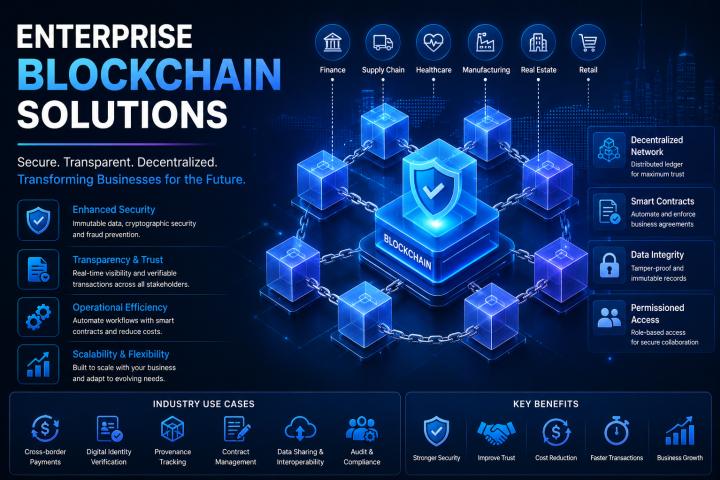
In today’s digital-first business environment, organizations are constantly searching for technologies that can improve operational efficiency, strengthen security, enhance transparency, and create long-term competitive advantages. Among the most transformative innovations of the modern era, blockchain technology has emerged as a powerful tool for enterprise digital transformation. While blockchain initially gained popularity through cryptocurrencies, its real business potential extends far beyond digital assets. Enterprises across industries are now adopting blockchain to streamline operations, secure sensitive data, automate workflows, and build trusted ecosystems.
From finance and healthcare to logistics, manufacturing, real estate, and supply chain management, blockchain technology is reshaping how businesses operate. Enterprise organizations are increasingly recognizing the need for secure, scalable, and customized blockchain infrastructure that aligns with their unique operational requirements. This growing demand has created significant opportunities for businesses seeking advanced blockchain implementation strategies that support long-term innovation and sustainable growth.
Understanding Enterprise Blockchain Technology
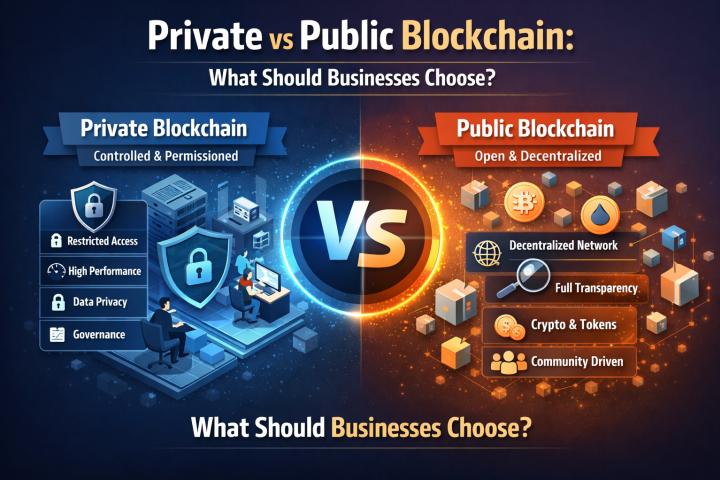
Enterprise blockchain is a specialized form of blockchain designed specifically for business applications. Unlike public blockchain networks that are open to anyone, enterprise blockchains are often permissioned networks where access is controlled, transactions are authorized, and data privacy is maintained according to organizational policies.
These blockchain networks enable multiple participants such as suppliers, partners, regulators, customers, and internal departments to securely share information in real time while maintaining transparency and accountability. Every transaction is recorded in an immutable ledger, reducing the possibility of fraud, unauthorized changes, and data manipulation.
Enterprise blockchain platforms can be built on technologies inspired by ecosystems such as Ethereum, or on business-focused frameworks designed specifically for organizational use cases. Modern enterprise systems also integrate with scalable blockchain ecosystems like Polygon and other interoperable infrastructures depending on project requirements.
Why Enterprises Are Adopting Blockchain
Traditional enterprise systems often rely on centralized databases, manual verification processes, fragmented communication channels, and third-party intermediaries. While these systems have supported business operations for decades, they frequently create inefficiencies, operational delays, compliance challenges, and security vulnerabilities.
Blockchain addresses these challenges by creating a shared, secure, and transparent digital infrastructure where all authorized participants can access verified information. This reduces reconciliation delays, minimizes operational disputes, improves collaboration, and creates trust between stakeholders.
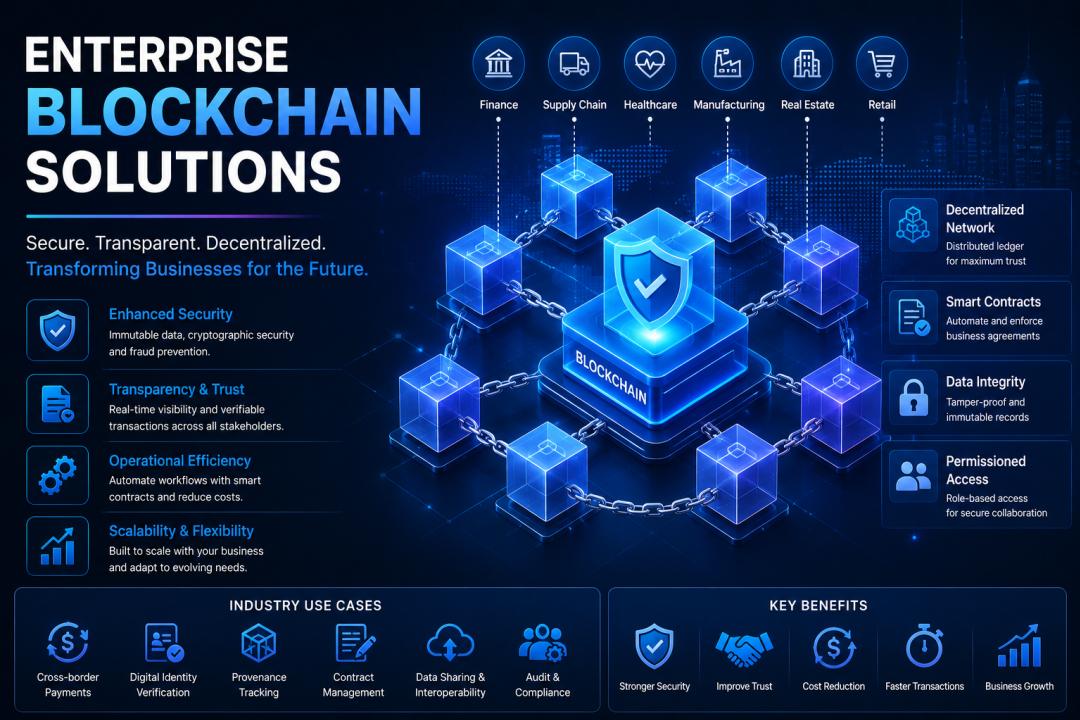
Enterprises are investing in blockchain because it offers: Improved transparency across business operations, enhanced data integrity, stronger cybersecurity, automated workflows through smart contracts, reduced operational costs, faster transaction processing, better auditability, and improved compliance with regulatory standards.
As industries become more digitized, blockchain is becoming an essential component of enterprise modernization.
Key Components of Enterprise Blockchain Development
Developing an enterprise blockchain solution requires careful planning, technical expertise, and deep understanding of business processes. Every enterprise blockchain system consists of multiple interconnected components that work together to create a secure and scalable ecosystem.
Smart contracts form the foundation of automation by executing predefined business rules without manual intervention. These contracts help automate approvals, payments, compliance checks, inventory updates, and operational workflows.
Distributed ledgers ensure that all authorized participants access the same verified information, reducing discrepancies and improving trust. Identity management systems control user permissions and access levels, ensuring that sensitive information remains protected.
API integrations connect blockchain infrastructure with existing enterprise systems such as ERP platforms, CRM tools, payment gateways, analytics dashboards, and cloud environments. Consensus mechanisms ensure transaction validation and network integrity while maintaining performance and scalability. Together, these components create a powerful foundation for enterprise innovation.
Industries Benefiting from Enterprise Blockchain
Blockchain technology is creating measurable impact across multiple industries worldwide. In finance, blockchain improves payment processing, cross-border settlements, fraud detection, and transaction reconciliation. Healthcare organizations use blockchain to secure patient records, improve data sharing, and strengthen identity verification.
Supply chain businesses leverage blockchain to track products, verify authenticity, and improve logistics transparency. Manufacturing companies use blockchain to monitor production workflows, supplier interactions, and equipment maintenance records. Real estate businesses explore blockchain for property verification, ownership transfer, and digital contracts.
Insurance providers automate claims processing and policy management using smart contracts. Government agencies investigate blockchain for digital identity, voting systems, and secure record management. These applications demonstrate the versatility and long-term value of enterprise blockchain adoption.
Security and Compliance in Enterprise Blockchain
Security remains one of the most critical priorities for enterprise organizations. Businesses handle sensitive customer information, financial records, intellectual property, compliance documentation, and operational data that must be protected against cyber threats.
Enterprise blockchain provides strong security through cryptographic encryption, decentralized validation, immutable record keeping, and permission-based access controls.
Unlike traditional centralized systems where a single breach can compromise the entire infrastructure, blockchain distributes information across multiple nodes, significantly reducing vulnerability. Compliance is equally important. Enterprise blockchain systems can support regulatory requirements by creating transparent audit trails, automated reporting, and verifiable transaction histories.
Organizations operating in highly regulated industries benefit from blockchain’s ability to simplify audits, reduce compliance risks, and strengthen governance.
The Role of Enterprise Blockchain Solutions in Modern Business
As digital transformation accelerates, organizations require advanced technologies that can support scalability, operational efficiency, and long-term security. This is where Enterprise Blockchain Solutions become essential for businesses seeking to modernize their infrastructure and unlock new growth opportunities.
These solutions enable organizations to build customized blockchain ecosystems tailored to specific business needs. From supply chain automation and digital identity verification to secure payments, smart contract automation, and multi-party collaboration, enterprise blockchain empowers businesses to eliminate inefficiencies and create trusted digital environments.
By implementing customized blockchain architectures, organizations can improve data visibility, strengthen operational control, reduce dependency on intermediaries, and build resilient systems capable of supporting future innovation.
Businesses that invest in enterprise blockchain today are positioning themselves for leadership in tomorrow’s digital economy.
Benefits of Choosing a Trusted Blockchain Partner
Implementing blockchain at an enterprise level requires specialized expertise, strategic planning, and deep technical knowledge. Choosing an experienced blockchain development partner ensures that projects are designed, developed, and deployed according to industry best practices.
A trusted provider helps businesses identify suitable use cases, define architecture, select blockchain frameworks, develop smart contracts, integrate existing systems, perform security audits, and provide long-term support.
Working with experienced professionals reduces technical risks, accelerates deployment timelines, and ensures scalability as business needs evolve.
A reliable blockchain partner also understands industry compliance standards, security requirements, and emerging market trends, helping enterprises stay ahead of competitors.
Future of Enterprise Blockchain
The future of enterprise blockchain looks increasingly promising as organizations continue to digitize operations and adopt advanced technologies. Emerging trends such as artificial intelligence integration, Internet of Things connectivity, decentralized identity systems, tokenized assets, and cross-chain interoperability are expanding blockchain’s business potential.
As cloud infrastructure, automation platforms, and global digital ecosystems continue to evolve, blockchain will become an even more critical component of enterprise strategy.
Organizations that begin their blockchain journey today will be better positioned to adapt, innovate, and lead in the next generation of digital transformation.
Conclusion
Blockchain is no longer just an emerging technology it has become a strategic business asset for enterprises seeking efficiency, transparency, and long-term growth. From automating workflows and securing sensitive data to improving collaboration and reducing operational costs, blockchain is transforming how organizations operate in the modern economy.
By partnering with experienced blockchain professionals and investing in secure enterprise infrastructure, businesses can build scalable digital ecosystems that support innovation, strengthen trust, and drive sustainable success in an increasingly connected world.