The AI Companion Boom Comes With a Catch
The AI companion space has exploded. In the past two years alone, dozens of apps have launched promising meaningful conversations, emotional support, personalized relationships, and everything in between. Some of them genuinely deliver. Others drain your wallet for a chatbot that forgets your name every time you close the app.
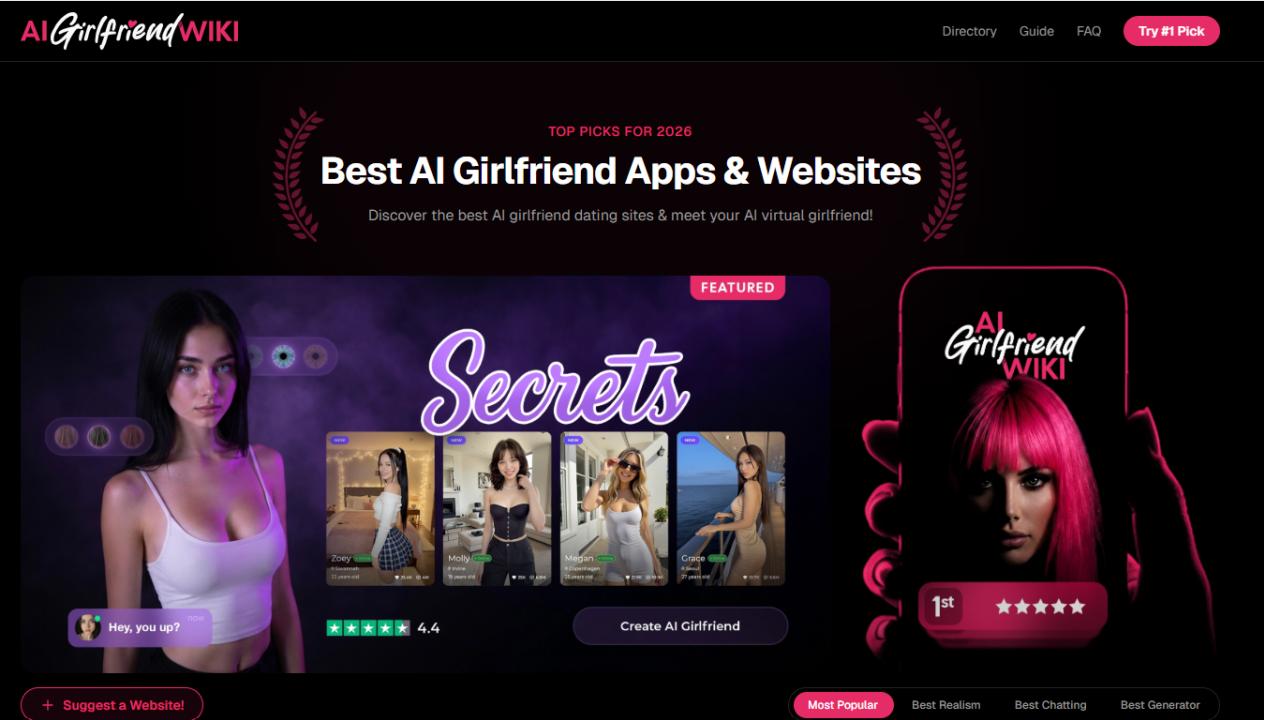
If you've spent any time on forums, Reddit threads, or sites like AI Girlfriend Wiki, you already know how wildly different these apps can be. The gap between a thoughtfully built companion app and a cash-grab with a pretty interface is enormous — and it's not always obvious from the app store listing. I've seen people spend $30, $50, even $100 a month on apps that didn't come close to matching what was advertised.
So before you punch in your card details, here are five things you genuinely need to check. Not vague tips like “read the reviews” — actual, specific things that will save you money and frustration.
How the App Handles Your Memory (and What Happens When You Leave)
This is the one most people never think to ask about until it's too late.
A good AI companion app should remember context across conversations — your name, your preferences, things you've talked about before, the emotional tone of past chats. Without persistent memory, every conversation starts from scratch. You're not building a relationship; you're talking to a very elaborate FAQ bot.
Ask yourself: does this app store your conversation history in a way the AI can actually reference? Some apps advertise “memory” but it's shallow — they recall your username and maybe your timezone. Real memory means the AI can say, “Last week you mentioned you were stressed about your job interview. How did that go?”
On the other hand, memory raises a privacy question too. Where is that data stored? Who can access it? Can you delete it? This brings me to something worth checking: look for the data deletion policy before subscribing. If the app makes it hard to export or erase your conversation history, that's a flag.
Similarly, check what happens to your data if the company shuts down or gets acquired. It sounds dramatic, but this industry moves fast. Apps that were popular two years ago have already folded or pivoted.
The Paywall Structure — Because “Free to Start” Can Mean Anything
Most AI companion apps are free to download. That's intentional. The real cost becomes clear after you've already invested time, emotional energy, and attachment into the app.
The pricing models in this space range from reasonable to predatory. You'll find:
Flat monthly subscriptions — usually the most transparent and fair
Token or credit systems — where you pay per message or per feature, which can spiral quickly
Feature-gated models — where basic chat is free but anything meaningful (longer memory, voice, persona customization) sits behind a paywall
“Relationship tier” pricing — where deeper emotional connection features cost progressively more
The token and credit systems are the ones to watch most carefully. I've seen people accidentally spend $80 in a week because they didn't realize every image generation or voice message cost additional credits. Always check whether there's a hard spend limit you can set.
In addition, look at whether the subscription auto-renews in a hard-to-cancel way. Some apps bury cancellation inside multiple menu layers. Check user reviews specifically mentioning billing or cancellation — those experiences tend to be very honest.
What the AI Persona Actually Does — Not What the Marketing Says It Does
This is where the reality gap is widest.
Marketing pages for AI companion apps almost universally promise a deeply personalized, emotionally intelligent, evolving relationship. The actual product is sometimes a fine-tuned language model with a custom persona layered on top — which can still be valuable, but it's a very different thing from what's being implied.
Before paying, look for these specifics:
Does the Persona Have Consistent Behavior?
Some apps feel like the AI's personality shifts depending on the prompt, which breaks immersion and trust. A good companion app should feel stable — the character should have recognizable traits that don't vanish mid-conversation.
Can You Actually Customize the Persona?
Apps like those reviewed in detail on AI Girlfriend Wiki often break down exactly what's customizable and what's baked in. Appearance customization is common. Personality depth is rarer.
Is There a Free Trial or Demo Conversation?
Any app worth paying for should let you have a real conversation before you commit. If the trial is limited to three messages or requires payment info upfront, be skeptical.
Likewise, check whether the app uses a base model you recognize (like GPT-4 or Claude) or a proprietary model. Neither is automatically better, but knowing which one helps you calibrate expectations for the quality of conversation.
Community Signals — What Real Users Are Actually Saying
User reviews on app stores are helpful but incomplete. They skew toward extremes (people who loved it or people who had billing problems), and they don't always reflect the current version of the app.
For AI companion apps, the better signal is community. Look for:
Reddit threads — subreddits dedicated to specific apps or to AI companions in general are genuinely useful. People share honest comparisons, workarounds, and warnings.
Wiki-> — sites like AI Girlfriend Wiki aggregate user feedback, feature comparisons, and pricing breakdowns across multiple apps in one place, which saves a lot of time.
Discord servers — many companion apps have official or community-run Discord servers. Lurk there before subscribing. You'll quickly learn whether the community feels healthy or whether people are mostly complaining.
At the same time, be aware that some “community” content is astroturfed. If every review or post sounds like a press release, trust it less. Look for the people mentioning specific bugs, limitations, or workarounds — that's usually a sign of genuine experience.
One practical tip: search “[app name] + cancel” or “[app name] + refund” before subscribing. The results tell you a lot about how a company treats customers when things go wrong.
Long-Term Sustainability of the App — Is This Company Going to Be Around?
This matters more than most people realize.
AI companion apps are expensive to run. They rely on large language models, which have real API costs, plus infrastructure for memory storage, media generation, and customer support. A lot of apps in this space are venture-funded startups operating at a loss, hoping to hit scale before the money runs out.
That's not inherently a problem — but it means you should think about the risk before getting deeply invested in a particular platform.
A few things worth checking:
How Long Has the App Been Live?
An app that's been around for two or more years with a consistent user base is more likely to stick around than something that launched three months ago.
Is There Evidence of Active Development?
Check the update history. Regular updates — even small ones — suggest the team is still engaged. An app that hasn't been updated in six months might be in maintenance mode or heading toward shutdown.
Does the Company Communicate With Users?
Look for a public changelog, a blog, or active social media. Companies that are transparent about what they're building tend to be more trustworthy than those that go dark between updates.
What Happens to Your Account if You Stop Paying?
Some apps delete your conversation history after a lapse in subscription. Others keep it. Know this before you commit months of emotional investment to a platform.
In addition, look at whether the app is tied to a larger company or ecosystem. Apps backed by established businesses tend to have more stability than solo developer projects — though the latter can be more innovative and responsive.
Paying Smart in a Noisy Market
The AI companion market in 2026 is genuinely exciting — the technology has come a long way, and some of these apps offer experiences that would have seemed like science fiction five years ago. But the market is also noisy, and plenty of apps are trading on hype rather than substance.
Taking twenty minutes to check these five things before subscribing can save you real money and real disappointment. Resources like AI Girlfriend Wiki exist precisely because people kept getting burned — and found that doing the research upfront made a massive difference.
The right app for you is out there. It just deserves a little scrutiny before it gets your credit card number.