TPO roofing systems have become increasingly common across commercial buildings, warehouses, retail facilities, and industrial properties throughout the United States.
As more flat-roof buildings move toward rooftop solar adoption, contractors are paying closer attention to how solar mounting systems interact with TPO membranes over the long term. That matters because TPO roofs behave very differently from asphalt shingles or standing seam metal roofing.
A poorly designed solar roof-mount system can eventually lead to waterproofing problems, membrane stress, drainage issues, or long-term structural concerns beneath the array. Commercial property owners often focus heavily on energy production while overlooking how mounting systems affect the roofing system itself. That is where installation quality and roof compatibility become critical.
According to the U.S. Department of Energy, proper solar installation planning and roof system integration both play important roles in long-term rooftop solar performance and building durability. For commercial roofing projects, the mounting system underneath the array matters just as much as the panels above it.
Why TPO Roofs Require Specialized Mounting Approaches
TPO roofing membranes expand and contract continuously under rooftop heat exposure. Unlike steep-slope residential roofs, commercial flat roofing systems also experience standing water risks, drainage movement, membrane flexing, and ongoing thermal cycling throughout the year.
That creates a different set of installation challenges for rooftop solar systems.
A properly engineered solar roof mount system should:
- Maintain membrane integrity
- Support waterproofing protection
- Distribute structural loads evenly
- Reduce stress around penetrations
- Allow controlled roof movement over time
Experienced contractors evaluate:
- Membrane condition
- Roof age
- Drainage design
- Rooftop equipment placement
- Structural framing
- Wind exposure
before selecting mounting hardware.
The goal is long-term roof performance without compromising the roofing system beneath the solar array.
Waterproofing Integrity Is Critical on TPO Roofs
Water management becomes especially important on low-slope commercial roofing systems.
Even small installation mistakes can eventually create moisture intrusion beneath the membrane if waterproofing details are rushed or poorly integrated.
That is why contractors pay close attention to:
- Flashing integration
- Attachment spacing
- Membrane sealing
- Rooftop drainage flow
- Thermal expansion movement
during installation planning.
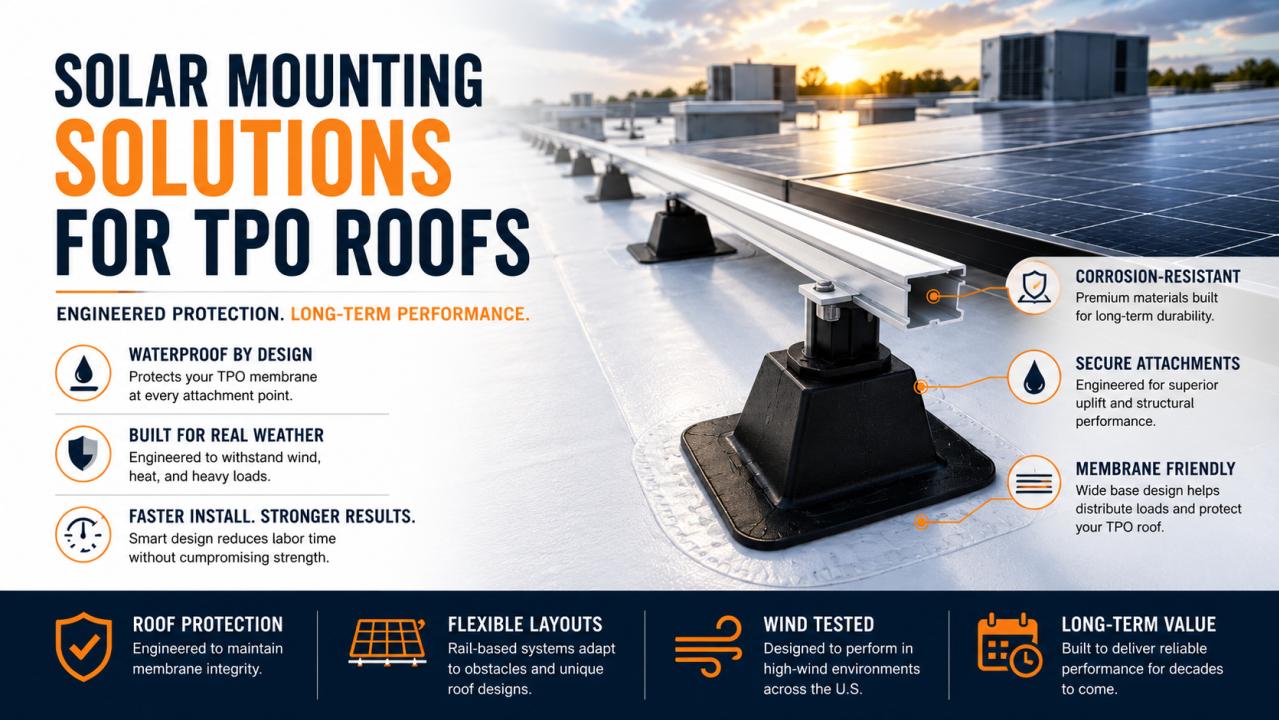
A properly engineered waterproof solar mount helps protect the roofing system while supporting long-term structural performance under changing environmental conditions.
On TPO roofing systems, waterproofing failures often develop slowly over time rather than appearing immediately after installation. That makes installation precision even more important on commercial projects.
Rail-Based Systems Can Improve Commercial Layout Flexibility
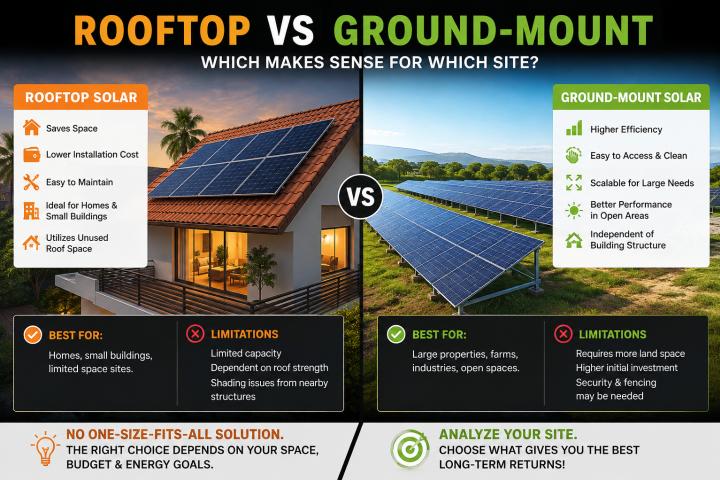
Large commercial rooftops often require more complicated solar layouts than residential systems. HVAC equipment, drainage pathways, parapet walls, skylights, and rooftop access zones can all affect solar array placement across TPO roofs.
That is one reason many installers use rail-based mounting systems for commercial flat-roofing projects.
Properly engineered solar rail systems can help improve:
- Panel alignment consistency
- Structural load distribution
- Attachment spacing
- Layout flexibility
- Rooftop workflow coordination
Rail systems also make it easier to manage large-scale arrays across varying roof sections while maintaining cleaner alignment across the installation.
For commercial contractors, layout flexibility often becomes just as important as installation speed.
Wind Exposure Creates Additional Structural Demands
Commercial flat roofs experience wind pressure differently than steep-slope residential roofing systems. Because TPO roofs have large open surface areas, wind uplift can place significant stress on mounting hardware and rooftop attachments during storms or high-wind conditions.
That is why experienced contractors evaluate:
- Wind uplift zones
- Parapet wall height
- Building exposure
- Attachment spacing
- Ballast requirements
- Structural load capacity
before installation begins.
A properly designed solar roof mount system should distribute loads evenly across the roof structure while maintaining membrane protection beneath the array.
Long-term performance depends on how well the mounting system handles both structural movement and environmental exposure over time.
Installation Quality Often Determines Long-Term Performance
Even high-quality mounting hardware depends heavily on proper installation practices.
Poor membrane preparation, rushed flashing work, weak structural connections, or improper attachment spacing can eventually create roofing and maintenance problems years after installation.
Professional installers focus heavily on:
- Waterproof detailing
- Structural consistency
- Roof compatibility
- Load management
- Drainage protection
because commercial roofing systems are expected to perform for decades under real-world conditions. A properly installed solar roof-mount system should continue to protect the roof while supporting stable solar performance over the long haul.
Final Thoughts
TPO roofing systems can support rooftop solar very effectively when the mounting system is engineered correctly for the building and its environmental conditions. The hardware beneath the array plays a major role in waterproofing integrity, structural reliability, rooftop compatibility, and long-term commercial roof performance.
For building owners, understanding how a solar roof-mount system works can help alleviate concerns about roof leaks, membrane damage, and future maintenance issues.
For contractors, selecting the right mounting strategy often comes down to balancing waterproofing, structural performance, layout flexibility, and long-term durability throughout the life of the roofing system. As commercial rooftop solar adoption continues growing across the United States, properly engineered mounting systems will remain critical for durable TPO solar installations.