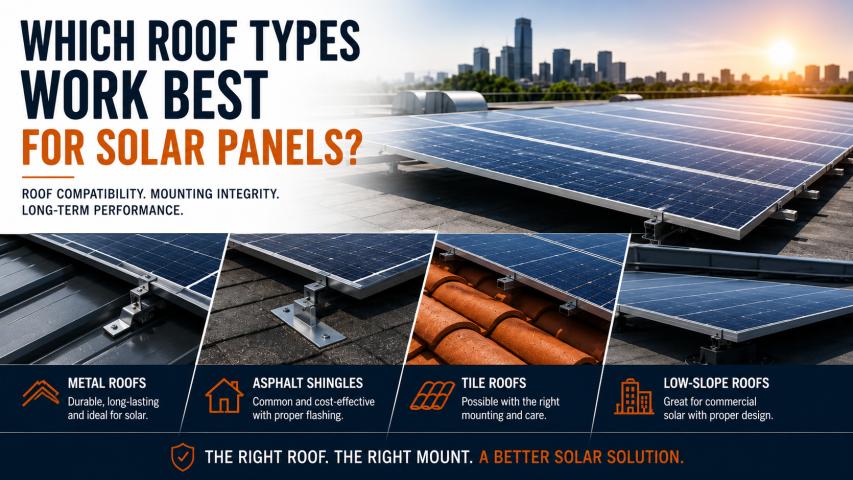
Not every roof behaves the same way once solar panels are installed. Some roofing systems handle structural loads, waterproofing, and attachment stress extremely well. Others require more careful planning to avoid long-term roofing problems. That is why roof compatibility matters before installation begins.
A properly engineered solar panel rail-mount system should work with the roof structure rather than creating unnecessary stress at penetrations, flashing points, or drainage paths.
According to SEIA rooftop solar resources, rooftop solar adoption continues to expand across residential and commercial properties throughout the U.S. But long-term system performance still depends heavily on roof compatibility and mounting design.
For contractors and property owners, understanding which roof types support long-term solar performance can help reduce future maintenance issues while improving installation reliability under real-world conditions.
Metal Roofs Are One of the Best Options for Solar
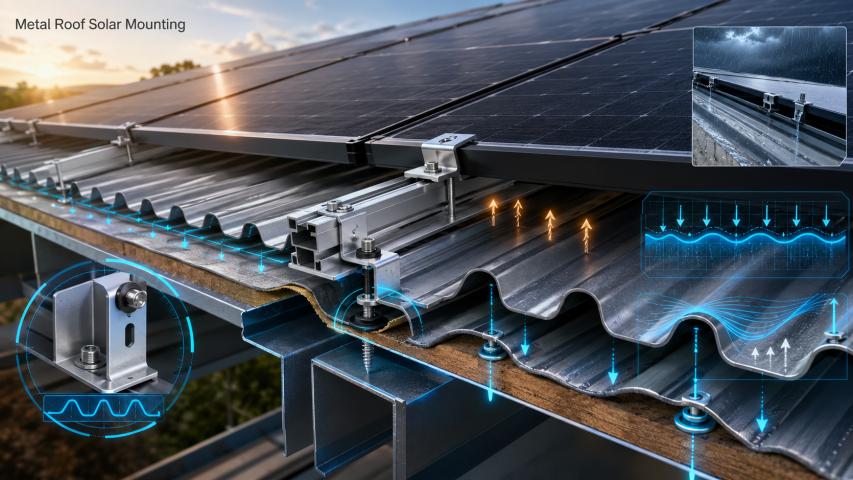
Metal roofs are widely considered one of the most solar-compatible roofing systems available.
Standing seam systems, in particular, allow installers to use clamp-based attachment methods that may reduce penetration requirements while maintaining strong structural support.
Metal roofs also perform well under:
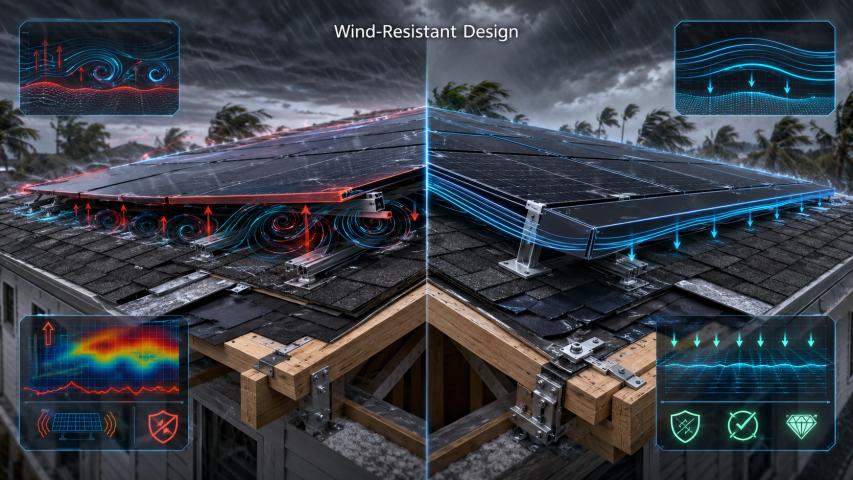
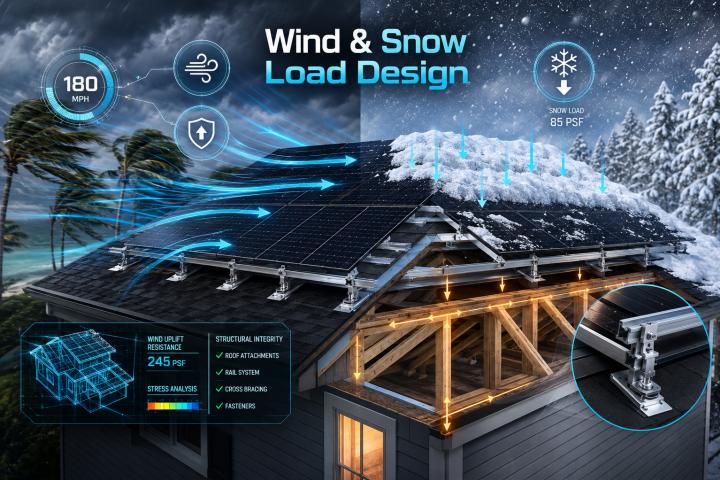
- Wind uplift pressure
- Snow loads
- Thermal movement
- Long-term weather exposure
A properly designed solar panel rail mount system can help preserve roof integrity while supporting long-haul attachment performance across varying environmental conditions.
That is one reason many contractors evaluate a solar rail system approach for commercial and residential metal roofing projects.
Because under real-world conditions, roof compatibility plays a major role in long-term solar durability.
Asphalt Shingle Roofs Remain the Most Common Residential Option
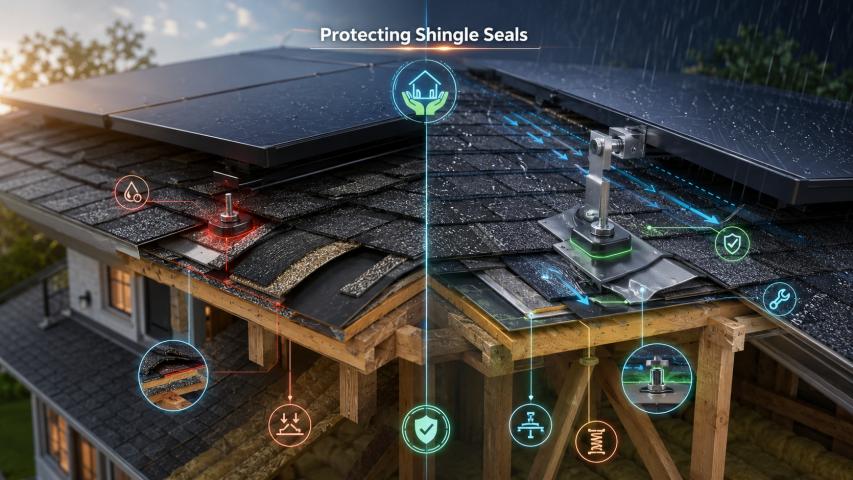
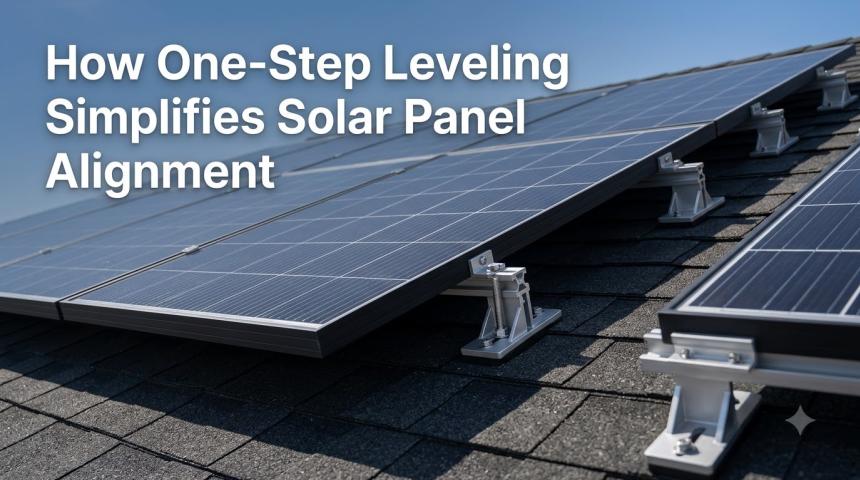
Asphalt shingles remain one of the most common roofing systems for residential solar installations across the U.S. The challenge is that waterproofing becomes especially important once penetrations are introduced through the roof assembly.
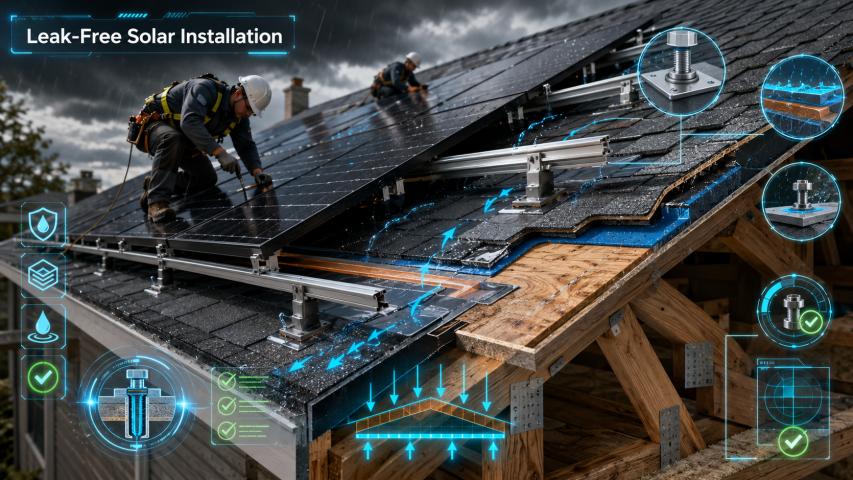
Improper flashing integration or rushed attachment work can slowly create moisture intrusion around mounting points over time.
A dependable solar panel rail mount system should help support:
- Proper flashing integration
- Secure structural attachment
- Water-shedding performance
- Long-term roof protection
- Roof lifespan preservation
Experienced installers understand that attachment quality matters just as much as panel placement on shingle roofs.
Tile Roofs Require More Installation Precision
Tile roofing systems can support solar successfully, but installation complexity increases significantly compared to metal or asphalt roofs. Clay and concrete tiles are more fragile during installation, and attachment planning becomes critical to avoid cracked tiles or waterproofing issues.
Installers often need specialized mounting methods to properly distribute loads while protecting the underlying roof structure.
Tile roof installations typically require attention around:
- Tile replacement areas
- Flashing integration
- Structural attachment points
- Roof movement
- Water drainage behavior
A well-planned solar panel rail-mount strategy should minimize stress on the tile system while maintaining long-term roof performance.
Low-Slope Commercial Roofs Need Roof-Specific Mounting Design
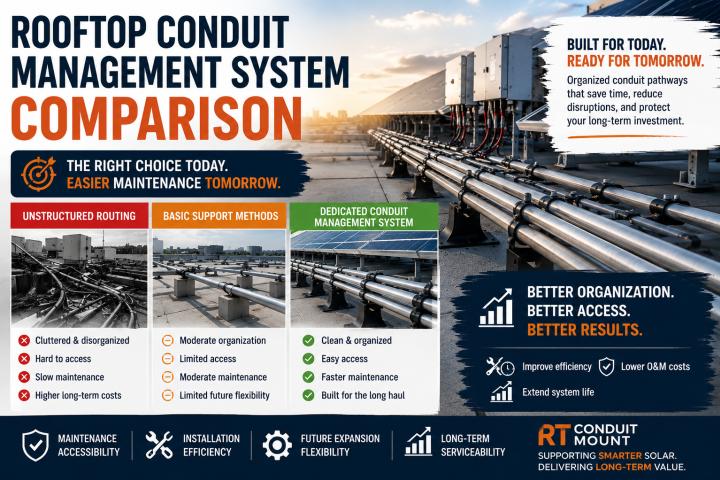
EPDM, TPO, and PVC roofing systems are commonly used across commercial solar projects.
These roofs can work well for solar, but mounting design becomes critical because low-slope systems rely heavily on waterproofing integrity and drainage management.
A poorly designed mounting layout can create:
- Ponding water issues
- Membrane stress
- Attachment fatigue
- Drainage disruption
- Premature roof wear
That is why many contractors evaluate low-profile solar mounting systems for low-slope commercial roofing applications.
Because under real-world conditions, protecting the membrane matters just as much as supporting the array itself.
Roof Age and Condition Matter More Than Most Realize
Even the best mounting hardware cannot fix a failing roof. Before installation begins, contractors should always evaluate:
- Roof age
- Existing damage
- Structural integrity
- Drainage performance
- Remaining roof lifespan
Installing solar on an aging roof often creates expensive reroofing complications later. That is why experienced crews evaluate the entire roof assembly before selecting a solar panel rail mount strategy.Because once solar equipment is installed, future roof access becomes more complicated and more expensive.
Conclusion
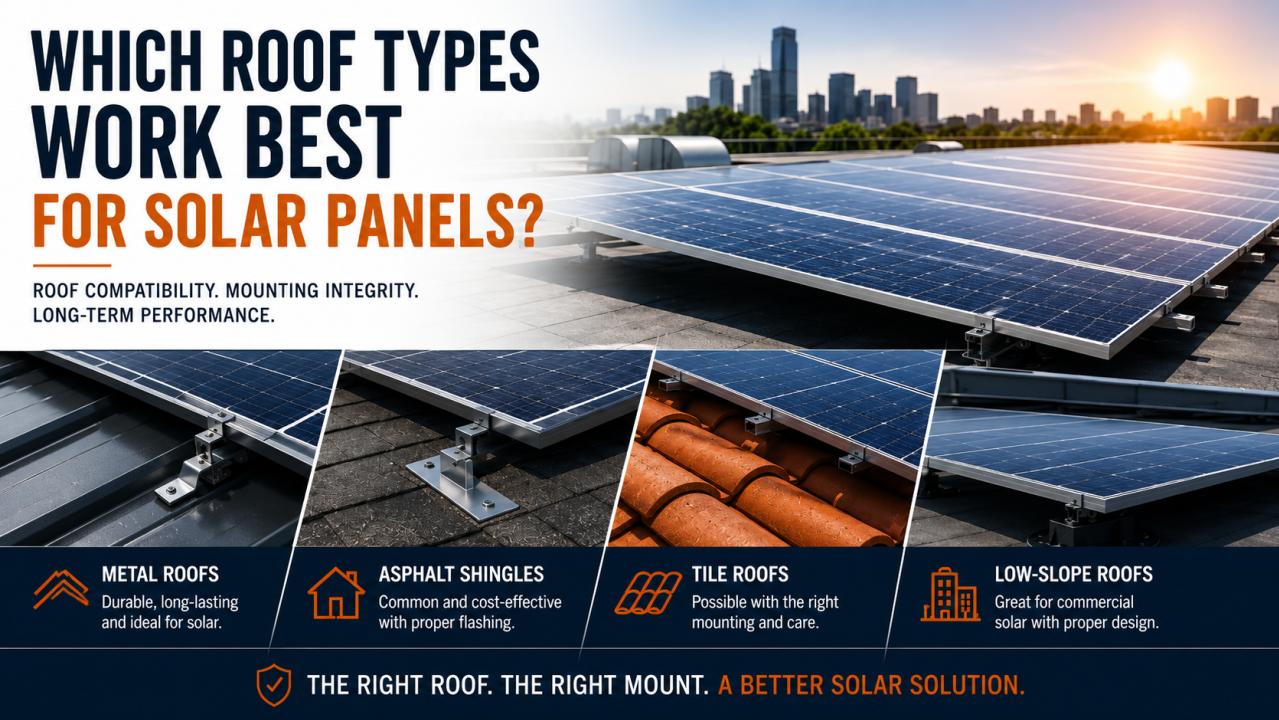
Several roof types can support solar successfully when the mounting system is designed around long-term roof compatibility.
Metal roofs often provide the easiest integration. Asphalt shingles remain highly common for residential projects. Tile roofs require additional precision. And low-slope commercial systems demand careful waterproofing and structural planning.
For contractors, the goal is not simply attaching solar panels to the roof. It protects the roof performance for decades after installation.That is why selecting the right solar panel rail-mount system matters in real-world conditions. Because long-term solar durability always starts with understanding how the roof itself behaves.