Introduction
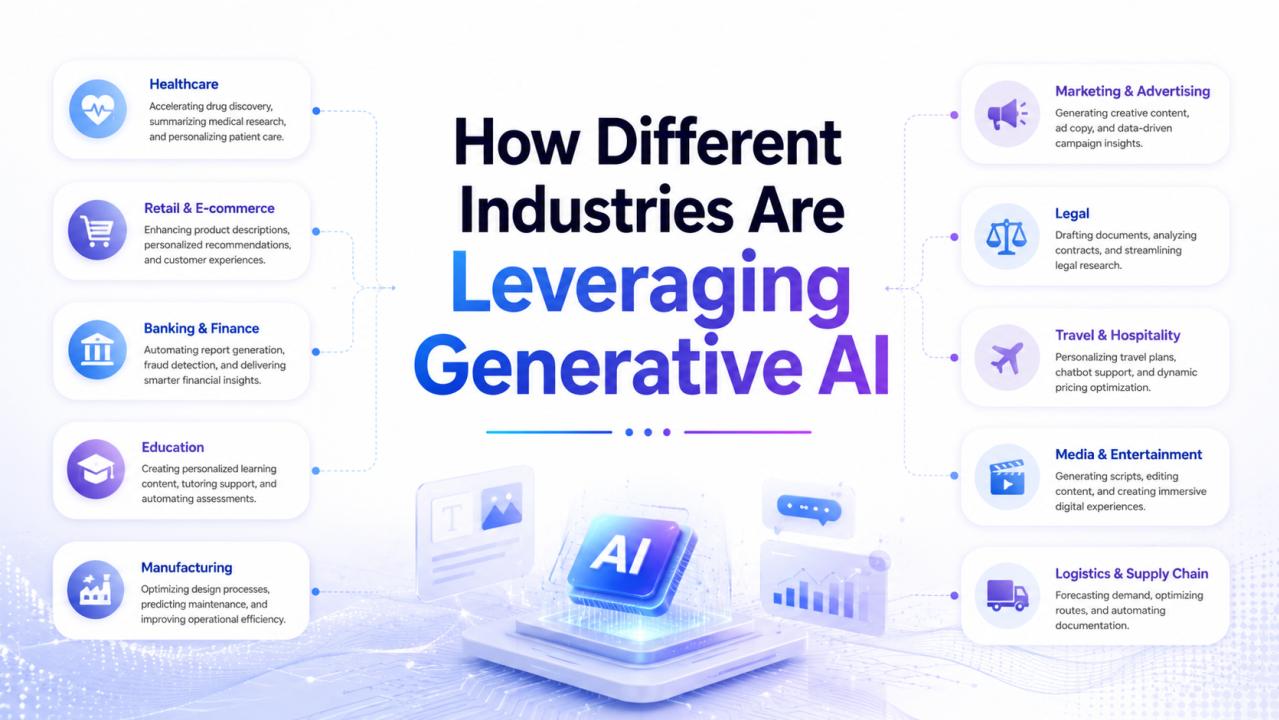
One way firms respond to change? They turn to tools that learn, then adapt. Generative AI is at the center of this shift — and instead of routine steps, machines now draft replies, suggest moves, and shape messages, with quiet changes adding up fast. Across hospitals, banks, stores, factories, and classrooms, leaders test systems that invent rather than just repeat. Progress here often means pairing human insight with machine speed. What grows clear: those refining their approach early tend to move faster later. Behind the scenes, investment flows into building smarter software, piece by piece. Results show in smoother workflows, sharper choices, and interactions that feel less robotic. Change isn't loud — it's gradual pressure toward better methods. The next phase hinges on who adjusts quietly, consistently.
Generative AI in Healthcare
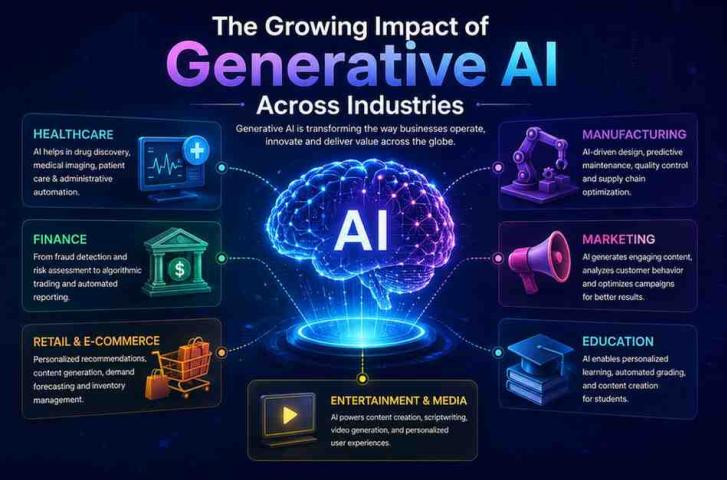
Among industries gaining the most from generative AI, healthcare stands out. Tools powered by artificial intelligence support clinicians in spotting illnesses, interpreting scans, and watching patient conditions, while also suggesting tailored therapies. By working through vast records quickly, such systems uncover patterns useful for clinical judgment. Insights emerge faster, aiding physicians during critical moments.
Now, patients stay more involved thanks to smart digital helpers that answer health questions fast and manage appointments without delay. Some hospitals and clinics choose AI development services built with strict privacy rules, aiming to support better treatment outcomes while easing office workloads.
Generative AI in Financial Services
Nowadays, banks use generative AI to strengthen how they judge risk, catch fraud, assist customers, and study investments. Because of advanced algorithms, patterns in market data get spotted faster — helping forecast threats while shaping precise financial summaries automatically. Though complex, these systems respond quickly, turning raw numbers into clear insights without delay.
Now beginning to transform their operations, banks, along with financial firms, turn to AI development solutions for smarter chatbot design, automated regulatory workflows, and personalization in advisory services. Efficiency gains emerge alongside improved client interactions, reshaping how support is delivered behind the scenes.
How Generative AI Changes Retail and Online Shopping
Because retail firms adopt generative AI, shopping experiences shift subtly — each interaction shaped by learned habits rather than guesswork. Instead of broad campaigns, suggestions emerge from observed choices, quietly guiding users toward items they tend to prefer. These tailored cues come from systems studying past actions, building trust through consistency. As relevance rises, so does engagement; people stay longer when what appears feels familiar yet surprising. Behind each display lies constant adjustment, fine-tuned without fanfare.
One way firms use generative AI? Writing product details, ads, or tailored promotions — fast and across large volumes. With Artificial Intelligence development solutions in place, retail players start seeing clearer patterns in what shoppers want. This insight shapes buying journeys that feel relevant. Revenue often follows when interactions match individual expectations more closely.
Factory Systems and Machine Control
From factory floors to logistics networks, generative AI helps streamline operations by spotting patterns in machine behavior. Because it learns from ongoing data streams, the technology forecasts when components might fail. Maintenance timing gets adjusted automatically — driven by real-time insights rather than fixed calendars. Unexpected stoppages become less frequent as alerts emerge well ahead of failure points. This shift allows teams to act earlier, reducing downtime without relying on guesswork.
Starting with idea creation, generative AI produces various design options according to set criteria. When companies want smarter workflows, they turn to AI development solutions that simplify production while lowering expenses.
How Different Industries Are Leveraging Generative AI in Education
Some schools now use generative AI to shape lessons around each student's pace and strengths. Because every learner differs, smart systems build tailored exercises, readings, and tests that match how they progress. Instead of one-size-fits-all content, these tools adjust material using past results and current understanding. While tradition favors fixed curricula, dynamic programs respond in real time to how well a pupil grasps topics. Often, what works for one person fails another — adaptive methods help close those gaps quietly.
With smart software, teachers find help in checking work, creating lessons, and leaving notes for individual students. Firms making digital classrooms tend toward Artificial Intelligence development services — crafted exactly — to match how students learn, pushing results a little higher each time.
Improving Customer Service Across Industries
Across industries, customer service teams now rely more on generative AI. With these tools, routine questions get answers at any time of day through smart chat systems. Support tasks once done by people now run automatically, improving response speed. Issues like password resets or billing questions finish faster without human involvement. Some companies report smoother operations since adding virtual helpers to their workflow.
When companies aim to boost their artificial intelligence tools, they frequently hire dedicated developers skilled in machine learning and automation. Because these teams design advanced support platforms, replies happen faster than before. Customer experience tends to rise when interactions feel smoother and more accurate. Human representatives then shift attention toward challenges requiring deeper judgment or personal touch.
Media and Content Creation
Generative AI now plays a central role across media and entertainment, shaping how stories are told and visuals are made. With it, companies generate scripts, edit videos, and craft designs while streamlining workflows behind the scenes. Articles appear faster; so do promotional images and online updates — each shaped by machine learning models trained on vast datasets. Scaling output becomes simpler when routine tasks shift toward automation, freeing human creators for complex decisions. Efficiency rises without sacrificing consistency, even under tight deadlines or high demand.
Starting with smarter tools, media firms now adopt generative AI development services to build systems that generate material efficiently without losing quality. Because of this shift, teams spend less time on routine work. Instead, attention moves toward planning and original thinking. With automation handling repetition, human effort redirects where it matters most.
The Future of Generative AI in Different Fields
Generative AI grows more advanced, opening doors in countless fields. Those who embrace it sooner stand to gain smoother operations, stronger engagement with users, and faster progress in creating new tools. Growth often follows where experimentation begins without delay.
Today's companies are turning toward cutting-edge AI tools that often work alongside a trusted AI development company that designs intelligent systems built to grow. With generative models entering the scene, firms find fresh paths forward — staying agile amid rapid digital shifts. Though change feels constant, preparation shapes what comes next. Those exploring now position themselves differently when markets evolve. Advancement does not wait; readiness matters most.
Conclusion
One way generative AI changes sectors? It streamlines processes while sharpening choices and tailoring user interactions. Across fields like health services, money management, stores, factories, schools, and news outlets, companies apply artificial intelligence to reshape how they function. Growth in usage means firms focusing on smart AI methods and suitable tools gain an advantage over time through steady progress and fresh approaches.