Effective wound management requires careful assessment, appropriate treatment selection, and ongoing monitoring to support optimal healing outcomes. Healthcare professionals must consider several factors, including wound type, infection risk, exudate levels, and patient-specific needs when choosing a dressing. While numerous wound care products are available, antimicrobial dressings are often preferred when bacterial burden becomes a concern.
Among these solutions, Inadine Dressing is widely used in clinical settings due to its antimicrobial properties and ease of application. By helping manage bacterial activity within the wound environment, it can play an important role in supporting wound healing and preventing complications. As a trusted provider of healthcare products and medical supplies, Medguard Healthcare recognizes the importance of using appropriate wound care solutions to address the unique challenges presented by different wound types.
Understanding the Purpose of Inadine Dressing
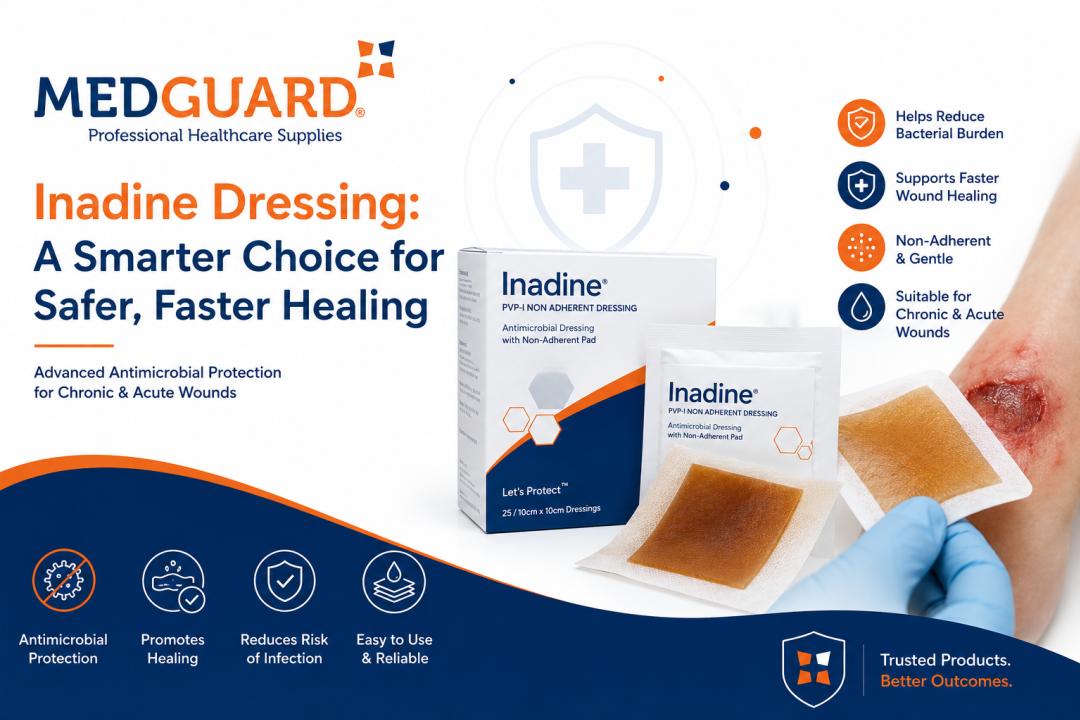
Inadine Dressing is a non-adherent wound dressing impregnated with povidone-iodine, a broad-spectrum antimicrobial agent. When the dressing comes into contact with wound exudate, iodine is gradually released into the wound bed.
This controlled release helps reduce bacterial burden while maintaining a protective wound environment. Unlike traditional dressings that primarily provide coverage and absorption, Inadine Dressing actively supports infection management through its antimicrobial action.
The dressing is designed to minimize trauma during removal, making it suitable for patients who require regular dressing changes.
Why Infection Control Matters in Wound Management
Bacteria are naturally present on the skin and surrounding environment. However, when bacterial levels increase within a wound, healing may be delayed. Elevated bacterial burden can contribute to prolonged inflammation, tissue damage, excessive exudate, and an increased risk of infection.
Healthcare professionals often focus on infection prevention because controlling microbial activity is essential for creating conditions that support tissue repair. Antimicrobial dressings such as Inadine Dressing can be useful tools when infection risk becomes a concern.
Understanding when to use these dressings is important for achieving effective wound management outcomes.
When Should You Consider Using Inadine Dressing?
Wounds at Risk of Infection
One of the most common reasons for using Inadine Dressing is when a wound is considered at risk of infection. Surgical wounds, traumatic injuries, and open wounds exposed to contaminants may benefit from additional antimicrobial protection.
By helping reduce bacterial activity, Inadine Dressing supports infection control efforts and may help prevent complications that could delay healing.
Critically Colonized Wounds
Not all wounds show obvious signs of infection. Some wounds become critically colonized, meaning bacterial levels are high enough to impair healing without causing clear clinical infection.
Signs of critical colonization may include:
- Delayed healing
- Increased exudate production
- Changes in wound appearance
- Persistent inflammation
- Increased discomfort
In these situations, healthcare professionals may use Inadine Dressing to help reduce bacterial burden and restore a more favorable healing environment.
Chronic Wounds with Delayed Healing
Chronic wounds often face ongoing challenges related to bacterial management. Conditions such as diabetic foot ulcers, venous leg ulcers, and pressure ulcers may remain open for extended periods, increasing the likelihood of microbial colonization.
When bacterial burden is believed to be contributing to delayed healing, Inadine Dressing may be considered as part of a broader wound care strategy.
Regular assessment remains important to determine whether antimicrobial intervention continues to be necessary.
Minor Burns
Minor burns can be particularly vulnerable to bacterial contamination due to damage to the skin's protective barrier. Inadine Dressing may be used to help protect the wound while supporting infection management.
Its non-adherent design can also improve patient comfort during dressing changes, which is especially important for sensitive burn injuries.
Traumatic Wounds and Abrasions
Cuts, lacerations, abrasions, and other traumatic wounds may be exposed to dirt, debris, and environmental contaminants at the time of injury.
Healthcare professionals may choose Inadine Dressing when there is concern about bacterial contamination or when additional antimicrobial support is appropriate during the early stages of healing.
Post-Surgical Wounds
Surgical wounds generally follow a predictable healing process, but infection remains a potential complication. In situations where infection risk is elevated or bacterial management is a concern, clinicians may incorporate Inadine Dressing into the patient's wound care plan.
The decision should always be based on clinical assessment and established treatment protocols.
Situations Where Ongoing Assessment Is Important
While Inadine Dressing can be beneficial in many circumstances, antimicrobial dressings should not be used indefinitely without review. Healthcare professionals should regularly assess the wound to determine whether bacterial burden remains a concern and whether continued antimicrobial intervention is necessary.
Factors that should be monitored include:
- Wound size and depth
- Healing progress
- Exudate levels
- Signs of infection
- Patient comfort
- Tissue quality
Regular reassessment helps ensure that treatment remains aligned with the patient's changing clinical needs.
Benefits of Using Inadine Dressing
Healthcare professionals often choose Inadine Dressing because it offers several practical advantages.
Antimicrobial Protection
The controlled release of povidone-iodine helps reduce bacterial burden and supports infection control efforts.
Non-Adherent Design
The dressing minimizes sticking to the wound surface, helping reduce discomfort and tissue trauma during dressing changes.
Visual Change Indicator
As iodine is released, the dressing gradually changes color, providing a useful visual cue that may indicate when replacement is needed.
Versatility
Inadine Dressing can be used across a variety of wound types, making it a valuable addition to wound care protocols.
Best Practices for Effective Wound Management
Successful wound care involves more than selecting the right dressing. Healthcare professionals should combine dressing selection with evidence-based practices such as proper wound cleansing, moisture management, patient education, and regular monitoring.
A comprehensive approach helps address the multiple factors that influence healing and supports better patient outcomes.
Conclusion
Determining when to use Inadine Dressing depends on careful wound assessment and an understanding of infection risk. Wounds that are critically colonized, vulnerable to bacterial contamination, or experiencing delayed healing may benefit from the antimicrobial support provided by this dressing.
With its controlled release of povidone-iodine, non-adherent design, and suitability for various wound types, Inadine Dressing remains a valuable option in modern wound management. When used appropriately as part of a comprehensive treatment plan, it can help healthcare professionals support infection control, protect the wound environment, and promote more effective healing outcomes.