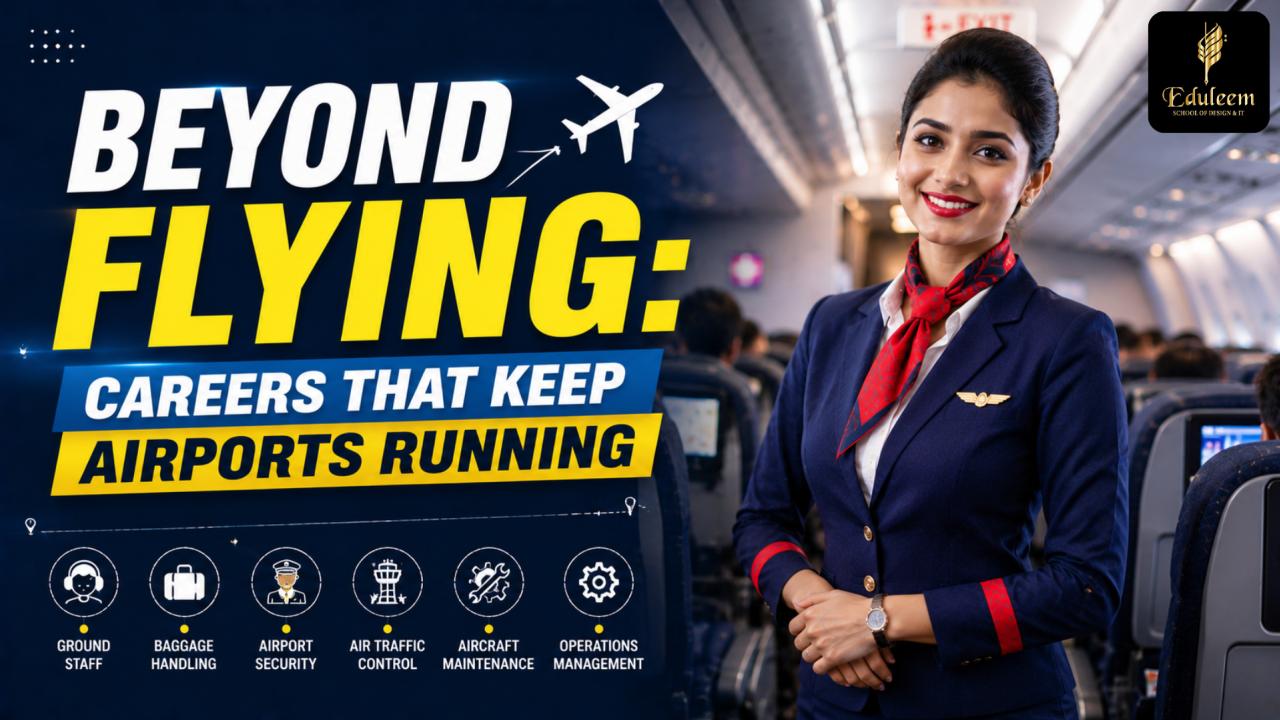
An Aviation Course in Bangalore is often associated with becoming a cabin crew professional or working directly inside an aircraft. While these are excellent career paths, the aviation industry is much bigger than most people realize. Every day, millions of passengers travel across the world smoothly because thousands of aviation professionals work behind the scenes to keep airports and airlines operating efficiently.
When people think about aviation, they usually picture pilots and cabin crew. What they often miss is the massive network of professionals who ensure every flight departs safely, every passenger receives assistance, every airport operation runs smoothly, and every airline maintains its service standards.
This is why aviation continues to be one of the strongest industries globally. It is not dependent on a single job role. It is an ecosystem filled with opportunities for people with different skills, personalities, and career goals.
As technology evolves and many industries become increasingly automated, aviation remains one of the few sectors that will always require human involvement. Aircraft can become smarter, systems can become more advanced, but airports cannot operate without trained professionals managing people, services, safety, and customer experiences.
The Truth About Aviation Careers
Many students believe aviation careers are limited to flying.
The reality is completely different.
A modern airport functions like a small city. Every flight requires coordination between multiple departments and hundreds of trained professionals.
From the moment a passenger enters the airport until they reach their destination, countless aviation professionals are involved behind the scenes.
This is one reason aviation continues to create employment opportunities year after year.
Unlike industries that can move entirely online, aviation requires physical operations. Passengers must be assisted. Flights must be managed. Airport services must be delivered. This creates long-term demand for skilled professionals.
Why Aviation Has Long-Term Career Stability
One concern many students have today is job security.
Industries change quickly. Technologies evolve. Companies restructure.
However, aviation has consistently remained relevant because travel is an essential part of modern life.
People travel for:
- Business
- Tourism
- Education
- Family commitments
- International opportunities
- Medical purposes
As long as people continue traveling, airports and airlines will continue operating.
This makes aviation one of the few industries where demand remains strong over the long term.
Airports are expanding globally. Airlines continue adding routes. Passenger numbers continue increasing. These factors contribute to a steady need for trained aviation professionals.
Careers That Keep Airports Running
Many students are surprised when they discover the variety of career opportunities available within aviation.
Cabin Crew Professionals
Cabin crew members play a vital role in ensuring passenger comfort, safety, and overall flight experience.
They are trained in:
- Passenger handling
- Safety procedures
- Emergency response
- Hospitality services
- Communication skills
This remains one of the most popular aviation career paths because it combines travel, professional growth, and global exposure.
Airport Customer Service
Airport customer service professionals assist passengers with:
- Check-in procedures
- Flight information
- Travel assistance
- Passenger queries
They are often the first point of contact for travelers and play a major role in customer satisfaction.
Ground Operations
Ground operations teams coordinate essential airport activities.
Their responsibilities include:
- Flight coordination
- Passenger management
- Operational support
- Airline communication
Without efficient ground operations, airport systems cannot function smoothly.
Airline Hospitality Services
Airlines place significant importance on customer experience.
Professionals in hospitality-focused roles help ensure passengers receive high-quality service throughout their journey.
Passenger Relations and Support
Airports and airlines employ trained professionals who handle customer concerns, special requests, and service-related support.
These roles require excellent communication and interpersonal skills.
Why Aviation Is More Than a Job
One reason aviation continues attracting students worldwide is the life>
Most professions allow people to work within a single environment for years.
Aviation is different.
Professionals interact with:
- International travelers
- Diverse cultures
- Global airline networks
- Dynamic working environments
The industry helps individuals develop confidence, professionalism, communication skills, and problem-solving abilities.
For many professionals, aviation becomes more than a career. It becomes a life>
Travel Opportunities Make Aviation Unique
One advantage aviation offers that few industries can match is global exposure.
Many aviation professionals get opportunities to:
- Travel internationally
- Visit different cities
- Experience diverse cultures
- Meet people from around the world
This exposure contributes significantly to personal and professional growth.
Students who enjoy interacting with people and experiencing new environments often find aviation particularly rewarding.
Why Skills Matter More Than Qualifications
A common misconception is that aviation hiring focuses only on appearance or educational qualifications.
In reality, airlines and airports prioritize professional skills.
Employers look for candidates who demonstrate:
- Communication ability
- Customer service skills
- Confidence
- Professional behavior
- Teamwork
- Problem-solving ability
This is why professional aviation training is extremely important.
Training helps students develop the practical skills that employers actively seek during recruitment.
The Importance of Professional Training
Aviation is a highly professional industry.
Students entering the sector must understand:
- Industry standards
- Airline operations
- Passenger handling techniques
- Safety procedures
- Hospitality expectations
- Communication protocols
Without proper training, students often struggle during interviews and recruitment processes.
Professional training creates a foundation that helps candidates enter the industry with confidence.
How Eduleem Prepares Students for Aviation Careers
Students looking for professional cabin crew training in Bangalore often need more than classroom learning.
They need practical exposure, confidence-building, and industry-focused preparation.
To address this need, Eduleem has collaborated with Avalon Aviation Academy to offer a comprehensive 10-Month Cabin Crew Excellence Program.
The program is designed to prepare students for real airline environments through structured and practical learning.
Students gain knowledge in:
- Conversational English
- Customer Service
- Basics of Aviation Industry
- Aviation and Cabin Crew Fundamentals
- On-board Emergency Procedures
- Inflight Services and Hospitality
- Business Communication
- Personality Development
- Interview and Job Readiness Skills
- Mock Training Sessions
The program also includes field visits and internship opportunities that help students understand aviation operations beyond the classroom.
This practical approach allows students to build confidence while developing skills that airlines actively value.
Who Can Join This Program?
The aviation industry welcomes individuals from different educational backgrounds.
The course is suitable for:
- Students after 12th
- Freshers
- Graduates
- Job Seekers
- Career Changers
- Hospitality Enthusiasts
- Travel Enthusiasts
No prior aviation experience is required.
Students simply need enthusiasm, commitment, and a willingness to develop professional skills.
Why Aviation Will Continue Growing in the Future
Some industries may experience uncertainty due to automation and changing technologies.
Aviation remains different because human interaction remains central to its operations.
Passengers still require:
- Assistance
- Communication
- Hospitality
- Safety support
- Personalized service
Airports and airlines cannot function effectively without trained professionals managing these responsibilities.
This makes aviation one of the most resilient industries for long-term career growth.
Final Thoughts
An Aviation Course in Bangalore opens doors to far more opportunities than many students initially imagine.
The aviation industry is not only about flying. It is about the thousands of professionals who work together every day to create safe, efficient, and memorable travel experiences.
From cabin crew professionals and customer service specialists to airport operations teams and hospitality experts, aviation offers diverse career paths with strong growth potential.
For students seeking a career that combines stability, professional development, travel opportunities, and global exposure, aviation remains one of the strongest options available today.
Professional cabin crew training in Bangalore can provide the skills, confidence, and industry understanding needed to build a successful future in this exciting and ever-growing industry.
Frequently Asked Questions
- Is aviation a good career option in 2026?
Yes. Aviation continues to grow globally and offers strong long-term career opportunities. - Can I join aviation training after 12th?
Yes. Students who have completed 12th standard are eligible for cabin crew and aviation training programs. - Are aviation careers limited to pilots and cabin crew?
No. Aviation includes airport operations, customer service, hospitality, passenger support, and many other career paths. - Why is aviation considered a stable industry?
Aviation relies on physical operations and human interaction, making it difficult to replace with automation. - Does aviation offer international exposure?
Yes. Aviation professionals often interact with international passengers and may receive opportunities to travel globally.