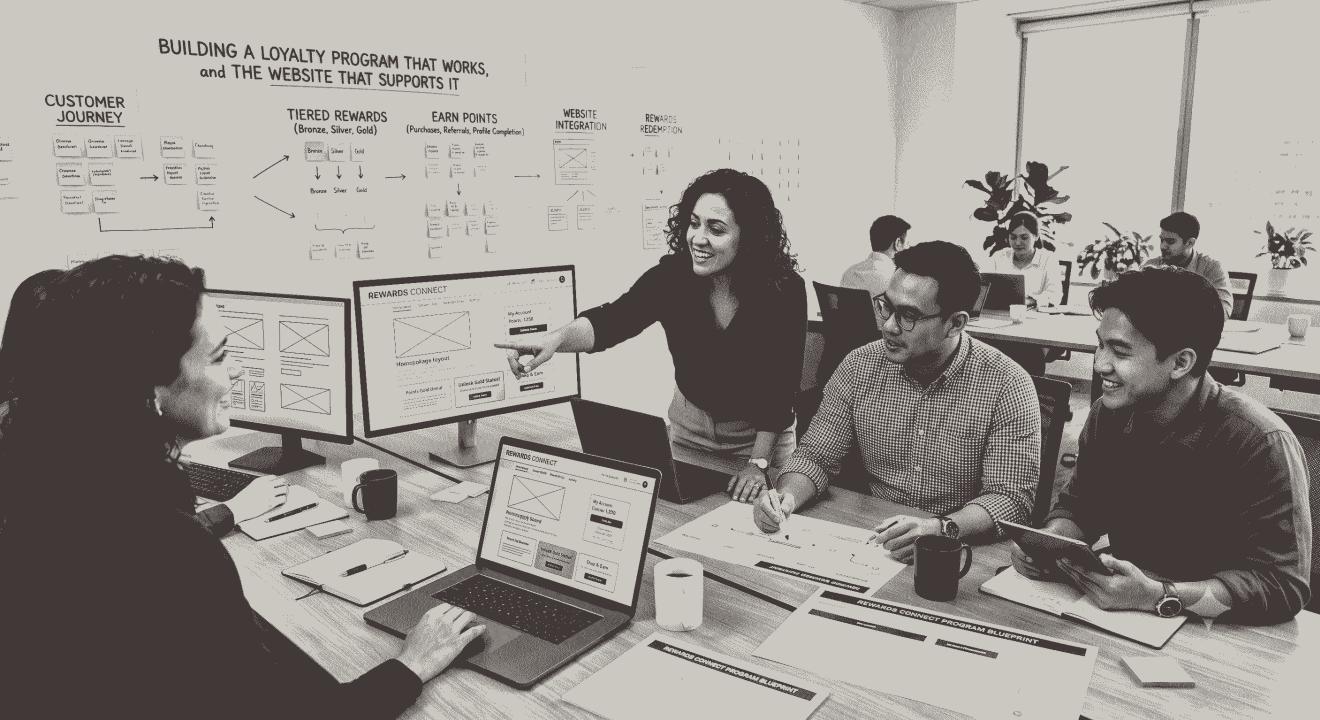
A loyalty program is one of the most direct ways to build brand loyalty on purpose. When a customer joins, you can properly measure loyalty performance and build organic brand advocacy. But a program only works if you understand the customer journey behind it, keep it customer-focused, and give people a smooth digital experience to use it on.
This guide covers the four stages of brand loyalty, the 3Rs, the 4Cs, and the trends shaping loyalty programs, and it shows where your website fits in.
The 4 Stages of Brand Loyalty
Stage 1: Opt-In
The first stage is when a customer decides to join your loyalty program. They may have read a post-purchase email, seen it on your website, or sought it out.
They might think, "This brand seems like a good option compared to others. Why not join their program?" They're curious about what rewards they could earn.
How to get customers here: Build a good relationship early. Customers decide whether signing up is worth their time and personal data based on:
- A seamless customer experience, before and after purchase
- A great quality product
- A clear customer value proposition
- A good brand reputation
Notice how much of this happens online. A confusing sign-up page or slow site can lose a customer before they ever join, which is why many brands work with a website development company in Bangalore to make enrollment quick and clear.
Stage 2: Engage
In the second stage, customers actively engage with your brand because of the program. Engagement counts when a customer completes an activity that earns points or another reward.
For example, if a customer wasn't following you on social media and did so to earn points, that's engagement. They're thinking, "I can earn enough points to get this reward," and they feel encouraged to be rewarded for non-transactional activities.
How to get customers here: Make engagement as easy as possible. Offer small rewards for low-effort activities to build momentum toward bigger rewards, such as points for:
- Following you on social media
- Signing up for your newsletter
- Adding their birthdate
- Downloading your app
These suit brands in fashion or beauty, which often have strong social media presence and enough products to justify an app.
Stage 3: Repeat Purchase
At this stage, customers love your products and keep coming back. They've engaged with the program and developed a preference for your brand. As they earn points for non-transactional activities, they accumulate enough to put toward a reward.
Their thinking shifts: "I have this many points, so I can use them now," or "If I buy something now without using my points, I could earn more toward an even better reward later." The goal is to push customers into higher tiers with better rewards.
How to get customers here: Remind customers they have points banked. An interactive loyalty widget shown while a customer is signed in works well, especially while shopping. For customers away from your site, personalized loyalty emails highlighting point accumulation and recommending a matched reward are a great way to drive them to checkout.
This is where custom web development in Bangalore becomes valuable. Features like a points dashboard, tier progress bar, and personalized reward suggestions need to be built into your site smoothly, not bolted on.
Stage 4: Brand Advocacy
The final stage is brand advocacy, where customers actively promote your brand through word-of-mouth or referrals. This is where loyalty marketing pays significant dividends. Your loyal customers are effectively acquiring new customers for you, which matters because most consumers trust recommendations from friends and family the most.
How to get customers here: Customers become advocates when they genuinely believe in the value your brand adds to their lives and when you give them rewarding ways to advocate. A great product usually isn't enough alone. Build an emotional connection by offering more than financial rewards, such as workshops, events, exclusive content, and priority support.
A Program Worth Copying: Starbucks Rewards
One of the best examples of a successful loyalty program is Starbucks Rewards. Customers earn stars for each purchase, redeemable for free drinks, food items, and other perks. The program also offers personalized promotions based on individual preferences and purchase history. It's simple to understand, rewarding to use, and tailored to each customer.
The 3Rs of Loyalty
- Retention: Keep existing customers engaged and satisfied so they don't switch to competitors.
- Relationship: Build strong, meaningful connections that foster long-term commitment.
- Revenue: Increase income by leveraging loyal customers who make repeat purchases and may advocate for you.
When retention and relationships are strong, revenue follows.
The 4Cs of Marketing
When customers feel valued and understood, they're more likely to stick with a brand.
Consumer wants and needs. Research your audience, create profiles, ask for feedback, and monitor social media. Focus on their needs instead of only what you want to sell.
Cost to satisfy. This is the total cost a customer bears, including time, effort, and how easy the product is to get or use. Something cheap but hard to find or use carries a high overall cost. Aim for customers to feel they get more value than they pay.
Convenience to buy. Customers value fast shipping, easy payment methods, and multiple locations. The easier it is to buy, the more likely people return.
Communication. Be consistent, transparent, and timely across social media, email, and support, so customers feel heard and valued.
Convenience and communication both depend heavily on your website. Responsive web design in Bangalore matters because most customers browse and buy on their phones. A site that loads slowly or breaks on a small screen raises the "cost to satisfy" instantly. A good website design company in Bangalore will treat speed, mobile layout, and clear navigation as loyalty features, not just visual polish.
Future Trends in Loyalty Schemes
- Emerging technologies. Programs will increasingly use artificial intelligence and blockchain to improve personalization, security, and convenience.
- Emotional loyalty. Businesses will prioritize emotional connections beyond transactional rewards.
- Sustainability and social responsibility. Programs will align with customers' values and preferences.
- Non-traditional sectors. Loyalty programs will expand into healthcare, education, and transportation.
Connecting Loyalty to Growth
A loyalty program should ultimately serve your business goals. Sales consulting services in Bangalore can help you connect program design to pipeline, pricing, and revenue targets, so rewards drive profitable behavior rather than just discounts.
Final Thoughts
A great loyalty program guides customers through four stages, from opt-in to advocacy, while staying grounded in retention, relationships, and revenue. Use the 4Cs to keep decisions customer-focused, and build the website that makes every step effortless.
Ready to build the digital foundation for your loyalty program? Explore our website design and development services, learn about our sales consulting services in Bangalore.