Every time you use a "free online image converter," there's a quiet question most people never ask: where do my files actually go? For the vast majority of these tools, the answer is "up to someone's server." Your private photos — including ones you'd never knowingly hand to a stranger — get uploaded, processed, and (you hope) deleted.
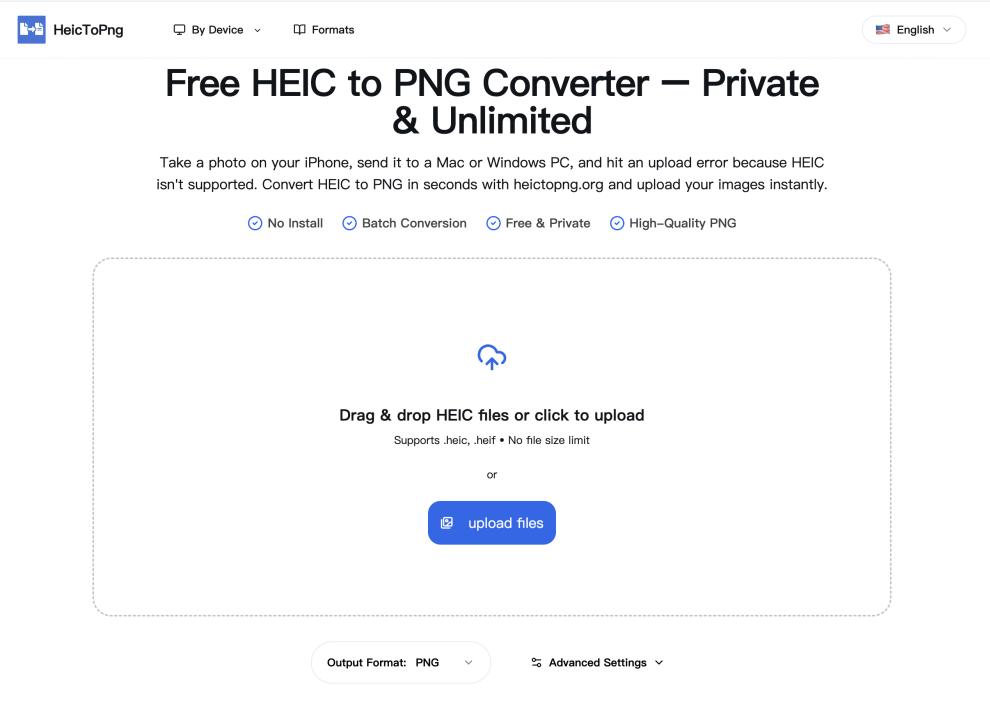
When I built a HEIC converter for iPhone photos, I made one decision that shaped everything else: the files would never leave the user's device. The conversion runs 100% in the browser. No upload, no server, no "trust us, we delete them." There is literally nothing to leak, because the photo never travels anywhere.
Why privacy was the product, not a feature
"Private" is a checkbox on a lot of landing pages. I wanted it to be structurally true — the kind of claim you can't fake. "We can't see your files" is a much stronger promise than "we promise not to look," and for personal photos it's the promise that actually matters. That single architectural choice became the whole positioning.
The tradeoffs were real
Client-side isn't a free lunch. Decoding HEIC in the browser means shipping a fairly heavy decode library, which you have to code-split carefully so it doesn't wreck first load. And iPhone HEIC encoding keeps shifting between iOS versions, so compatibility testing has to run against real files from real devices, not synthetic samples. A server with a mature image library would have been easier in some ways.
But the upside compounds
No servers processing images means near-zero marginal cost per conversion — which matters enormously for a free tool that lives on SEO traffic. It also means no upload wait, so conversions feel instant. And the privacy story writes its own marketing: people share a tool they trust with their photos.
The broader lesson for anyone building utility tools: look for the decision that turns a generic feature into a claim a competitor structurally can't copy. For a file converter, "it never touches a server" is exactly that. If you want to see it in action, this is the tool: heictopng.org.
Would you trade some edge-case robustness for a converter that genuinely can't see your files? Curious where other builders land on the client-side vs server tradeoff.