Key Takeaways
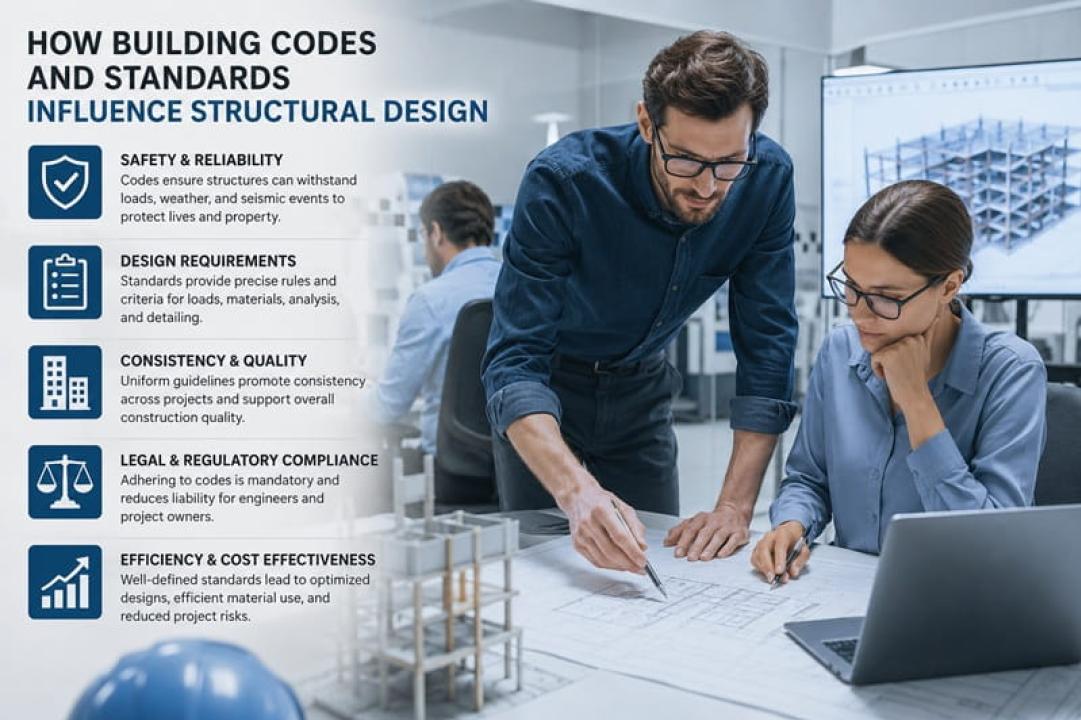
Building codes and standards set the minimum safety requirements for structural design.
Engineers use codes to calculate loads, select materials and ensure structural stability.
Building codes help structures withstand forces such as wind, earthquakes and heavy occupancy loads.
Structural safety standards reduce risks and improve long-term building performance.
Building code requirements vary based on a building's type, location and intended use.
Building regulations in construction help ensure designs are correctly implemented on site.
Structural engineering codes create consistency, safety and compliance across construction projects.
Understanding design codes for civil engineering is essential for every aspiring structural engineer.
Introduction
A building may appear to be a collection of structural and non-structural elements such as columns, beams, slabs, walls and a roof. However, each component is designed to perform a specific function, ensuring that loads are safely transferred through the structure to the foundation. But the real work is hidden in the design. Before anything is built, engineers have to answer one basic question: will this structure stay safe for the people who use it?
That is where building codes and standards come in. They tell engineers the minimum safety rules a building must follow. They also help architects, contractors and project teams work from the same set of rules instead of depending only on personal judgment.
What are building codes and standards?
Building codes are official rules for planning, designing and constructing buildings. Standards explain the technical details behind those rules. Together, they guide the size of structural members, the type of materials used, the loads a building must carry and the safety checks needed before construction starts.
For example, a classroom, hospital, mall and high-rise apartment do not have the same design needs. Each building has a different use, crowd level and risk. Codes help engineers design for these differences.
A useful fact: the International Code Council says its International Codes, including the International Building Code, are updated every three years. This helps codes reflect new research, safety lessons and construction practices. (Source: iccsafe.org)
Also Read : Different types of structural members & their functionalities
Importance of building codes
The importance of building codes is easiest to understand when something goes wrong. A weak column, poor concrete mix, wrong steel placement or ignored fire rule can put lives at risk.
Codes reduce that risk. They set minimum safety levels for buildings so that a structure can carry its loads without sudden failure. They also help avoid guesswork. A young engineer may not have years of site experience, but a code gives them tested rules to follow.
Building regulations in construction also protect the public. They make sure that a builder cannot cut corners just to save money. The final design must be checked, approved and inspected as per the rules of that location.
How building codes affect structural design
How building codes affect structural design can be seen from the first stage of a project. Before an engineer starts calculations, they check which code applies to the site and building type.
Codes decide many things, such as:
How much load the structure must carry
How strong the concrete, steel or timber should be
How much safety margin is needed
How the structure should behave during wind or earthquakes
How much movement or bending is acceptable
This means the design is not based on rough ideas. It is based on clear limits.
For example, a building in an earthquake zone will need stronger detailing than the same building in a low-risk area. A coastal building may need extra care because of wind and corrosion. A hospital may need stricter safety rules because it must remain useful during an emergency.
Building codes in structural design
Building codes in structural design guide the way engineers calculate loads. Every building carries dead load and live load. Dead load is the weight of the structure itself. Live load comes from people, furniture, machines and movable items.
Some buildings must also be checked for wind, snow, earthquake forces or soil pressure. These loads can change from place to place. Codes give engineers a common method to calculate them.
This matters because underestimating load can make a structure unsafe. Overestimating it too much can make the project costly. Codes help engineers stay between these two extremes.
Also Read : Basic of Structural Steel Construction
Structural design standards and material choice
Structural design standards also affect the choice of materials. Concrete, steel, brick, stone and timber behave in different ways. A beam made of steel does not act like a beam made of concrete.
Standards explain how each material should be tested and used. They also define strength limits, quality checks and design methods. This helps the engineer choose the right material for the right job.
For students, this is an important lesson. Structural design is not only about formulas. It is also about knowing how real materials behave on site.
Structural safety standards in everyday use
A safe building is not only one that does not collapse. It should also feel safe and work well for daily use.
Structural safety standards set limits for bending, cracks, vibration and movement. For example, a floor may be strong enough to carry people, but if it vibrates too much, users may feel unsafe. A beam may not fail, but wide cracks can still point to a design or construction issue.
Codes help engineers control these problems before they become serious.
Role of building codes in construction
The role of building codes in construction continues after the drawings are ready. Site teams must follow the approved design. Inspectors check whether the work matches the drawings and code requirements.
This includes checking steel placement, concrete quality, foundation depth, fire exits and other safety details. If the site work does not match the approved plan, the building may fail inspection.
Good codes are useful only when people follow them on site. That is why construction standards and safety must go together.
Building code requirements for different projects
Building code requirements change from project to project. A small home, school, factory and airport will not follow the exact same safety path.
The rules depend on the height of the building, number of users, location, soil condition and purpose of the structure. A tall building may need special wind checks. A public building may need wider exits. A factory may need extra fire protection.
These requirements should be studied early. If they are ignored in the beginning, the project may need changes later. That can waste time and money.
Structural engineering codes for future engineers
Structural engineering codes are part of daily life for civil engineers. Students often see them as difficult books full of tables and formulas. But once they start using them, the purpose becomes clear.
Codes are not there to make design harder. They are there to make design safer.
Design codes for civil engineering also teach discipline. They force engineers to check loads, materials, drawings and assumptions carefully. This habit is important, especially for early-career engineers who are still learning how classroom theory works on a real site.
Conclusion
Building codes and standards shape almost every part of structural design. They guide load calculation, material selection, safety checks, site inspection and legal approval.
They also remind engineers that every line on a drawing affects real people. A column is not just a column. A slab is not just a slab. These parts support homes, offices, hospitals, schools and public spaces.
For students and young professionals, learning codes may feel slow at first. But it is one of the most useful skills in civil engineering. A good engineer does not design by guesswork. A good engineer understands the rules, applies them properly and knows why they matter.