The networking and cybersecurity landscape continues to evolve as organizations adopt advanced technologies, cloud platforms, and automation-driven security solutions. Professionals preparing for the Cisco expert-level certification need to understand how certification updates reflect these industry changes. CCIE Security Training helps candidates build the skills required to work with modern enterprise security environments and prepare for advanced certification paths.
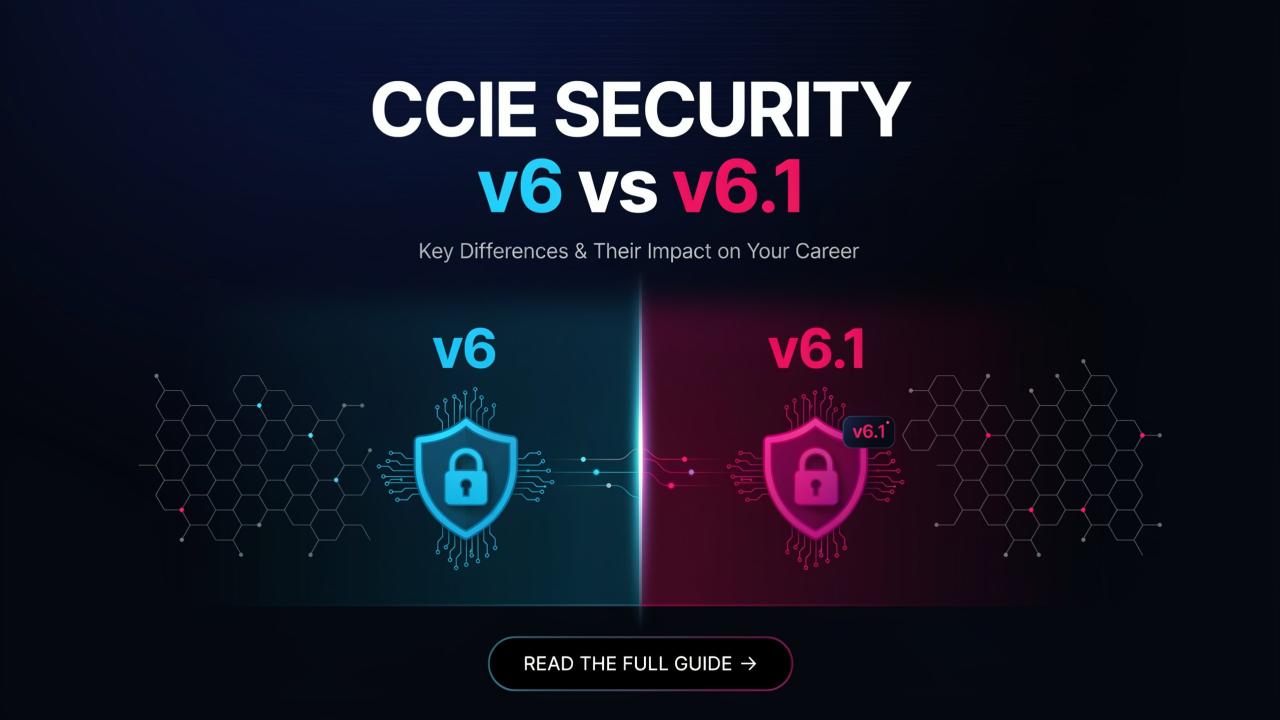
The transition from CCIE Security v6 to v6.1 introduced important updates designed to align the certification with current security practices. While the foundation remained focused on enterprise security, the newer version emphasized updated technologies, automation, threat protection, and evolving infrastructure requirements.
Understanding the differences between CCIE Security v6 and v6.1 helps learners, network engineers, and security professionals choose the right preparation strategy and build relevant skills for future career opportunities.
Understanding CCIE Security v6 Certification
CCIE Security v6 was designed to validate advanced-level security expertise across enterprise networks. It focused on building strong knowledge of security architecture, infrastructure protection, and troubleshooting complex security environments.
The certification covered several important areas, including:
Network Security Fundamentals
The v6 version emphasized traditional enterprise security concepts such as:
Firewall configuration and management
Secure network connectivity
Access control policies
Identity management
VPN technologies
Threat prevention strategies
These skills helped professionals protect business networks against common security risks.
Infrastructure Security
Another major focus area was securing enterprise infrastructure. Candidates needed to understand how to implement security solutions across routers, switches, and other network devices.
Topics included:
Device hardening
Secure communication methods
Network segmentation
Security monitoring
Policy enforcement
Security Operations
CCIE Security v6 also included operational security concepts. Professionals were expected to analyze security events, identify issues, and troubleshoot security-related problems in enterprise environments.
Introduction to CCIE Security v6.1
CCIE Security v6.1 was introduced as an updated version that reflected changes in modern cybersecurity requirements. The update did not completely replace the core concepts but expanded the blueprint to include newer technologies and security approaches.
Organizations were increasingly adopting cloud services, automation tools, and advanced threat detection methods. The updated version addressed these industry trends by including more practical and modern security topics.
Key Changes Between CCIE Security v6 and v6.1
The differences between v6 and v6.1 can be understood by looking at the areas where the certification evolved.
Greater Focus on Automation and Programmability
One of the most noticeable improvements in v6.1 was the increased importance of automation.
Modern security teams manage large-scale environments where manual configuration is no longer efficient. Automation helps organizations improve consistency, reduce errors, and respond faster to security incidents.
The updated version introduced more emphasis on:
Security Automation Concepts
Professionals needed awareness of:
Automated security workflows
API-based integrations
Configuration automation
Security orchestration
This shift reflected the growing role of automation in enterprise security operations.
Enhanced Cloud and Hybrid Security Coverage
Cloud adoption changed how organizations designed their security strategies. Traditional perimeter-based security models were no longer enough for hybrid environments.
CCIE Security v6.1 placed more attention on securing:
Cloud-connected networks
Hybrid infrastructures
Remote access environments
Distributed applications
Security professionals needed to understand how security controls operate beyond traditional data centers.
Updated Threat Defense Approach
Cyber threats became more advanced, requiring stronger detection and response capabilities.
The updated certification placed greater importance on:
Advanced Threat Protection
This included concepts related to:
Malware prevention
Intrusion detection
Security analytics
Threat monitoring
Incident response
The focus shifted from only preventing attacks to continuously identifying and responding to potential risks.
Changes in Identity and Access Management
Identity became a critical part of modern cybersecurity strategies. Organizations needed better control over users, devices, and applications.
The newer version highlighted areas such as:
User authentication
Authorization policies
Access control frameworks
Device identity management
This aligned with the growth of Zero Trust security models.
Impact on Certification Preparation
The move from v6 to v6.1 changed how candidates needed to prepare. Instead of focusing only on device configuration, learners had to develop broader security knowledge.
A successful preparation approach included:
Building Strong Networking Foundations
Candidates still needed a solid understanding of:
Routing and switching concepts
Network protocols
Enterprise architecture
Troubleshooting methods
These fundamentals remained important because security depends on a properly designed network infrastructure.
Learning Modern Security Technologies
Preparation needed to include newer areas such as:
Cloud security principles
Automation tools
Security monitoring platforms
Advanced firewall capabilities
Practical experience became increasingly valuable.
Developing Troubleshooting Skills
Expert-level certifications test the ability to solve real-world problems. Candidates needed to understand how different security components interact and identify issues efficiently.
Career Impact of the Updated Certification
The changes from v6 to v6.1 reflected the direction of the cybersecurity industry. Employers increasingly looked for professionals who could manage complex environments combining networking, security, automation, and cloud technologies.
Professionals with updated skills could explore roles such as:
Network Security Engineer
These professionals design and maintain secure enterprise networks while protecting infrastructure from threats.
Security Architect
Security architects create security frameworks that support business operations while reducing risks.
Cybersecurity Consultant
Consultants help organizations improve security strategies, implement solutions, and meet compliance requirements.
Security Operations Specialist
These specialists monitor environments, investigate incidents, and support security response activities.
Should You Prepare for CCIE Security v6 or v6.1?
For candidates deciding between older and newer versions, the choice depends on their goals and available resources.
Candidates Starting Fresh
Those beginning their certification journey should focus on the latest available version because it reflects current industry expectations and technologies.
Existing v6 Candidates
Professionals who already invested time in v6 preparation can evaluate their progress and identify areas where additional learning may be needed.
The most valuable skills are not only certification-specific topics but also practical abilities that apply to real enterprise environments.
Future of CCIE Security Certification
Cybersecurity continues to change rapidly due to artificial intelligence, cloud adoption, remote work, and increasing cyber threats. Certification programs must continue adapting to ensure professionals remain prepared.
Future updates are likely to include more emphasis on:
Security automation
Cloud-native protection
Artificial intelligence in security operations
Zero Trust architectures
Advanced threat intelligence
Professionals who continue learning will be better positioned to handle evolving security challenges.
Conclusion
The transition from CCIE Security v6 to v6.1 represented a shift toward modern cybersecurity requirements. While both versions focused on advanced enterprise security knowledge, v6.1 expanded the scope by introducing stronger emphasis on automation, cloud security, threat defense, and identity management.
For aspiring security professionals, understanding these changes helps create a more effective learning plan. The updated approach ensures that certified experts are prepared to manage today’s complex digital environments and contribute to stronger organizational security strategies.