Preparing for an expert-level networking certification requires dedication, structured learning, and consistent practice. Many professionals planning their cybersecurity career ask one common question: how long does it take to become ready for the certification exam?
CCIE Security Training helps candidates develop advanced skills in network security, infrastructure protection, threat prevention, and enterprise security solutions. However, the preparation timeline depends on factors such as previous experience, technical background, study routine, and hands-on practice.
A realistic preparation plan helps learners avoid unrealistic expectations and create a strategy that matches their career goals. While some candidates may prepare faster due to strong networking experience, others may require additional time to build the required foundation.
Understanding the CCIE Security Certification Journey
The certification is designed for professionals who want to validate their expertise in designing, implementing, and troubleshooting complex security environments. It focuses on advanced concepts that go beyond basic configuration skills.
Candidates are expected to understand multiple areas of enterprise security, including:
Network Security Architecture
Professionals need knowledge of secure network design principles, security policies, and infrastructure protection techniques.
Threat Detection and Prevention
Modern security environments require skills in identifying risks, preventing attacks, and responding to security incidents.
Identity and Access Management
Security professionals must understand authentication methods, authorization policies, and user access controls.
Security Operations
Monitoring, troubleshooting, and maintaining secure environments are essential parts of expert-level security roles.
Factors That Affect Preparation Time
There is no single timeline that works for every candidate. Several factors influence how quickly someone can become exam-ready.
Previous Networking Experience
Candidates with experience in enterprise networking may require less time because they already understand concepts such as:
Routing and switching
Network protocols
Infrastructure design
Troubleshooting methods
Professionals starting with limited networking experience may need additional months to strengthen these fundamentals.
Hands-On Practice
Security certifications are highly practical. Reading concepts alone is usually not enough to build the required confidence.
Hands-on practice helps candidates understand:
Device configuration
Security policies
Network behavior
Real-world troubleshooting scenarios
Regular lab practice can significantly improve preparation quality.
Study Consistency
The number of hours dedicated each week affects the overall timeline. A professional studying a few hours daily may progress faster than someone following an irregular schedule.
Consistency is often more important than studying for long hours occasionally.
A Realistic CCIE Security Preparation Timeline
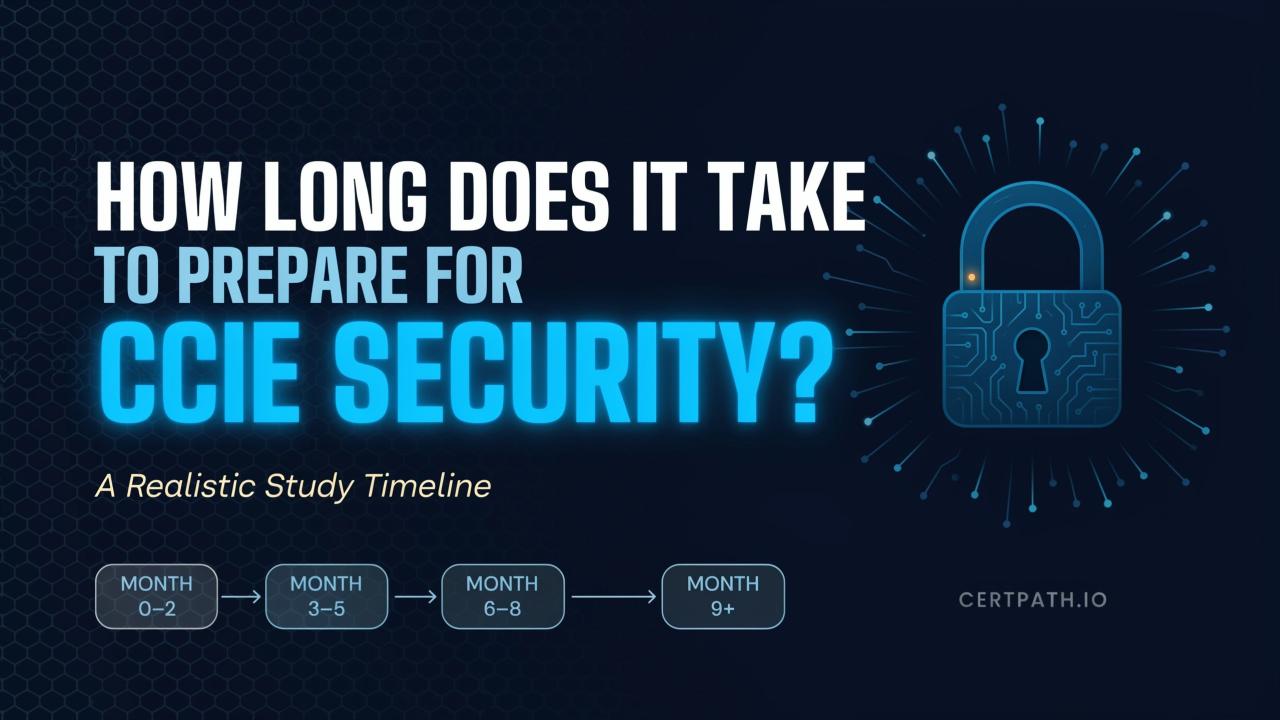
A typical preparation journey can range from several months to over a year, depending on experience and study approach.
First 3 Months: Building Strong Foundations
The initial phase focuses on strengthening core networking and security knowledge.
During this stage, candidates should focus on:
Networking Fundamentals
Important areas include:
IP addressing
Routing concepts
Switching technologies
Network communication models
Security Basics
Candidates should understand:
Firewall concepts
VPN technologies
Access control mechanisms
Security policies
Lab Familiarization
Building basic lab environments helps learners become comfortable with configuration and troubleshooting tasks.
Months 4 to 6: Developing Advanced Security Skills
After building fundamentals, candidates can move toward advanced security topics.
Key learning areas include:
Enterprise Security Solutions
Professionals should explore how security technologies work together across large-scale networks.
Secure Connectivity
This includes understanding secure communication between:
Branch offices
Data centers
Cloud environments
Remote users
Threat Management
Candidates should practice identifying and responding to security challenges.
This stage is where practical skills become more important.
Months 7 to 9: Intensive Practice and Troubleshooting
The middle-to-late preparation stage focuses on improving real-world problem-solving abilities.
Candidates should spend more time on:
Complex Lab Scenarios
Practice environments should include multiple connected technologies instead of isolated tasks.
Troubleshooting Exercises
Candidates should learn how to:
Identify configuration issues
Analyze network behavior
Resolve security problems efficiently
Exam Practice
Timed practice helps improve speed and confidence.
Final 2 to 3 Months: Exam Readiness
The final stage focuses on revision and performance improvement.
Candidates should:
Review Weak Areas
Identify topics that require additional attention and revisit important concepts.
Practice Under Exam Conditions
Simulating exam situations helps improve:
Time management
Decision-making
Troubleshooting speed
Strengthen Practical Knowledge
Final preparation should focus on understanding why solutions work, not just memorizing commands.
Recommended Weekly Study Plan
A balanced study schedule can make preparation more manageable.
A weekly plan may include:
Theory Learning
Spend time understanding security concepts and technologies.
Lab Practice
Allocate regular sessions for configuration and troubleshooting.
Review Sessions
Review previous topics to improve long-term retention.
Practice Tests
Use assessment methods to measure progress.
Common Mistakes During Preparation
Many candidates face challenges because of ineffective preparation methods.
Focusing Only on Theory
Security roles require practical understanding. Candidates should combine learning with hands-on experience.
Ignoring Troubleshooting Skills
Expert-level exams often test problem-solving ability rather than simple configuration knowledge.
Creating an Unrealistic Schedule
Setting an overly aggressive timeline can lead to incomplete learning and burnout.
A realistic plan based on personal experience and available study time is more effective.
How to Make Preparation More Effective
A structured approach can improve learning efficiency.
Follow a Topic-Based Roadmap
Organize preparation by technology areas instead of randomly studying topics.
Practice Regularly
Frequent hands-on practice helps convert theoretical knowledge into practical skills.
Stay Updated
Cybersecurity changes constantly. Following current trends helps professionals understand how technologies are used in real environments.
Career Benefits of Completing the Certification
Advanced security expertise can support career growth in several areas.
Professionals may pursue roles such as:
Security Engineer
Security engineers design and maintain secure infrastructure.
Network Security Specialist
These professionals focus on protecting enterprise networks from threats.
Security Consultant
Consultants help organizations improve security strategies and implement solutions.
Security Architect
Security architects create long-term security frameworks for businesses.
Conclusion
The time required to prepare for CCIE Security depends on individual experience, learning speed, practical exposure, and study consistency. For many professionals, a realistic preparation timeline can range from several months to more than a year.
A successful approach combines strong networking foundations, hands-on lab practice, troubleshooting experience, and continuous learning. Creating a structured study plan helps candidates prepare effectively and build skills that are valuable beyond certification.