Most businesses obsess over big-ticket expenses like rent, payroll, and marketing, while smaller recurring costs slip under the radar. Office equipment is one of the biggest culprits. A printer that seemed like a "good deal" at purchase can end up costing a company thousands more over its lifetime once you factor in maintenance, toner, repairs, and the inevitable upgrade cycle.
Here are five common mistakes businesses make with office equipment, and how to avoid them.
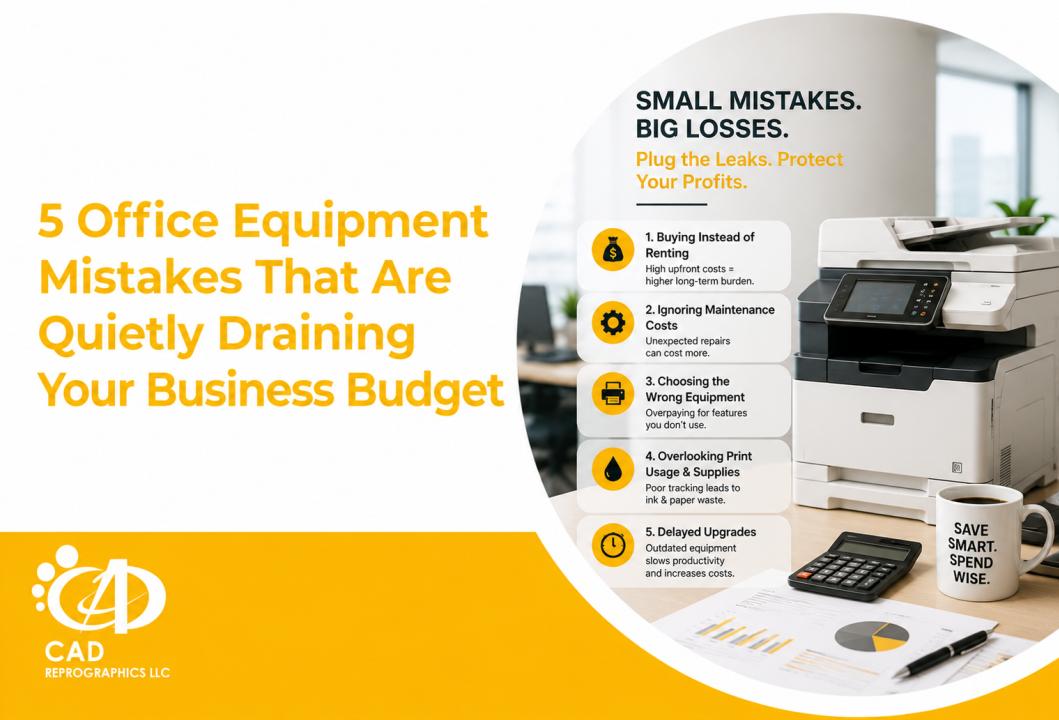
1. Buying Equipment You'll Outgrow in a Year
Companies in growth mode often buy printers or copiers sized for their current headcount, only to find themselves bottlenecked six months later. Upgrading means either living with an undersized machine or writing off a recent purchase entirely. Scalable arrangements that let you swap or upgrade equipment as needs change are far more practical for fast-moving teams.
2. Ignoring the True Cost of Ownership
The sticker price of a printer is just the entry fee. Toner cartridges, replacement parts, service call-outs, and eventual disposal all add up, and most businesses never actually calculate this total. When you add it up, the "cheaper" option on paper is frequently the more expensive one over a three-year period.
3. No Plan for Breakdowns
A single day of printer downtime can stall invoicing, contracts, or client deliverables. Yet many offices have no backup plan beyond calling a repair technician and hoping for a quick turnaround. Built-in maintenance and replacement guarantees, the kind that come standard with rental agreements, remove this risk entirely.
4. Treating Equipment as a Fixed Asset Instead of a Flexible Tool
Office technology changes fast. A copier bought today may lack features that become standard within a couple of years. Businesses locked into ownership are stuck with outdated machines until depreciation schedules allow a refresh. Flexible terms let companies stay current without the capital outlay each time.
5. Underestimating Tax and Cash Flow Benefits
Outright purchases tie up capital that could otherwise fund operations, hiring, or marketing. Rental and lease arrangements typically shift equipment costs to operating expenses, which can be more favorable for cash flow and, depending on local tax treatment, for deductions as well. This is especially relevant in markets with fast-scaling SME activity, like the UAE.
The Bigger Picture
None of these mistakes are about poor judgment, they're about businesses defaulting to the "buy it outright" model because that's traditionally how equipment procurement has worked. But the market has shifted. Renting has become a mainstream choice for businesses that want predictable costs, less operational risk, and the flexibility to scale equipment alongside their growth.
For a deeper look at why this shift is happening and what businesses are gaining from it, Cadreprographics put together a detailed breakdown of the trend in Printer Rental in Dubai: Why Hundreds of Smart Businesses Are Renting Instead of Buying, which is worth a read if you're weighing the buy-vs-rent decision for your own office.
Takeaway
Office equipment decisions feel small in the moment but compound significantly over time. Before your next purchase, run the numbers on total cost of ownership, factor in your growth trajectory, and seriously evaluate whether renting gives you more flexibility for less risk. It's a decision that pays off well beyond the printer itself.