Walk onto almost any commercial job site right now and you'll hear contractors grumbling about the same thing: refrigerant rules have changed again, and nobody wants to be the one who finds out the hard way during inspection.
A2L refrigerants have quietly taken over the HVAC world, and with them came a wave of code requirements that catch even seasoned engineers off guard.
If you're still designing systems the way you did five years ago, it's time to catch up because the codes have not been waiting around.
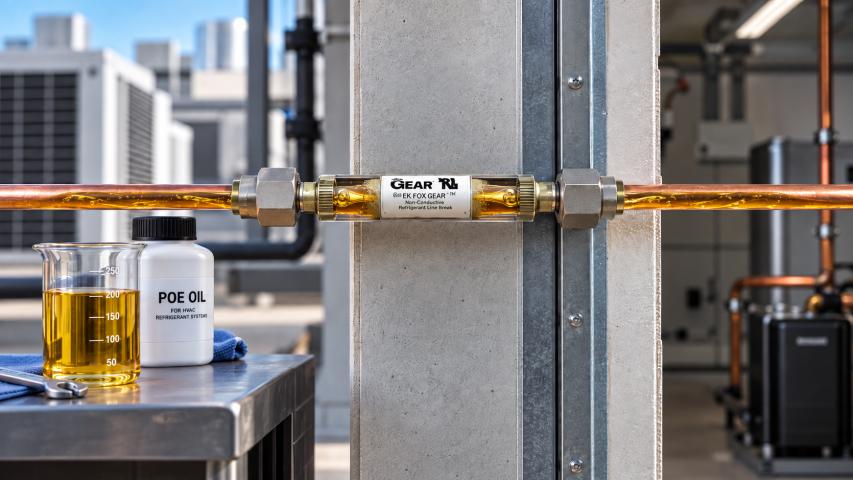
Anyone working near a secure or sensitive environment should also know that an A2L refrigerant line break isn't optional anymore; it's becoming a baseline expectation for compliant, safe installations.
So what changed, why does it matter, and what should you actually be doing about it? Let's break it down.
Why A2L Refrigerants Took Over
For decades, HVAC systems leaned on refrigerants with a high Global Warming Potential, or GWP. They worked fine, but they were environmentally costly.
The American Innovation and Manufacturing Act, signed into law in late 2020, gave the EPA the authority to phase down hydrofluorocarbons across the country, aligning the U.S. with the global Kigali Amendment.
The result is a hard deadline-driven shift: HVAC products with a GWP above 700 can no longer be manufactured after January 1, 2025, can't be sold or distributed after 2028, and can't be installed in new systems starting January 1, 2026. Variable Refrigerant Flow systems follow a similar timeline.
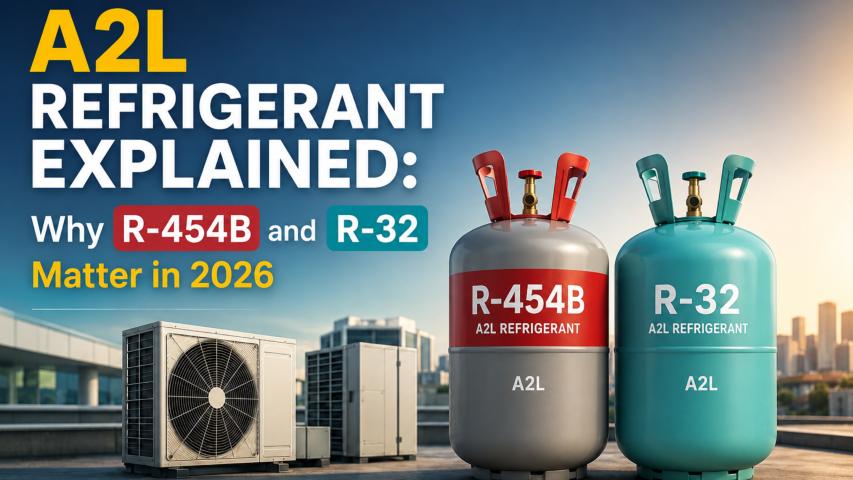
That regulatory pressure is exactly why A2L refrigerants, such as R-32 and R-454B, have become the new standard. Classified as "mildly flammable" with low toxicity under ASHRAE Standard 34, A2L refrigerants offer the lower environmental footprint regulators are demanding, but they come with a flammability profile that older systems were never designed to handle. That single distinction is driving nearly every code update we're about to discuss.
HVAC Code Compliance A2L Refrigerants: What Actually Changed
Before the 2024 International Mechanical Code (IMC), A2L refrigerants weren't even recognized for human comfort applications.
The 2024 IMC changed that, but it brought along a long list of new building code refrigerant regulations: charge limits, ventilation mandates, leak detection requirements, and shaft enclosure rules.
If your jurisdiction hasn't formally adopted the 2024 I-codes yet, amendments are available for older code cycles, but skipping them isn't really an option if you want to use A2L systems for comfort cooling.
The 2024 IMC leans heavily on the 2022 editions of ASHRAE 15 and ASHRAE 34 for A2L refrigerant safety standards. ASHRAE 34 handles classification, while ASHRAE 15 lays out the broader safety requirements that apply across virtually every A2L installation.
The Shaft Enclosure Headache
Here's where a lot of design teams get tripped up. Under current HVAC industry code requirements 2025, refrigerant piping that runs through two or more floor-ceiling assemblies generally needs a fire-rated shaft.
Older A1 refrigerant systems had an exception when concentration limits weren't exceeded, but that exception was never extended to A2L refrigerants.
Practically speaking, that means most buildings three stories or taller now need rated shafts to protect A2L piping risers, unless the lines are routed along the building exterior, which plenty of owners reject for aesthetic reasons.
If a shaft is required, it also needs ventilation. Natural ventilation calls for a minimum 4-inch opening at the lowest point of the shaft, while mechanical ventilation has its own velocity requirements and typically needs either continuous airflow or a refrigerant detector tied to the activation system.
There's a workaround worth knowing about. The 2022 edition of ASHRAE 15 includes a "shaft alternative" letting designers skip the rated shaft when refrigerant concentration stays under ASHRAE 34 limits and unlike the current IMC exception, it isn't restricted to A1 refrigerants.
A proposed 2027 IMC change would bring that allowance into the base code, giving engineers a credible basis for a code modification now rather than waiting years.
Refrigerant Detectors Are Becoming Non-Negotiable
Refrigerant handling regulations HVAC professionals deal with daily increasingly hinge on detection. A refrigerant detector is required any time A2L refrigerant risers run through a shaft without continuous mechanical ventilation, and it's also mandated in machinery rooms under current code.
Detectors additionally serve as a workaround in a couple of specific scenarios, avoiding a dedicated machinery room in certain industrial settings, or skipping a hood and exhaust system where refrigerant lines run near open flame or hot surfaces.
This is exactly the kind of refrigerant compliance inspection HVAC teams need to plan for early, not bolt on after the design is finalized.
Where Sensitive Facilities Add Another Layer
Commercial HVAC code changes get even more complicated in secure or classified environments.
Safety updates for SCIF HVAC systems show just how tangled this can get: A2L refrigerants now operate at pressures routinely exceeding 600 psig, while ICD 705 still demands a dielectric break on every metallic line crossing a secure perimeter, with zero exceptions.
Standard water-rated plumbing unions simply weren't built for that pressure or for synthetic refrigerant oils, and using them creates a real risk, both a mechanical failure point and a potential opening for unwanted electrical or signal transmission across the secure boundary.
The fix is specifying factory-tested, high-pressure dielectric breaks on both the suction and liquid lines, positioned within roughly six inches of the secure wall, and confirming everything is rated and certified for A2L service before installation begins.
This is also where the icd 705 refrigerant line break requirement intersects with general code: isolation components should be UL listed, pressure-rated correctly, and verified during commissioning, not assumed.
Practical Steps for Staying Ahead
For most teams, modern HVAC regulatory standards boil down to a handful of habits worth building into every project:
Confirm equipment is A2L-rated before specifying it, not after ordering it
Plan for shaft enclosures early, or build the case for a code modification using current ASHRAE 15 provisions
Treat leak detection and ventilation as core design elements, not afterthoughts
Verify any refrigerant line break ul listed components are pressure-rated for A2L service, especially in secure or high-pressure applications
Document everything for the refrigeration safety certification standards your AHJ will check during inspection
Low GWP refrigerant code compliance isn't a passing trend that will ease up after a few code cycles. It's the new baseline for commercial HVAC system design code updates, and the teams that adapt early are the ones who avoid expensive redesigns mid-project.
Preparing for A2L Refrigerants? Get Ahead of Code Before Inspection Day
A2L refrigerants are reshaping HVAC engineering code standards from the ground up, touching everything from shaft design to detector placement to how secure facilities handle perimeter penetrations.
The refrigerant industry regulatory framework will keep evolving as the 2027 IMC and future ASHRAE updates roll out, so staying current isn't optional anymore, it's part of the job.
If your next project involves A2L systems, secure facility penetrations, or anything requiring certified isolation components, it pays to work with engineered HVAC products, government and high-security applications from the start, rather than retrofitting compliance after the fact.
Don't wait for a failed inspection to find out your design needs a second look, get ahead of the code now, while you still have options.