
Selling into horticulture is trickier than it looks. Your buyers are scattered across commercial nurseries, greenhouse operations, floricultural farms, landscaping companies, and ag-tech startups, and they're often focused on what's happening in their fields or on their growing floors rather than monitoring email closely. If you sell fertilizers, irrigation systems, greenhouse equipment, or farm software, you already know the struggle: you can identify the type of business you want to reach, but finding the actual person making the purchasing decision takes real effort.
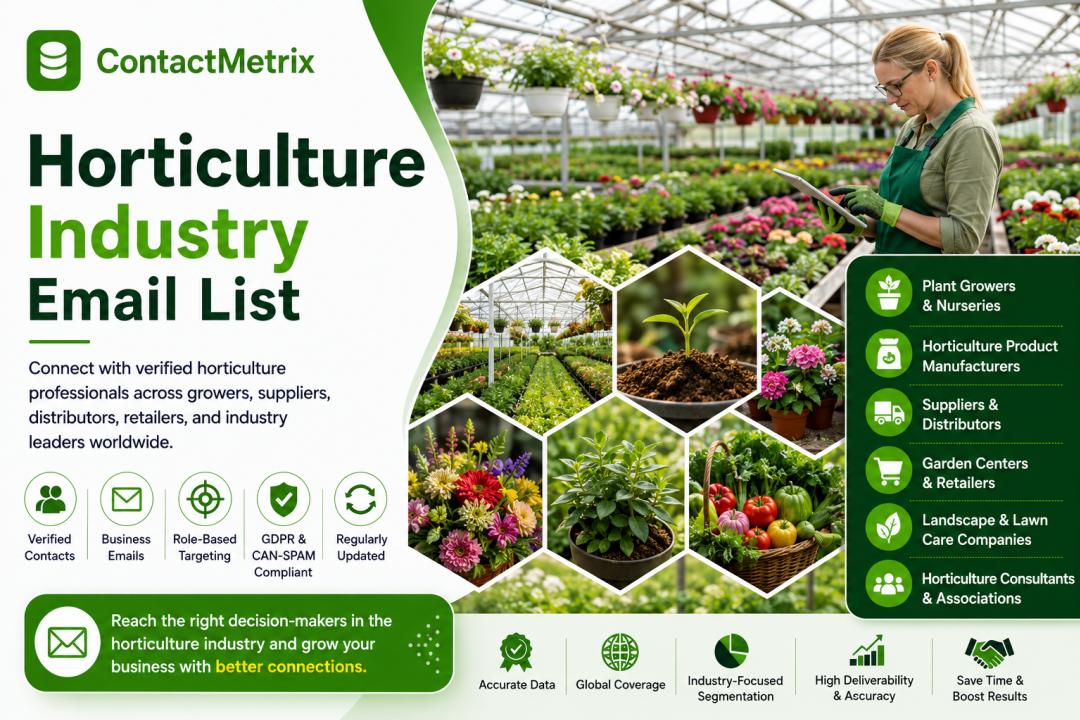
That's what a horticulture industry email list is built to address. It's a database focused specifically on the decision-makers in this sector: nursery owners, head growers, greenhouse managers, and procurement directors. Providers like ContactMetrix build these lists so you're not sending a generic pitch to a farm's general contact line and hoping it gets forwarded to someone relevant. You're reaching the person whose job includes evaluating what you sell.
What's Actually in One of These Lists
A useful horticulture contact list includes far more than a name and email address. A solid one has 20 or more data fields, and each one helps you figure out whether a contact is actually worth your time. Expect things like:
- Full name and job title
- Business email and direct phone number
- Company name and website
- Physical mailing address
- Business type and sub-sector, such as nursery, greenhouse, or landscaping
- Company size, including employee count and revenue band
- Geographic location down to city and country
- LinkedIn profile URL, where available
- Years in business
That last group of fields is what sets a targeted horticulture list apart from a generic agriculture database. Knowing whether a business is a 5-person landscape contractor or a 200-employee greenhouse operation changes everything about fit and approach. Similarly, knowing if a company focuses on ornamental floriculture versus field vegetable crops tells you whether your product is even relevant.
Who Gets the Most Out of This Data
Not every business needs horticulture-specific contacts, but if your customers sit anywhere in the growing, supply, or landscaping chain, this kind of list can save months of guessing. A few examples:
Fertilizer and soil amendment suppliers can reach head growers and procurement managers at commercial nurseries and greenhouses who actively source NPK blends, composts, and soil conditioners, instead of hoping a catalog gets noticed.
Irrigation and water management companies can connect with operations managers responsible for drip systems, sprinklers, and water recycling infrastructure at growing operations that are ready to upgrade.
Greenhouse and growing infrastructure suppliers can find nursery owners and capital procurement heads evaluating grow lights, climate control systems, or polytunnels, right when they're comparing options.
AgTech and precision farming software vendors can target digital transformation leads and farm managers ready to adopt farm management software, drone analytics, or crop monitoring platforms.
Pesticide and agrochemical companies can reach agronomists and procurement teams responsible for sourcing herbicides, fungicides, or biopesticides at commercial growing operations.
Packaging and cold chain logistics firms can identify produce exporters and large nursery operations needing refrigerated freight or cold storage solutions.
The industry also breaks down into clear sub-sectors: commercial propagation, protected cropping, field crops, floriculture, landscaping, vertical farming, AgTech, and input suppliers. Each has its own decision-makers and purchasing priorities. A Greenhouse Manager and a Landscape Operations Manager need completely different pitches, and a well-built list should let you filter down to exactly the role and sub-sector instead of buying one broad, unsorted file.
Why Data Quality Matters More Than Data Quantity
It's easy to assume a bigger list means more opportunity, but a database of thousands of outdated contacts is only as useful as how current it is. Horticulture has seasonal hiring, high staff turnover in some roles, and businesses that expand or consolidate quickly, so a list that hasn't been refreshed recently will send you chasing people who've moved on or changed positions.
Before buying any horticulture contact database, whether it's from ContactMetrix or another provider, it's worth asking a few questions:
- How often is the data verified and refreshed?
- Are the contacts opt-in, meaning people who've agreed to be reached for business purposes?
- What happens with a hard bounce? Some providers replace bad contacts at no extra cost, which is worth confirming before you commit.
- Can the list be filtered by sub-sector, company size, or geography, instead of just a broad horticulture label?
A provider that refreshes data every month or so and stands behind it with a replacement policy is a much safer bet than a static file compiled once and left untouched.
Getting Started Without Wasting Budget
The smartest way to test any contact list is to request a sample before buying the full database. A handful of real (even if partially masked) records will show you the data structure and whether the companies listed actually match who you're trying to reach. If you sell to greenhouse operations, you want to see Greenhouse Managers and Production Directors in that sample, not a random mix of unrelated horticulture contacts.
From there, most providers, ContactMetrix included, let you build a custom list around your ideal customer profile: sub-sector, company size, revenue range, job title, and geography. That's a far better use of a marketing budget than sending a mass email to a generic horticulture list and hoping it lands with someone who can actually say yes.
Growing businesses are relationship-driven, and cold outreach only works when it reaches someone with real authority. A well-built, regularly updated contact list won't close a deal by itself, but it does mean your first message lands with the right person instead of getting buried in a busy inbox.