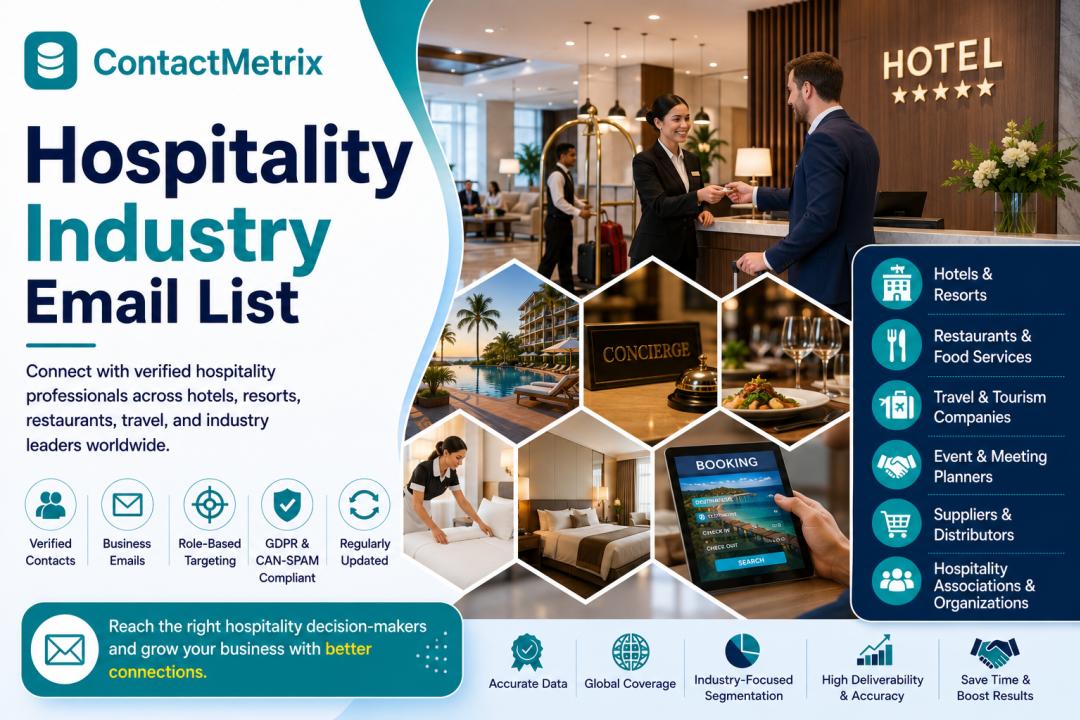
Hospitality is a sprawling industry to sell into. Your buyers might be running a five-room boutique hotel, managing a 400-unit resort, overseeing a restaurant group, or coordinating across multiple properties as a regional manager. They're busy, often in the field or on property, and most of them don't sit around checking email from vendors they don't know. If you sell hospitality technology, F&B products, staffing services, or property maintenance solutions, you already know the struggle: you can identify the type of property or operator you want to reach, but getting to the actual decision-maker is a different challenge entirely.
That's what a hospitality industry email list is built to solve. It's a database focused specifically on the people making purchasing decisions in this sector: hotel owners, general managers, F&B directors, operations leaders, and procurement heads. Providers like ContactMetrix build these lists so you're not sending a generic pitch to a hotel's front desk or main inbox and hoping it gets forwarded to the right person. You're reaching someone whose job includes evaluating exactly what you sell.
What's Actually in One of These Lists
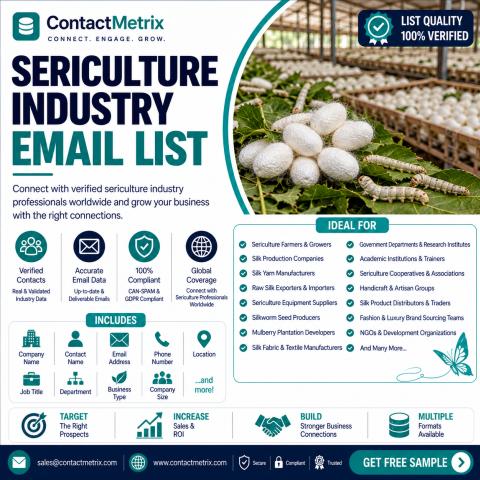
A useful hospitality contact list is far more than a name and a general email address. A solid one includes 20 or more data fields, and each one helps you figure out who's worth contacting and how to approach them. Expect things like:
- Full name and job title
- Business email and direct phone number
- Company name and website
- Industry classification and NAICS codes
- Geographic location by country, state, and city
- Revenue range and employee size
The specificity here matters a lot in hospitality. Knowing whether a property is a 20-room boutique hotel or a 400-room resort changes everything about fit, budget, and who makes the decision. A small independent restaurant has a completely different purchasing process than a restaurant group with fifteen locations.
Who Gets the Most Out of This Data
Not every business needs hospitality-specific contacts, but if your customers sit anywhere in this industry, this kind of list can save a lot of wasted outreach. A few examples:
Hospitality technology providers can go straight to general managers and operations leaders evaluating property management systems, point-of-sale platforms, booking engines, or revenue management software, instead of hoping a feature demo request gets noticed.
Food and beverage suppliers can reach purchasing managers and F&B directors who actively source food products, beverages, kitchen equipment, or bar solutions, right when they're evaluating vendors.
Hospitality services and vendors can connect with operations teams searching for staffing, housekeeping, maintenance, security, or logistics partners, which is a much more useful audience than a general hospitality directory.
Travel and leisure brands can identify hospitality operators and partners involved in destination services or tourism initiatives, rather than relying on conference connections alone.
Technology recruitment and staffing firms can find organizations actively hiring for IT leadership or technical roles, with the context needed to make a relevant pitch.
The industry also breaks down by clear categories. You've got executives and owners, general and regional management, operations and administration, F&B leadership, sales and marketing, and procurement and supply chain roles. A General Manager and a Procurement Manager have completely different priorities and budget authority, and a well-built list should let you filter down to the exact role and property type instead of buying one broad, unsorted file.
Why Data Quality Matters More Than Data Quantity
It's easy to think a bigger list automatically means more leads, but a database of 300,000 outdated contacts is only as useful as how current it is. Hospitality has high staff turnover, frequent promotions, management changes, and properties opening or closing, so a list that hasn't been refreshed recently will send you chasing people who've moved on or left the company.
Before buying any hospitality contact database, whether it's from ContactMetrix or another provider, it's worth asking a few questions:
- How often is the data verified and refreshed?
- Are the contacts opt-in, meaning people who've agreed to be reached for business purposes?
- What happens with a hard bounce? Some providers replace bad contacts at no extra cost, which is worth confirming before you commit.
- Can the list be filtered by property type, star rating, room count, or geographic region, instead of just "hospitality" as a broad category?
A provider that refreshes data every month or so and stands behind it with a replacement guarantee is a much safer bet than a static file compiled once and left untouched.
Getting Started Without Wasting Budget
The smartest way to test any contact list is to request a sample before buying anything. A handful of real (even if partially masked) records will show you the data structure and whether the properties and roles listed actually match who you're trying to reach. If you sell to resort properties, you want to see Resort Managers and Operations Directors in that sample, not a random mix of unrelated hospitality titles.
From there, most providers, ContactMetrix included, let you build a custom list around your ideal customer profile: property type, room count, revenue range, job title, and geography. That's a far better use of a marketing budget than sending a mass email to a generic hospitality list and hoping it lands with someone who can move things forward.
Hospitality is a relationship-driven industry, and cold outreach only works when it reaches someone with real authority to make a decision. A well-built, regularly updated contact list won't close a deal by itself, but it does mean your first message lands in front of the right person instead of getting lost in a busy inbox or forwarded to the wrong department.