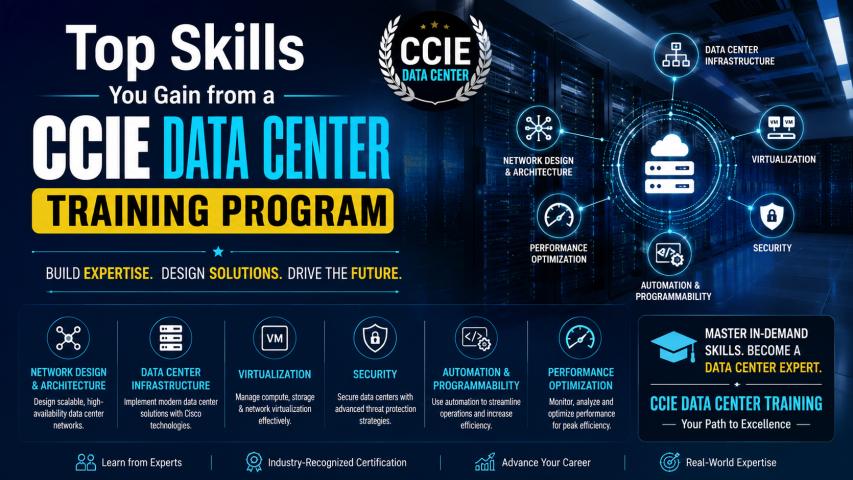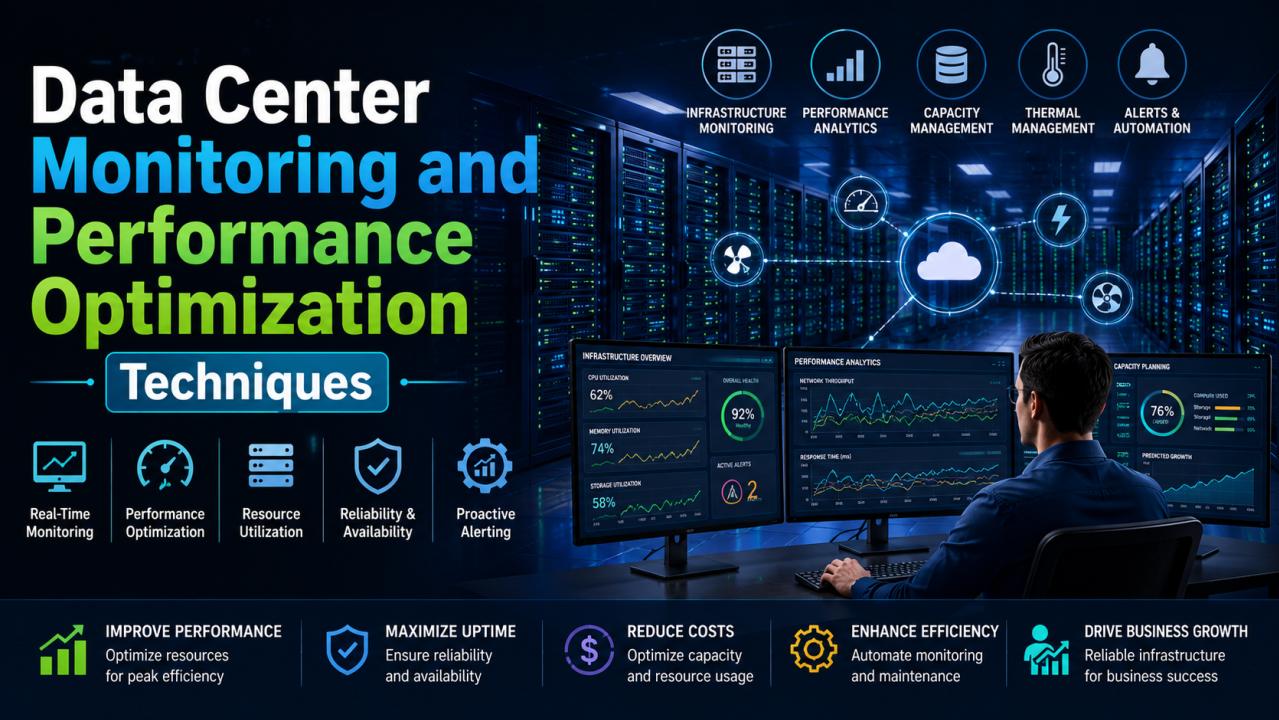
As modern enterprises continue to adopt cloud computing, virtualization, and AI-driven infrastructure, maintaining a high-performing data center has become more important than ever. CCIE Data Center certification equips networking professionals with the advanced knowledge required to monitor, manage, and optimize enterprise data center environments. Understanding effective monitoring and performance optimization techniques enables organizations to improve availability, reduce downtime, maximize resource utilization, and deliver reliable services to users. Professionals who master these concepts are well-positioned to support business-critical infrastructure and meet the growing demand for skilled data center experts.
Why Data Center Monitoring Is Essential
A data center hosts mission-critical applications, storage systems, servers, and networking equipment that support daily business operations. Even a minor performance issue can affect productivity, customer experience, and revenue.
Effective monitoring helps organizations:
Detect performance issues early
Improve infrastructure reliability
Minimize downtime
Optimize resource utilization
Enhance security
Reduce operational costs
Support business continuity
Improve user experience
Continuous visibility into infrastructure health enables IT teams to make informed decisions before problems escalate.
Understanding Data Center Performance Optimization
Performance optimization is the process of improving the efficiency, reliability, and responsiveness of data center infrastructure. It involves monitoring hardware, software, networking, storage, and virtualization platforms to ensure optimal performance.
Key optimization objectives include:
Reducing latency
Increasing network throughput
Balancing workloads
Optimizing storage performance
Improving server utilization
Enhancing application availability
Maintaining consistent service delivery
These objectives contribute to a stable and scalable enterprise infrastructure.
Key Components of Data Center Monitoring
A successful monitoring strategy covers every critical component within the data center.
Network Infrastructure Monitoring
Enterprise networks require continuous monitoring to maintain seamless communication between servers, storage devices, and applications.
Important metrics include:
Bandwidth utilization
Network latency
Packet loss
Interface errors
Device availability
Link performance
Monitoring these metrics helps administrators identify bottlenecks before they affect users.
Server Performance Monitoring
Servers are the backbone of every data center.
Administrators monitor:
CPU utilization
Memory usage
Disk performance
Process health
Operating system status
Hardware temperature
Continuous monitoring ensures servers operate within acceptable performance thresholds.
Storage Monitoring
Enterprise applications depend on high-performing storage systems.
Storage monitoring includes:
Storage capacity
Input/output operations per second (IOPS)
Disk latency
Read/write performance
Storage utilization
RAID health
Proper storage monitoring helps prevent performance degradation and capacity shortages.
Virtualization Monitoring
Virtualized environments require visibility into both physical and virtual resources.
Common monitoring areas include:
Virtual machine performance
Hypervisor utilization
Resource allocation
VM availability
Host performance
Workload distribution
Efficient virtualization monitoring improves infrastructure efficiency and scalability.
Network Performance Optimization Techniques
Enterprise networks require continuous tuning to deliver optimal performance.
Optimize Routing and Switching
Proper routing and switching configurations improve traffic flow and reduce unnecessary delays.
Best practices include:
Optimizing routing protocols
Eliminating routing loops
Reducing convergence time
Implementing efficient switching designs
Improve Network Redundancy
High availability minimizes service interruptions.
Organizations implement:
Redundant links
Link aggregation
High Availability (HA)
Failover mechanisms
Multiple network paths
Redundancy ensures uninterrupted network connectivity.
Implement Quality of Service (QoS)
Not all network traffic requires equal priority.
QoS enables administrators to:
Why Practical Experience Matters
Theoretical knowledge alone is not sufficient for enterprise infrastructure management.
Hands-on practice enables professionals to:
Troubleshoot complex issues
Optimize production environments
Improve operational efficiency
Strengthen technical confidence
Prepare for enterprise deployments
Practical experience is one of the most valuable aspects of expert-level certification preparation.
Conclusion
Data center monitoring and performance optimization are essential for maintaining reliable, secure, and efficient enterprise infrastructure. By understanding network monitoring, server management, storage optimization, virtualization, automation, analytics, and proactive maintenance strategies, professionals can significantly improve operational performance and reduce downtime. These skills enable organizations to deliver consistent application performance while supporting business growth and digital transformation initiatives. For networking professionals aiming to build expertise in enterprise infrastructure, CCIE Data Center certification provides the technical knowledge and practical experience needed to manage complex data center environments successfully. Enrolling in CCIE Data Center Training is an effective way to develop advanced monitoring and optimization skills that support long-term career growth in today's rapidly evolving IT industry.
Prioritize business-critical applications
Reduce voice and video latency
Manage bandwidth effectively
Prevent network congestion