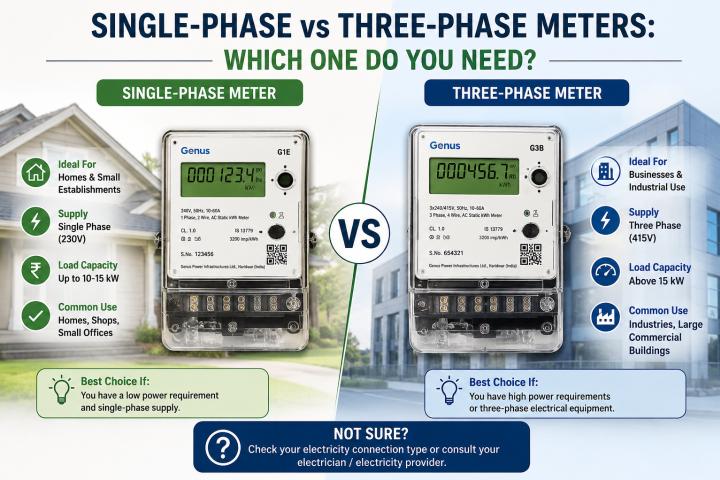
Choosing between a single-phase and a three-phase meter isn't really a technology decision — it's a load decision. Get the load requirement right, and the meter choice follows naturally. Get it wrong, and you're either paying for capacity you'll never use or installing something that can't handle the connection it's meant to measure.
What Actually Separates the Two
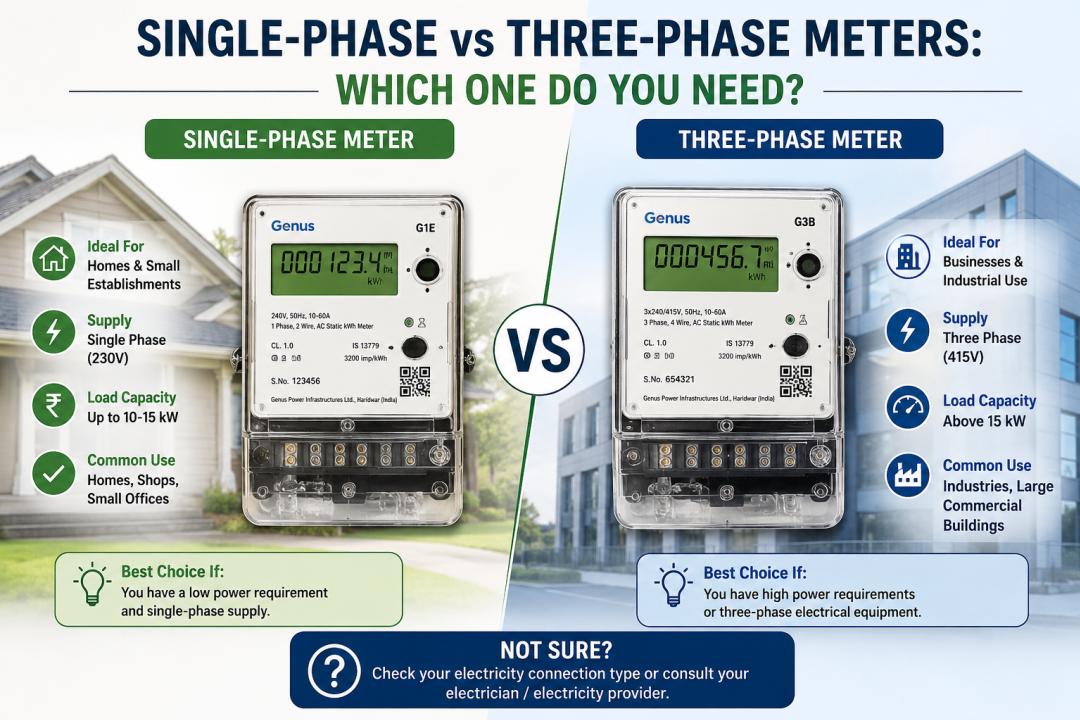
A single-phase meter measures energy on a system with one alternating current phase and a neutral wire — typically a simple two-wire connection. It's the standard setup for homes, small offices, and light commercial spaces, where the load consists of things like lighting, fans, small appliances, and general household equipment.
A three-phase meter measures energy across three separate AC phases, typically requiring three phase wires plus a neutral. That extra complexity exists for a reason: three-phase systems distribute electrical load more evenly across the three phases, which means smoother, more stable power delivery — particularly important for equipment that draws large or fluctuating current, like industrial machinery, large compressors, or heavy commercial HVAC systems.
Why Three-Phase Isn't Just "More Power"
The advantage of three-phase power isn't only about handling bigger loads — it's about how that power is delivered. Because the load is split across three phases instead of one, three-phase systems experience fewer voltage dips and deliver more consistent power under heavy or variable demand. That matters for equipment that's sensitive to power fluctuations, where a single-phase connection under heavy load can produce noticeable dips that affect performance or, over time, equipment lifespan.
There's also a reliability advantage built into the three-phase design: if one phase experiences a fault or interruption, the other two phases can continue supplying power, reducing the chance of a complete outage. A single-phase system doesn't have that redundancy — any interruption on the single phase takes down the whole connection.
Practical Guidance: Which One Fits Your Situation
The decision generally comes down to the type of property and the nature of the load:
- Homes, small offices, small retail outlets — single-phase is almost always sufficient. The load profile (lighting, small appliances, occasional heavier equipment like an AC unit) doesn't demand the balanced, high-capacity delivery a three-phase connection provides.
- Factories, workshops, large commercial buildings, facilities running heavy machinery — three-phase becomes necessary once load demand grows past what a single phase can reliably or economically handle.
- Anticipated future growth — a property expecting significant expansion in power demand may be better served installing three-phase capacity upfront, rather than needing to upgrade the connection later once single-phase capacity is exceeded.
Cost and Installation Considerations
Single-phase meters are generally simpler and less expensive to install, which is part of why they remain the default for residential and light commercial use — there's less wiring complexity and lower material cost involved. Three-phase installations cost more upfront due to the additional wiring and more involved setup, but that cost buys the higher capacity and more stable power delivery that heavier commercial and industrial loads actually require.
Maintenance follows a similar pattern: single-phase meters tend to be simpler to maintain given their more straightforward design, while three-phase systems, though more complex, are generally justified by the loads they're built to serve.
The Practical Takeaway
The right choice isn't about which meter is "better" — it's about matching the meter to the actual load. A household or small office gains nothing from the added cost and complexity of three-phase capacity it will never use. A factory or facility running substantial machinery on a single-phase connection, on the other hand, is working against a real ceiling on power delivery and stability. Assessing the current load honestly — and being realistic about near-term growth — is what actually determines the right meter for a given site, not a general preference for one system over the other.