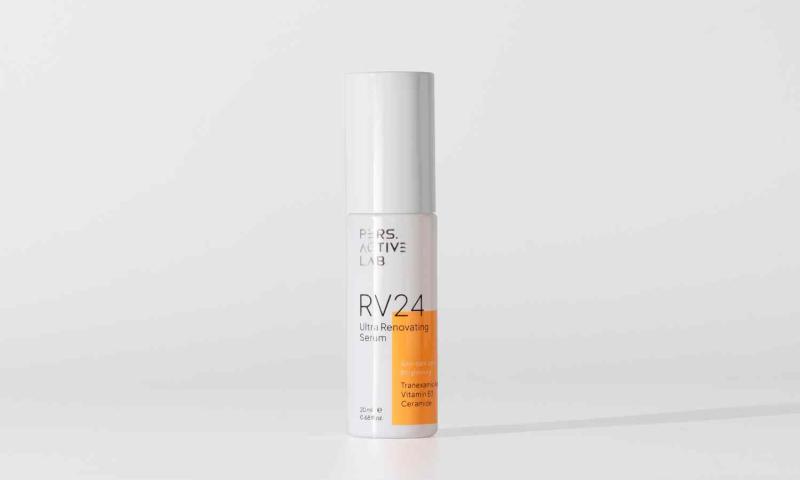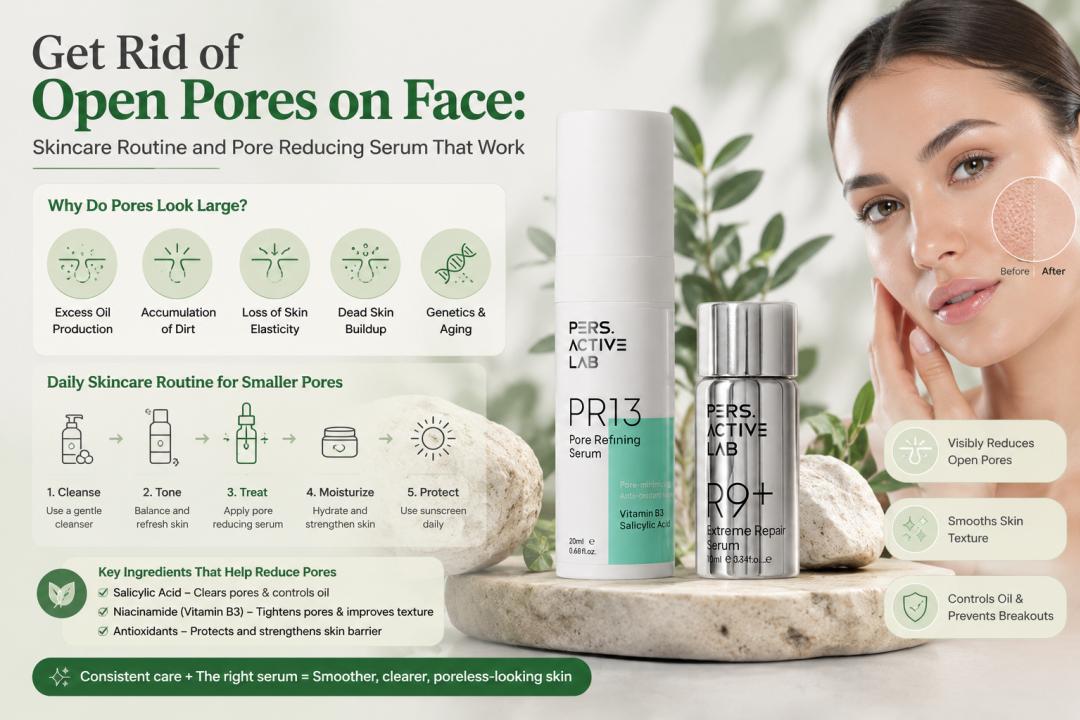
Open pores become less visible through a combination of consistent oil control, gentle exfoliation, and ingredients that support collagen around the pore lining—not through any single overnight fix. A pore reducing serum formulated with niacinamide, salicylic acid, or a retinoid can visibly tighten pore appearance over four to twelve weeks when paired with the right daily routine. Pores themselves cannot shrink or "close," since they have no muscle tissue, but their visible size can be reduced significantly by addressing what stretches them in the first place.
Why Pores Look Larger in the First Place
Pores are structural openings that allow oil glands to release sebum onto the skin's surface. Their size is partly determined by genetics, but several everyday factors make them appear more prominent:
- Excess oil production, common in oily and combination skin, mixes with dead skin cells and stretches the pore opening.
- Sun damage breaks down collagen and elastin around the pore, reducing the skin's ability to keep pores tight.
- Aging naturally slows collagen production, which weakens pore structure over time.
- Dehydration can paradoxically increase oil production, as skin overcompensates for lost moisture.
- Buildup of dead skin cells without regular exfoliation clogs pores and makes them stretch further.
Since pores can't be permanently closed, the goal of any routine is to minimize their visible size and prevent the buildup that stretches them further.
Building a Skincare Routine for Open Pores
An effective routine addresses pores at every stage—cleansing, treating, and protecting—rather than relying on one product to do all the work.
1. Cleanse without stripping.
A gentle, non-foaming cleanser removes excess oil and debris without disrupting the skin barrier. Over-cleansing or using harsh, high-pH cleansers often triggers more oil production, which worsens pore appearance over time.
2. Apply a pore reducing serum.
This step targets the root causes of enlarged pores directly. Niacinamide regulates oil production and strengthens the skin barrier, salicylic acid exfoliates inside the pore to clear congestion, and retinoids speed up cell turnover while rebuilding collagen around the pore structure. Using one of these actives consistently, rather than switching products frequently, gives skin time to show measurable change.
3. Moisturize, even if skin is oily.
Skipping moisturizer often backfires, since dehydrated skin tends to overproduce oil. A lightweight, oil-free moisturizer keeps the barrier balanced without adding to congestion.
4. Apply sunscreen daily.
UV exposure is one of the primary drivers of collagen breakdown around pores. Skipping sunscreen undermines the results of even the most effective serum.
Choosing the Right Pore Refining Serum for Your Skin Type
Not every active ingredient suits every skin type, and matching the formula to your skin's actual needs makes a measurable difference in results:
- Oily and combination skin generally responds well to niacinamide and salicylic acid, which control sebum and clear congestion simultaneously.
- Dry or sensitive skin often tolerates a gentler pore refining serum built around PHAs or peptides better than stronger acids, since aggressive exfoliation can compromise an already fragile barrier.
- Mature skin dealing with pore stretching from collagen loss benefits from a retinoid-based formula, which rebuilds structural support around the pore over time.
Overloading skin with multiple strong actives at once—an AHA toner, a BHA serum, and a physical scrub in the same week, for example—is one of the most common mistakes people make. This typically damages the skin barrier rather than improving pore appearance, leading to more inflammation and, ironically, more visible pores. A formula built around a few essential, precisely dosed actives tends to outperform one packed with unnecessary ingredients that compete with each other. This is the principle behind Skin Pal's approach to formulation—fewer actives in exact ratios that work with the skin's natural processes rather than overwhelming it.
Repair Before Treatment
Skin that's already irritated, over-exfoliated, or dealing with a compromised barrier isn't ready for active pore treatment, regardless of how well-formulated the serum is. Applying salicylic acid or a retinoid onto inflamed skin often worsens redness and sensitivity rather than improving pore appearance. The better approach is to calm and rebuild the barrier first with gentle, hydrating ingredients, then reintroduce active treatment once the skin has stabilized. This sequencing produces more consistent, longer-lasting results than pushing active ingredients onto compromised skin.
Matching Treatment to the Actual Cause
Pores stretched by excess oil need a different long-term approach than pores stretched by sun damage or age-related collagen loss. Treating only the visible symptom without addressing the underlying cause—oil production, sun exposure, or aging—means results tend to plateau quickly. Effective routines connect the visible concern to its root cause, then build habits and product choices around that connection rather than applying the same product regardless of what's actually driving the problem.
This is where AI-based skin analysis has become a useful tool. Apps like Skin Beauty Pal assess skin condition through photos, generate a personalized skin score, and build a routine that links specific concerns—like enlarged pores—to their likely causes, whether that's oil production, sun damage, or barrier dysfunction. The routine adjusts over time as skin changes, tracking progress across weeks rather than offering a single, static recommendation.
Life>
Products alone don't fully control how pores appear. Hydration levels, consistent sun protection, and avoiding over-exfoliation all play a role in keeping pores from stretching further. A pore-focused routine works best when paired with these daily habits rather than relying on the serum alone to compensate for skipped sunscreen or excessive scrubbing.
When to See a Dermatologist
Most people can visibly reduce pore appearance with a consistent, well-matched routine over several months. However, persistently clogged pores, recurring cystic breakouts, or skin that reacts poorly to multiple products are worth discussing with a board-certified dermatologist, who can recommend stronger in-office treatments if needed.
A Dermatologist-Reviewed, Precision-Based Approach
Formulas made in Taiwan and reviewed by dermatologists, like those from Skin Pal, follow this same layered logic: repair the barrier first, then treat with a small number of precisely dosed actives instead of overwhelming skin with unnecessary ingredients. You can check your skin score and build a personalized routine for enlarged pores directly through Skin Pal, which pairs AI-based skin analysis with formulas designed around this same essential-actives approach.
Frequently Asked Questions
Can pores actually shrink, or do they just look smaller?
Pores are structural openings without muscle tissue, so they can't physically open or close. A pore reducing serum improves their visible appearance by clearing congestion and supporting collagen around the pore, not by permanently changing pore size.
How long does it take to see results from a pore-minimizing serum?
Most people notice visible improvement in four to twelve weeks of consistent use, depending on the active ingredient and how compromised the skin barrier was to begin with.
Is niacinamide or salicylic acid better for open pores?
Niacinamide works by regulating oil production and strengthening the skin barrier, while salicylic acid exfoliates inside the pore to clear buildup. Many people use both together, though those with sensitive skin may need to introduce them separately to avoid irritation.
Why do my pores look bigger after I stopped moisturizing to control oil?
Skipping moisturizer on oily skin often triggers more oil production as skin tries to compensate for lost hydration, which can make pores appear more congested and visible rather than less.