Digital Marketing Agency in Jaipur: A Practical Guide to Modern Digital Marketing
The search for a digital marketing agency in Jaipur often starts when a business wants to fix a real issue: how to find the right customers online.
Now people can find a business using search engines, social media, online reviews, ads, videos, email and many other online ways. This gives chances. It also makes digital marketing harder than just putting up content or running ads.
Good digital marketing begins with knowing people.
What are they looking for? What issues are they trying to fix? Which sites do they use? What details do they want before making a choice?
These questions give a base for digital marketing than just picking the most channels.
What Is Digital Marketing?
Digital marketing is a big word that covers many tasks.
Some usual parts are:
- Search engine optimization
- Paid search advertising
- Social media marketing
- Content marketing
- Email marketing
- Website optimization
- Local search
- Reputation management
- Analytics and conversion measurement
These tasks are linked, but they don’t do the same thing.
For example SEO can help people find information through free search results while paid ads can get attention faster. Social media can let businesses talk to people while email can help keep relationships, with customers.
The best mix depends on the business the people it wants to reach and what it wants to achieve.
Start With the Customer, Not the Platform
One big mistake people make with marketing is picking the platforms they want to use before thinking about who their audience is.
A company might say they need to be on Instagram, Google Ads, LinkedIn, YouTube and email just because other companies are using them.
That is not the best way to do things. You should start by thinking about the customer.
You need to ask yourself some questions about the customer.
- Who is the customer?
- What problem are they trying to solve?
- Where do they go to find information?
- What makes them decide to buy something?
- What stops them from taking action?
When you have the answers to these questions you can figure out which digital marketing platforms are actually worth using.
For example: a restaurant in an area probably gets a lot of business from people looking at maps reading reviews using social media and searching on their phones. A company that sells technology to businesses has a more complicated process that involves people searching online reading educational content using professional networks watching demonstrations and talking directly to the company.
There is no one size fits all approach, to marketing every business is different and needs to use the digital marketing platforms that work best for their customers.
Search Intent Is More Valuable Than Keyword Volume Alone
Search engines are one of the most important ways people discover information online.
But not every search has the same purpose.
Consider these three queries:
“What is digital marketing?”
This is primarily informational.
“Digital marketing strategy for small business”
This suggests research and a desire for practical guidance.
“Digital marketing agency Jaipur”
This may indicate commercial investigation.
Each search represents a different stage of the user's journey.
A useful SEO strategy therefore considers not only which keywords people search for, but also why they search for them.
This can influence the type of page that should be created.
An informational query may require a detailed guide, while a commercial query may require clear information about available options and decision-making factors.
Content Should Solve a Real Problem
The internet already contains millions of articles explaining basic marketing concepts.
Simply publishing another generic article rarely provides much value.
Useful content should give readers something they can apply.
For example, instead of saying:
“Social media is important for businesses.”
A stronger article might explain how a small business can determine whether Instagram, LinkedIn, YouTube, or another platform is appropriate for its audience.
Useful content can include:
- Practical examples
- Original observations
- Step-by-step processes
- Industry-specific situations
- Data and evidence
- Common mistakes
- Limitations
- Actionable recommendations
The goal is not to make an article longer.
The goal is to make it more useful.
Experience Adds Context to Digital Marketing
Digital marketing advice often sounds simple when presented as a list of tips.
Real-world situations are usually more complicated.
A campaign may generate a large amount of traffic but very few enquiries.
A website may rank for important keywords but have a poor conversion rate.
A social media account may have thousands of followers but little meaningful engagement.
An email campaign may have a high open rate but generate few actual sales.
These situations show why marketing decisions should be based on evidence rather than assumptions.
A useful process is:
Observe → Test → Measure → Learn → Improve
Instead of assuming that a particular strategy will work, marketers can use available data to understand what is happening and make informed changes.
Local Digital Marketing in Jaipur
Local businesses have an additional consideration: geography.
A business serving customers in Jaipur may need to communicate information about:
- Service areas
- Business location
- Opening hours
- Contact details
- Local availability
- Customer reviews
- Relevant services
Local search can involve websites, business profiles, maps, reviews, directories, and social platforms.
However, local optimization should not simply mean repeating “Jaipur” throughout a page.
A genuinely useful local page should provide information that matters to people in that location.
For example, a service business could explain which areas it serves, how customers can access the service, what local customers should consider, and what information they need before making contact.
SEO Is More Than Keyword Placement
Search engine optimization is sometimes treated as a process of inserting keywords into web pages.
Modern SEO is considerably broader.
A website may also need:
- Logical information architecture
- Crawlable pages
- Useful internal links
- Relevant content
- Descriptive page titles
- Mobile-friendly design
- Fast and usable pages
- Clear business information
Google's guidance emphasizes creating helpful, reliable, people-first content rather than producing content primarily for search engine traffic.
This changes the question businesses should ask.
Instead of:
“How many times should this keyword appear?”
A better question is:
“Does this page completely address what the visitor came here to understand?”
Paid Advertising Needs Clear Objectives
Paid advertising can provide targeted visibility, but spending money does not automatically produce meaningful results.
Before launching a campaign, businesses should establish what they want the advertising to achieve.
Possible objectives include:
- Product sales
- Lead generation
- Phone enquiries
- Bookings
- Registrations
- App downloads
- Brand awareness
The measurement should match the objective.
For example, a lead-generation campaign should not be evaluated only by impressions and clicks. The business should also understand how many relevant enquiries were generated and what those enquiries were worth.
Similarly, an eCommerce campaign needs to be evaluated against revenue, acquisition costs, and profitability rather than traffic alone.
Social Media Is Not Just About Followers
Follower counts are easy to display, but they do not necessarily indicate whether a social media strategy is working.
A smaller audience that regularly interacts with relevant content may be more useful than a much larger audience with little interest in the business.
Businesses can consider:
- Audience relevance
- Meaningful engagement
- Website visits
- Enquiries
- Repeat interactions
- Content performance
Different platforms also encourage different behaviours.
A strategy that works on Instagram may not produce the same results on LinkedIn or YouTube.
The platform should therefore follow the audience rather than the other way around.
Website Experience Connects Everything
A business can have excellent advertisements, strong social content, and good search visibility, but the website can still become the weakest part of the customer journey.
Visitors generally expect:
- Clear information
- Simple navigation
- Mobile usability
- Fast-loading pages
- Relevant content
- Easy-to-understand next steps
If a visitor arrives through an advertisement promising one thing and the landing page provides something completely different, trust can quickly disappear.
Digital marketing should therefore be considered as a complete journey:
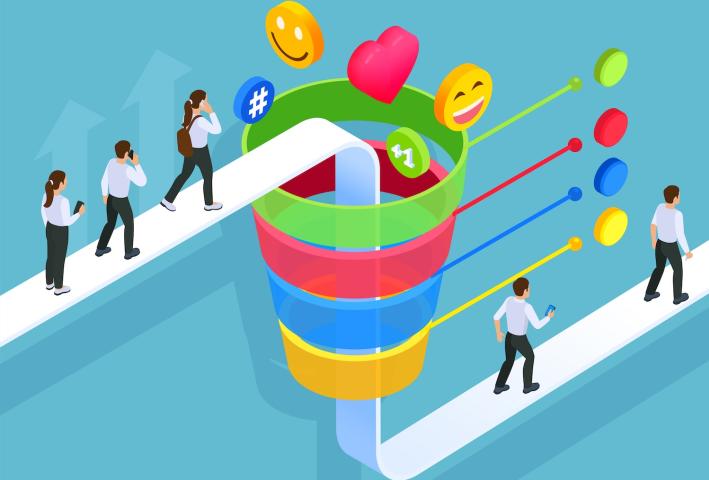
Discovery → Visit → Understanding → Evaluation → Action
Every stage matters.
Trust Is a Marketing Asset
People often research a business before contacting it.
They may look at:
- Reviews
- Website information
- Social media
- Customer experiences
- Business details
- Third-party references
This makes trust an important part of digital communication.
Businesses can strengthen trust through accurate information, transparent claims, genuine customer experiences, clear contact details, and useful content.
They should also avoid practices such as fake reviews, exaggerated promises, misleading advertisements, and copied information.
Short-term visibility cannot replace long-term credibility.
E-E-A-T in Digital Marketing
E-E-A-T stands for Experience, Expertise, Authoritativeness, and Trustworthiness.
These principles provide a useful framework for evaluating online information.
Experience
Does the content demonstrate practical understanding?
Expertise
Is the information accurate and explained with appropriate depth?
Authoritativeness
Is there a credible connection between the writer or organization and the subject?
Trustworthiness
Are claims transparent, accurate, and supported where appropriate?
E-E-A-T should not be treated as a formula for guaranteeing search rankings.
Its greater value is that it encourages businesses to think about whether their content genuinely deserves a reader's confidence.
Data Should Support Decisions
One major advantage of digital marketing is the amount of measurable information available.
Businesses can analyze:
- Organic search traffic
- Search queries
- Advertising performance
- Social engagement
- Website behaviour
- Conversion rates
- Customer acquisition costs
But collecting hundreds of metrics does not automatically lead to better decisions.
The important question is:
Which measurements help answer the business's most important questions?
For example:
- Are the right people visiting the website?
- Which pages generate meaningful engagement?
- Which campaigns produce qualified leads?
- Which content attracts relevant search traffic?
- Where do potential customers leave the journey?
These questions turn analytics into a decision-making tool.
Common Digital Marketing Mistakes
Many digital marketing problems come from doing too much without a clear strategy.
Common mistakes include:
Being Present Everywhere
Managing too many platforms can spread resources too thinly.
Publishing Without Purpose
Content created only to maintain a publishing schedule may provide little value.
Focusing Only on Traffic
Traffic is useful, but relevance and conversions often matter more.
Copying Competitors
Another business's strategy may work because of its particular audience, resources, and market position.
Changing Strategies Too Quickly
Some campaigns need enough time and data before their performance can be properly evaluated.
Ignoring Existing Customers
Marketing often focuses heavily on acquiring new customers while overlooking retention and long-term relationships.
A Practical Framework for Businesses
Businesses can simplify their digital marketing planning with five questions:
1. Who are we trying to reach?
Define the audience clearly.
2. What problem are we solving?
Understand the customer's actual need.
3. Where do they look for information?
Select channels based on audience behaviour.
4. What information will help them make a decision?
Create useful content rather than promotional filler.
5. How will success be measured?
Choose metrics that reflect meaningful business outcomes.
This framework can help prevent digital marketing from becoming a collection of unrelated activities.
What Is Changing in Digital Marketing?
Digital marketing continues to evolve as artificial intelligence, automation, search technology, social platforms, and changing consumer habits influence how people discover information.
Some tasks are becoming automated.
Search is becoming more conversational.
Content can now be produced faster than ever.
But faster production does not necessarily mean better communication.
As content becomes easier to create, original knowledge, practical experience, accuracy, and trust may become increasingly important differentiators.
Businesses should therefore focus on creating information that is useful even when the technology used to distribute it changes.
Conclusion
A digital marketing agency in Jaipur can work across many different channels, but effective digital marketing is ultimately about understanding people and helping them find the right information at the right stage of their decision-making process.
SEO, paid advertising, social media, content, websites, and analytics should not be treated as completely independent activities.
When they are connected by a clear understanding of the audience, they can support a more consistent digital experience.
The strongest strategy is not necessarily the one with the most posts, largest advertising budget, or highest traffic.
It is the one that understands its audience, provides genuine value, builds trust, measures meaningful outcomes, and improves based on evidence.
Digital marketing works best when technology serves the customer—not when the customer is forced to fit the technology.