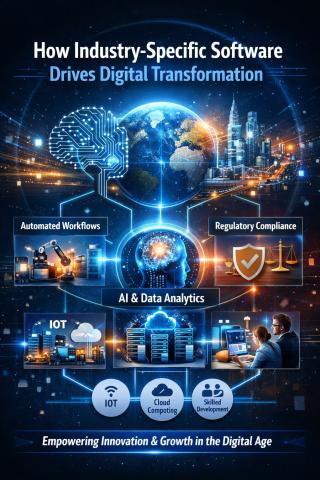

Businesses today are under constant pressure to improve customer experiences, modernize operations, and respond quickly to changing market demands. Traditional IT approaches are often not enough to support these goals. Organizations need modern engineering practices that connect technology, data, automation, and product development. This is where digital engineering services can help businesses create scalable and future-ready digital solutions.
What Is Digital Engineering?
Digital engineering combines modern software development practices, cloud technologies, data engineering, automation, and intelligent technologies to build and improve digital products. Instead of treating development as a one-time project, it focuses on creating flexible systems that can continuously evolve with business requirements.
For example, businesses can use custom software development solutions to modernize legacy applications, develop customer-facing platforms, and improve internal business systems. These solutions can be designed around specific operational needs rather than relying on generic software.
Supporting Digital Transformation Through Engineering
A successful digital transformation strategy requires more than adopting new technology. Businesses need a strong technical foundation that allows different systems, applications, and data sources to work together efficiently.
Digital engineering supports this transformation by helping organizations modernize infrastructure, automate repetitive processes, integrate applications, and develop scalable platforms. Cloud-native architectures can make applications more flexible and scalable through approaches such as containers, microservices, and declarative APIs. Organizations can learn more about cloud-native technologies from the Cloud Native Computing Foundation.
Data plays an equally important role. Organizations can use data engineering solutions to build reliable data pipelines, integrate information from multiple sources, and prepare data for analytics and intelligent applications. Better data infrastructure allows companies to make faster and more informed business decisions.
The Role of AI in Modern Engineering
Artificial intelligence is becoming an important part of modern digital products. Businesses are using AI to automate workflows, personalize customer experiences, analyze large datasets, and improve decision-making.
Integrating AI into applications requires careful planning, appropriate technology selection, secure data handling, and scalable architecture. Organizations can also refer to the AI Risk Management Framework from NIST when considering trustworthy AI practices. Businesses looking to incorporate intelligent capabilities can explore AI development solutions as part of their broader technology strategy.
Why Businesses Need a Modern Engineering Approach
Digital products need to remain secure, scalable, and adaptable as business requirements change. A modern engineering approach helps organizations reduce technical limitations, improve development efficiency, and deliver better digital experiences.
By combining software engineering, cloud, data, automation, and AI capabilities, companies can build technology ecosystems that support long-term growth. The right engineering approach can also make it easier to introduce new features and respond to market changes without rebuilding systems from scratch.
As businesses continue investing in modernization, digital engineering services provide a practical foundation for developing resilient, scalable, and business-focused digital solutions.