India Autoclaved Aerated Concrete Blocks Market: Industry Report 2026–2034
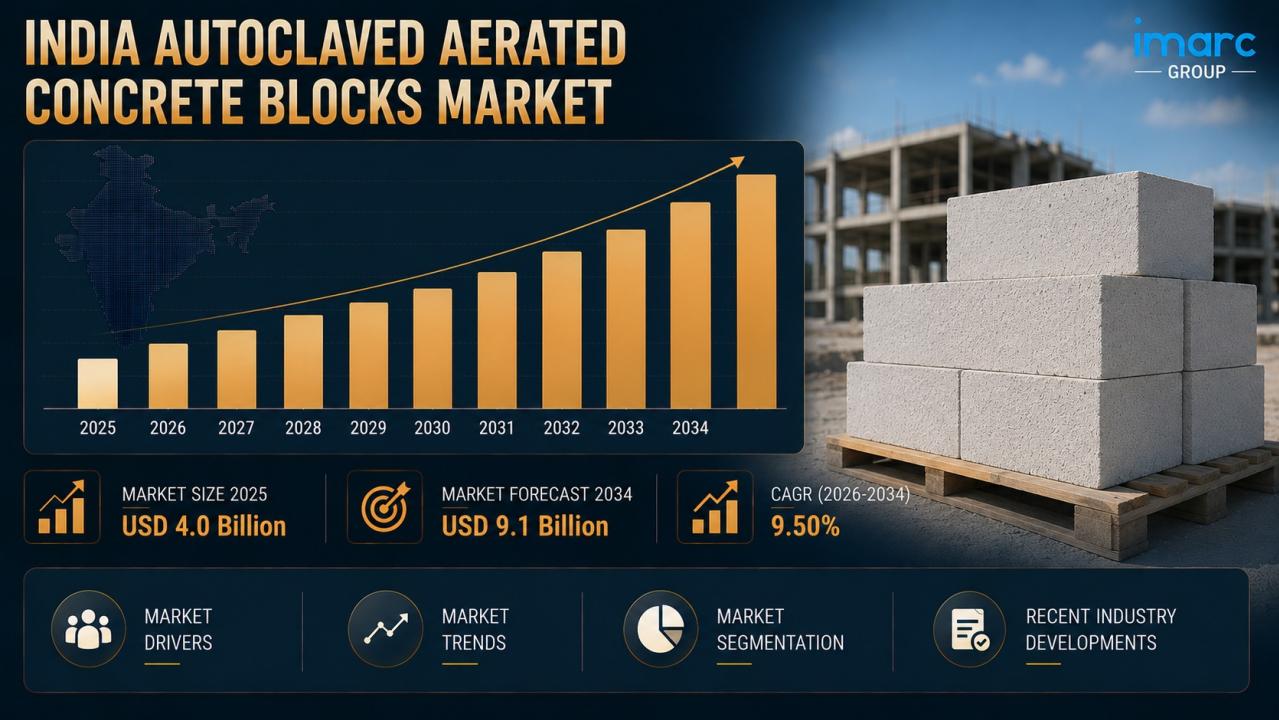
The India autoclaved aerated concrete (AAC) blocks market size reached USD 4.0 Billion in 2025. It is projected to reach USD 9.1 Billion by 2034, exhibiting a compound annual growth rate (CAGR) of 9.50% during the 2026–2034 forecast period. The Indian construction ecosystem is undergoing a massive structural and environmental transition. Driven by the urgent need for faster project deliveries, stringent green building compliances, and superior thermal insulation, AAC blocks are rapidly rendering traditional red clay bricks obsolete across both mass residential housing and premium commercial real estate.
What Is the Size and Growth Forecast of the India Autoclaved Aerated Concrete Blocks Market?
The market is exhibiting highly robust, near double-digit growth, firmly anchored by the rapid modernization of Indian construction methodologies and expanding manufacturing capacities.
- Market Size in 2025: USD 4.0 Billion.
- Market Forecast in 2034: USD 9.1 Billion.
- Compound Annual Growth Rate (CAGR): 9.50% during the 2026–2034 forecast period.
- Underpinning Momentum: The sheer scale of India's affordable housing initiatives, paired with aggressive capacity expansions by top-tier manufacturers aiming to consolidate the market, ensures massive, continuous volume off-takes.
What Are the Latest Emerging Trends in the India Autoclaved Aerated Concrete Blocks Market?
- B2C Brand Building in a Historically B2B Space: Traditionally, AAC blocks were marketed strictly to large developers and B2B contractors. However, leading manufacturers are now aggressively pivoting to consumer-facing (B2C) marketing. For example, Magicrete’s recent "Kyunki Naya Ghar Banta Hai Magicrete se" digital ad campaign explicitly targets individual homebuilders. By educating the end-consumer about reduced AC bills and faster construction, brands are successfully driving localized, retail-level demand for independent residential projects.
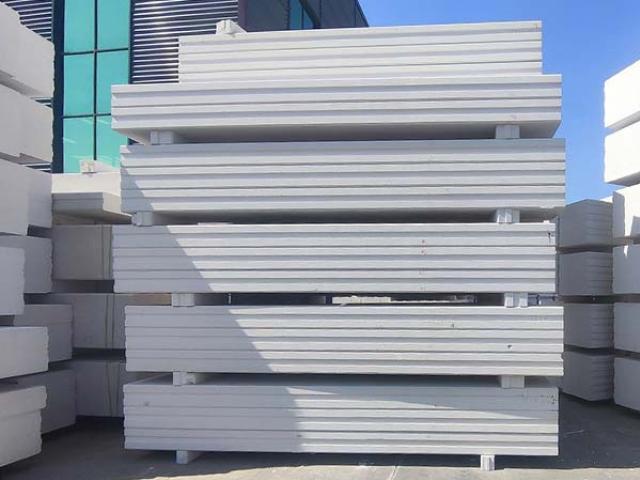
- Transition from Standard Blocks to Large-Format AAC Panels: To combat severe on-site labor shortages and accelerate project turnaround, tier-1 commercial developers are increasingly moving beyond standard blocks to utilize precast AAC Wall and Roof panels. These massive, factory-finished panels can be installed in a fraction of the time required for block-by-block masonry, significantly reducing wet-construction mess and structural dead-load on skyscrapers.
- Adoption of Polymer-Modified Thin-Bed Mortars: The rapid adoption of AAC blocks has catalyzed a parallel market for specialized adhesives. Instead of using traditional cement-sand mortar which is thick, messy, and requires days of water curing contractors are shifting to ready-mix, polymer-modified block-joining adhesives. These thin-bed mortars are applied at just a 2–3 mm thickness, eliminating the need for post-installation water curing and drastically accelerating the masonry process.
- Integration of Smart Manufacturing and Hybrid Autoclaving: To optimize production costs and ensure precise block dimensions, Indian AAC manufacturers are actively upgrading their plants with advanced, automated machinery from global tech providers (like Teeyer and HESS). Modern facilities are deploying cloud-connected PLC (Programmable Logic Controller) systems and hybrid autoclaving techniques that cure the blocks faster while utilizing significantly less energy and minimizing raw material waste.
➤ Grab a sample copy of this report: https://www.imarcgroup.com/india-autoclaved-aerated-concrete-blocks-market/requestsample
What Growth Factors Are Driving the India Autoclaved Aerated Concrete Blocks Market?
- Cost Parity with Surging Red Clay Brick Prices: Historically, red clay bricks were cheaper than AAC blocks. However, strict environmental regulations against topsoil mining, bans on highly polluting traditional brick kilns near urban centers, and escalating coal and labor costs have caused red brick prices to skyrocket. At an average price of ₹3,500–₹4,000 per cubic meter, AAC blocks are now highly cost-competitive especially since one AAC block covers the wall area of 8 to 12 standard red bricks, requiring significantly less jointing mortar.
- Massive Reduction in Structural Steel and Concrete Costs: AAC blocks possess a dry density of 550–650 kg/m³ making them roughly three times lighter than traditional concrete or red bricks (~1,600–1,900 kg/m³). When structural engineers specify AAC blocks early in the design phase, this massive reduction in the building's dead-load allows developers to use significantly less structural steel and foundational concrete, generating massive cost savings for high-rise residential projects.
- Strategic Consolidation and Regional Capacity Expansions: Because AAC blocks are bulky, high logistics costs historically limited their distribution radius. To solve this, top-tier companies are aggressively acquiring regional players or building greenfield plants to establish local supply hubs. For instance, Magicrete recently acquired South India-based Maxlite, while BigBloc Construction's subsidiary (StarBigBloc) secured land in Indore, Madhya Pradesh. This massive capacity consolidation ensures seamless, low-cost supply to real estate developers nationwide.
- Integration with Thermal Power Plants (Fly Ash Utilization): AAC block manufacturing relies heavily on fly ash, a waste byproduct generated by coal-fired thermal power plants. As the Indian government strictly enforces mandates requiring 100% utilization of fly ash to prevent environmental dumping, power plants are actively partnering with AAC manufacturers. This provides the AAC industry with a highly stable, low-cost raw material supply chain while simultaneously establishing the product as a critical component of India's circular, sustainable economy.
Who Are the Key Players Shaping the India Autoclaved Aerated Concrete Blocks Sector?
The competitive landscape of the India AAC blocks market is experiencing rapid consolidation. Capital-intensive manufacturing requirements (such as specialized autoclaves) create significant barriers to entry, allowing well-capitalized national players to dominate regional fragmented markets. Leading entities actively shaping the sector include:
- BigBloc Construction Ltd.
- Magicrete
- Avantha Group.
- Renaatus Procon Private Limited
- Godrej Enterprises
➤ Explore the Full Report with Charts, Table of Contents, and List of Figures: https://www.imarcgroup.com/india-autoclaved-aerated-concrete-blocks-market
Deep-Dive Segment Insights
The market is meticulously segmented to reflect specific architectural applications, diverse construction sectors, and regional infrastructure investments.
By Product Type
- Block (61.8% in 2025): The standard Block segment is the absolute market leader, capturing standard walling unit applications across all construction categories. It is the most commercially mature and widely specified AAC product in India's construction market.
- Wall Panel (13.4% in 2025): Identified as the fastest-growing product sub-segment as prefabricated and rapid construction adoption increases across commercial projects.
- Lintel (8.7% in 2025): Captures structural beam replacement applications over doors and windows.
- Floor Elements (5.8%) & Roof Panel (4.6%): Directly serve the booming prefab construction and industrial roofing sectors.
- Cladding Panel (3.2% in 2025): Specifically addresses modern, lightweight architectural facade applications.
By End User
- Residential (48.6% in 2025): The dominant segment, driven by Pradhan Mantri Awas Yojana (PMAY) affordable housing schemes, urban residential high-rises, and the self-build market. AAC blocks are favored here for their faster construction and lower structural load advantages versus clay bricks.
- Commercial (26.4% in 2025): Reflects massive construction volumes across IT parks, retail malls, and corporate office spaces.
- Industrial (14.3% in 2025): Captures factory and large-scale warehouse construction, heavily driven by manufacturing investments linked to the government's PLI (Production Linked Incentive) schemes.
- Infrastructure (10.7% in 2025): Includes institutional buildings, large government facilities, and critical public sector projects.
By Region
- North India (34.7% in 2025): Leads the national market, driven by an immense construction boom across the Delhi-NCR corridor, Uttar Pradesh, and Rajasthan. Sustained demand is heavily fueled by PMAY housing schemes and the Smart Cities Mission.
- South India (31.8% in 2025): A highly prominent region reflecting strong commercial and IT corridor construction across Bengaluru, Hyderabad, and Chennai, alongside growing green building adoption in residential projects.
- West India (20.6% in 2025): Demand is heavily driven by the Mumbai Metropolitan Region (MMR) and Pune housing markets, with massive Gujarat industrial corridors adding substantial commercial and warehousing volumes.
- East India (12.9% in 2025): Identified as the fastest-growing region. Emerging growth is led by Kolkata and Bhubaneswar, with massive government infrastructure investments under the National Infrastructure Pipeline drastically improving AAC block adoption across Odisha, Jharkhand, and West Bengal.
Recent Developments:
- June 2026 (Revenue Growth & Approvals): BigBloc Construction reported highly robust consolidated revenue from operations reaching INR 283.42 crore for FY26 (a 26.2% year-on-year increase). Concurrently, the company secured critical project approvals, including town planning clearance and land registration for its massive proposed greenfield AAC block manufacturing facility in Indore, Madhya Pradesh.
- April 2026 (Corporate Restructuring): The Regional Director officially approved the strategic amalgamation of StarBigBloc Building Material Ltd with Bigbloc Building Elements Private Limited. This major restructuring aims to streamline the group's operations and significantly strengthen its overall corporate structure as it scales up production.
- December 2025 (Capital Raising Initiatives): StarBigBloc Building Material, a wholly-owned subsidiary of BigBloc Construction, received shareholder approval to raise capital through an Initial Public Offering (IPO). This move is designed to unlock value and aggressively finance the company's next phase of manufacturing expansion across central and western India.
- February 2025 (Greenfield Expansion in MP): StarBigBloc Building Material Ltd officially acquired 57,500 square meters of industrial land in Indore, Madhya Pradesh, for a total consideration of Rs. 6 crores. This strategic greenfield expansion aims to establish a much stronger AAC supply footprint across Central India and surrounding geographic regions.
Customization Note: If you require any specific information not covered within this report's scope, we will provide it as part of the customization.
➤ Request Report Customization: https://www.imarcgroup.com/request?type=report&id=29779&flag=E
Frequently Asked Questions (FAQs):
Q1. How big is the India autoclaved aerated concrete blocks market?
The India autoclaved aerated concrete blocks market was valued at USD 4.0 Billion in 2025.
Q2. What is the projected growth rate of the India autoclaved aerated concrete blocks market?
The market is projected to reach USD 9.1 Billion by 2034, exhibiting a rapid CAGR of 9.50% during the 2026–2034 forecast period.
Q3. Which product type and end user command the highest market share?
Standard AAC Blocks dominate the product type segment due to their widespread use in structural walling. The Residential sector holds the largest end-user share, driven heavily by mass housing and high-rise developments.
Q4. What are the key factors driving the market's growth?
Primary growth catalysts include the urgent need for faster construction timelines, stringent green building and energy efficiency requirements, the utilization of industrial fly ash promoting a circular economy, and the structural optimization of building load designs.