Every group has someone who hears a strange noise and says, "I can do that."
Usually, they cannot. The robot alarm comes out like a tired bicycle horn. The cat sounds worried. The meme clip is recognizable until the recording starts, then disappears completely.
That exchange was the starting point for Mimic Party Online, a browser game where you hear a short sound and get one try to copy it. I wanted the game to capture the part that happens after the claim, when everyone listens back to find out what was actually recorded.
The replay is half the game
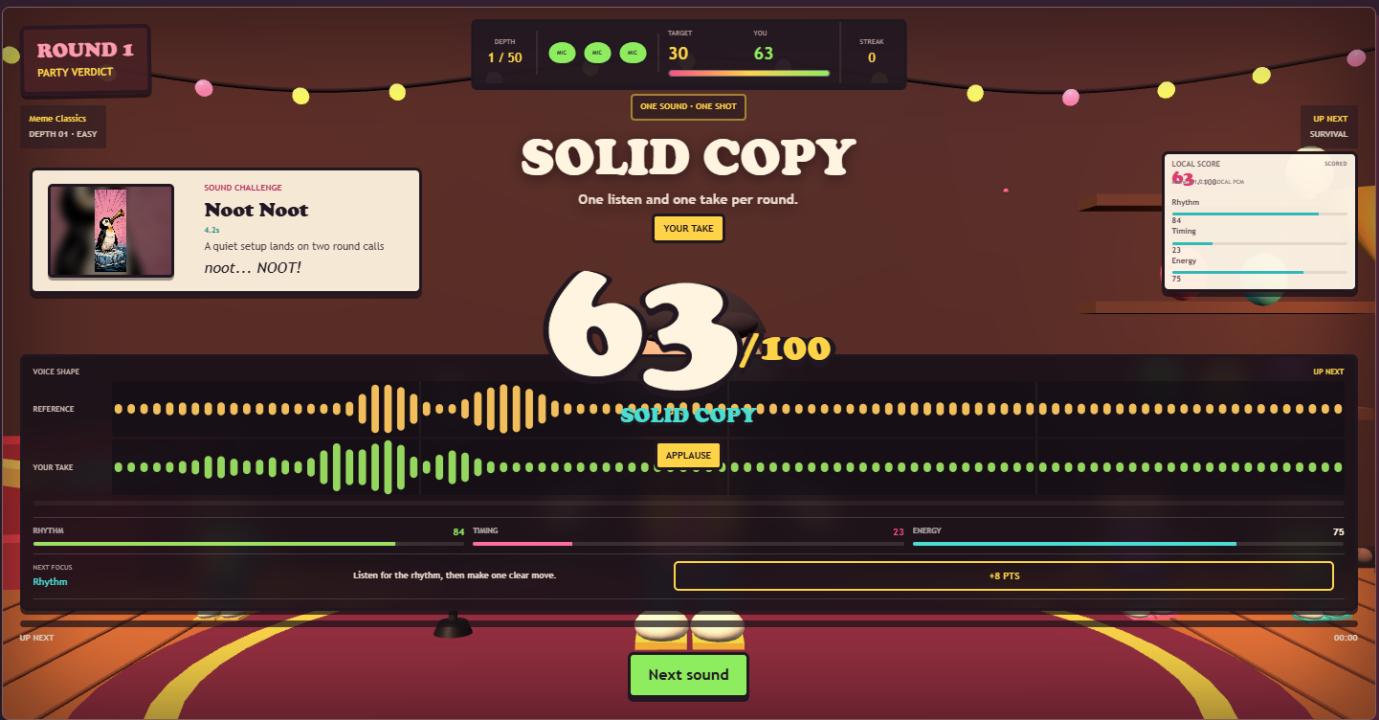
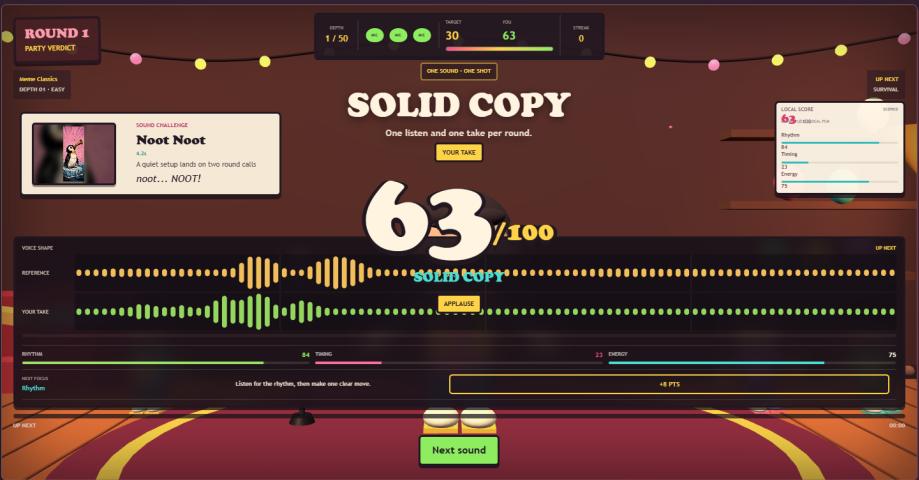
Each round takes a few seconds to understand. Listen to the reference, press record, make your version, and play it back. The score comes after the replay.
That order matters. People tend to remember what they meant to sound like. The recording is less forgiving. It catches the rushed ending, the missed beat, and the note that went somewhere nobody planned. A score tells you that an attempt missed. The replay usually tells you why.
There is no character to upgrade or long tutorial to finish. Pick a pack and make a noise. If the first attempt is awful, at least it is over quickly.
What the game scores
The game compares the shape of your recording with the reference. It looks at timing, pitch movement, duration, rhythm, and changes in energy. Different sounds need different things. A melody cares about pitch. A short meme clip may depend on timing. A machine noise can be easier to recognize from its attack and texture than from a single note.
This keeps the game from becoming a singing test. You do not need a trained voice. A rough voice can still make a good copy if the timing and movement are close. Sometimes a technically messy recording gets a better result than a confident note that arrives at the wrong moment.
Different packs, different problems
The sound packs each create a different kind of challenge:
Animals are easy to recognize and surprisingly hard to imitate.
Meme Classics reward anyone who can hold on to a rhythm for a few seconds.
Machines sound simple until you have to make one with your mouth.
Everyday sounds are familiar enough to invite overconfidence.
Quick mode is good for a short break. Survival mode gives you three Mic lives and a longer run of references. A low score costs a life, so players eventually have to choose between a careful attempt and a risky one. With friends, the best part is often giving everyone the same cue and comparing the replays. The most inaccurate version is usually the one people remember.
Why keep the audio local
Microphone access makes people reasonably cautious, even when the app is only asking them to imitate a doorbell. Mimic Party processes the recording in the browser and keeps the session on the device. You do not need an account, and the audio does not go to a remote scoring service.
That also keeps the round moving. The recording stops, the replay starts, and the result appears without an upload step. Of course, microphones are unpredictable. Rooms are noisy. A take can be too quiet or clipped. When that happens, the game treats it as an audio problem and explains what to change instead of handing out a score that says nothing useful.
A small game with room for bad ideas
The point is not to produce a perfect copy every time. The fun comes from hearing the gap between the sound in your head and the sound from the speaker. Sometimes you get close. Sometimes your robot is clearly a sleepy kazoo. Both outcomes give you a reason to try one more cue.
If you have a microphone nearby, try Mimic Party Online. Pick a sound before you have time to overthink it. Then let the replay settle the argument.