
IMARC Group’s “Lead Acid Battery Recycling Plant Project Report 2026: Industry Trends, Plant Setup, Machinery, Raw Materials, Investment Opportunities, Cost and Revenue” offers a detailed roadmap for entrepreneurs and investors planning to establish a lead acid battery recycling facility. The lead acid battery recycling plant project report provides in-depth insights into the complete production process and essential setup requirements. It covers key aspects such as unit operations, raw materials, utility requirements, infrastructure, machinery and technology, manpower, packaging, transportation, and other critical factors necessary for the successful establishment and operation of the plant.
In addition to operational guidance, the report provides an in-depth analysis of the lead acid battery recycling process and project economics, covering capital investment, project funding, operating expenses, income and expenditure projections, fixed and variable costs, direct and indirect costs, expected return on investment (ROI), net present value (NPV), profit and loss analysis, taxation, depreciation, liquidity, profitability, payback period, uncertainty analysis, sensitivity analysis, and overall financial feasibility.
What is Lead Acid Battery Recycling?
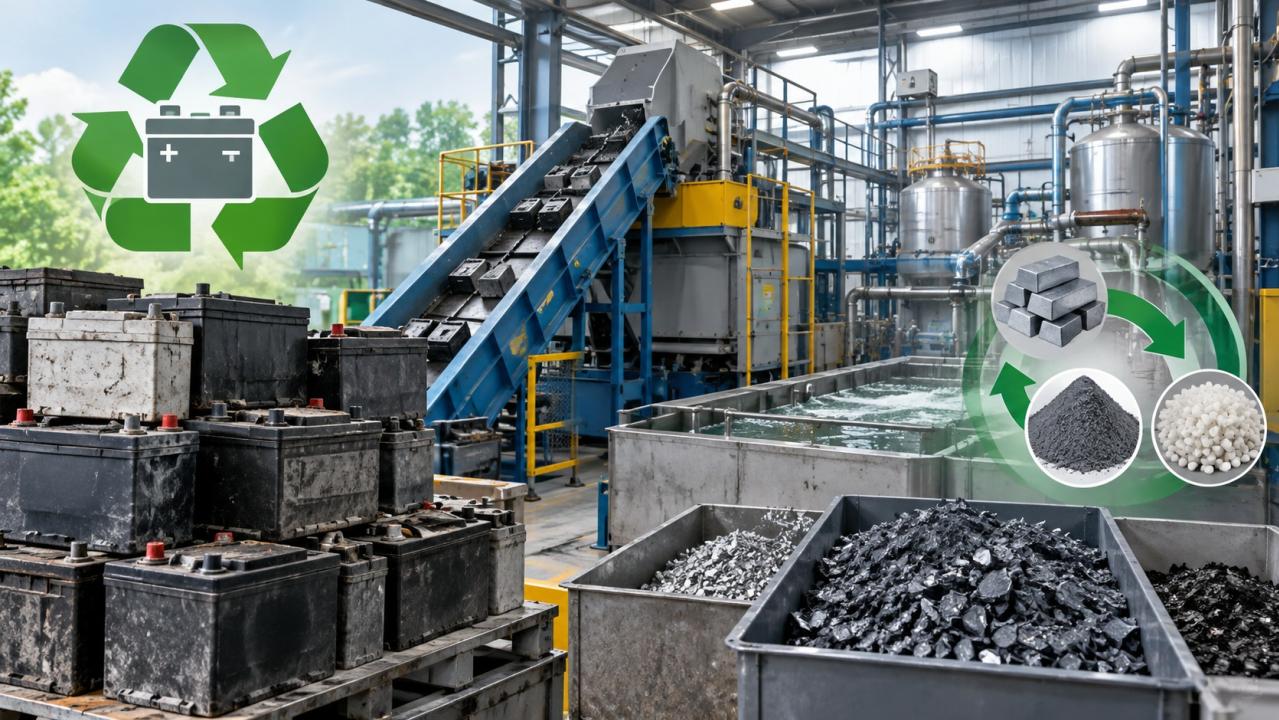
Lead acid battery recycling is a resource recovery process that converts discarded lead-acid batteries into reusable materials for manufacturing new industrial products. Spent batteries are collected and processed to separate lead-bearing components, polypropylene casings, electrolyte solutions, and other recoverable materials.
The recovered lead is refined into secondary lead suitable for manufacturing new batteries and other industrial products. Plastic components can be processed into recycled polypropylene, while electrolyte materials are treated through appropriate recovery or disposal systems. Modern recycling facilities utilize advanced separation, emission-control, and refining technologies to maximize material recovery while supporting environmentally responsible operations.
Lead acid battery recycling plays an important role in supporting a circular economy by reducing dependence on primary lead mining, minimizing hazardous waste, and returning valuable materials to the manufacturing supply chain.
Market Trend and Drivers of Lead Acid Battery Recycling:
The lead acid battery recycling market is being driven by increasing emphasis on resource recovery, hazardous waste management, and sustainable manufacturing practices. Governments and industries are increasingly focused on recovering valuable materials from end-of-life batteries while reducing environmental risks associated with improper disposal.
The growing number of automotive, industrial, telecommunications, and energy-storage batteries reaching the end of their operational life is generating a consistent supply of recyclable feedstock. The increasing adoption of vehicles, backup power systems, industrial equipment, and stationary energy-storage solutions is further supporting the long-term availability of spent lead-acid batteries.
Battery manufacturers are also increasingly utilizing secondary lead recovered through recycling as a raw material for new battery production. This reduces dependence on primary lead extraction and supports more efficient resource utilization.
Technological advancements in battery breaking, material separation, lead refining, plastic recycling, electrolyte treatment, and emission-control systems are further improving the efficiency and environmental performance of modern recycling facilities.
Lead Acid Battery Recycling Process:
The recycling process involves several stages designed to recover lead, plastic, and other valuable materials from spent batteries:
- Battery Collection and Transportation: Spent lead-acid batteries are collected from authorized sources and transported to the recycling facility.
- Battery Dismantling and Breaking: Batteries are mechanically broken and processed to separate their individual components.
- Material Separation: Lead-bearing materials, plastic components, and electrolyte solutions are separated using specialized equipment.
- Lead Recovery: Lead-containing components are processed to recover lead and lead compounds.
- Smelting and Refining: Recovered lead materials are refined to produce secondary lead suitable for industrial and battery manufacturing applications.
- Plastic Recycling: Polypropylene battery casings are cleaned, processed, and converted into reusable recycled plastic materials.
- Electrolyte Treatment: Battery electrolytes are treated using suitable recovery or neutralization systems.
- Emission and Waste Control: Gas-cleaning, filtration, and wastewater-treatment systems are used to support environmental compliance.
- Quality Inspection and Packaging: Recovered materials undergo quality checks before being packaged and supplied to end-use industries.
Key Investment Highlights:
- Process Used: Battery collection, dismantling, crushing, material separation, lead recovery, refining, plastic recycling, electrolyte treatment, quality inspection, and packaging
- End-use Industries: Battery manufacturing, automotive, industrial equipment, telecommunications, renewable energy storage, mining, and metallurgy
- Applications: Secondary lead production, battery manufacturing, recycled polypropylene, industrial lead alloys, backup power systems, and stationary energy storage
Lead Acid Battery Recycling Plant Capacity:
The proposed production facility can be designed with an annual processing capacity ranging between 20,000 and 60,000 MT of spent batteries, enabling economies of scale while maintaining operational flexibility.
Lead Acid Battery Recycling Plant Profit Margins:
The project demonstrates healthy profitability potential under normal operating conditions.
- Gross Profit: 20–28%
- Net Profit: 7–13%
Lead Acid Battery Recycling Plant Cost Analysis:
The operating cost structure of a lead acid battery recycling plant is primarily influenced by the cost of spent lead-acid batteries, sodium carbonate or sodium hydroxide, coke or anthracite, utilities, labor, maintenance, environmental management, and transportation.
- Raw Materials: 40–50% of OpEx
- Utilities: 20–28% of OpEx
Major Applications:
- Battery Manufacturing: Secondary lead recovered through recycling is used in the production of new automotive and industrial lead-acid batteries.
- Automotive Sector: Recycled lead supports the production of starter batteries for passenger vehicles, commercial fleets, motorcycles, and heavy-duty transportation equipment.
- Industrial Energy Storage: Recovered materials can be utilized in stationary batteries used by telecommunications networks, data centers, power utilities, and UPS systems.
- Plastic Resource Recovery: Recycled polypropylene from battery casings can be used to manufacture battery containers and other molded industrial products.
- Sustainable Waste Management: Battery recycling supports the recovery of valuable materials while reducing hazardous waste and promoting circular manufacturing practices.
Why Invest in Lead Acid Battery Recycling?
Lead acid battery recycling offers significant opportunities for material recovery and sustainable resource utilization. The process enables valuable lead, plastics, and other materials to be recovered and returned to the manufacturing cycle.
The continued generation of end-of-life automotive, industrial, and stationary batteries provides a reliable source of recyclable materials. Growing environmental awareness and increasingly stringent regulations regarding hazardous waste management are also expected to support investments in advanced battery recycling infrastructure.
Modern recycling technologies can improve material recovery rates, operational efficiency, and environmental performance. As manufacturers increasingly focus on sustainable supply chains and circular manufacturing, demand for recycled battery materials is expected to remain significant.
Request For a Sample Report: https://www.imarcgroup.com/lead-acid-battery-recycling-plant-project-report/requestsample
Key Aspects to Setup a Lead Acid Battery Recycling Plant:
- Location to Setup Plant
- Market Research
- Plant Layout
- Construction and Infrastructure
- Equipment/Machinery Procurement
- Documentation and Licenses
- Cost Analysis
- Environmental and Safety Compliance
- Quality Assurance Systems
Requirements to Setup a Facility:
- Funds
- Machinery
- Land
- Raw Materials
- Skilled Manpower
- Quality Testing Infrastructure
- Environmental Management Systems
- Wastewater and Emission Control Systems
Types of Costs to Setup a Factory:
- Land, Location and Site Development Cost
- Plant Layout Cost
- Machinery Requirements and Costs
- Raw Material Requirements and Costs
- Packaging Requirements and Costs
- Transportation Requirements and Costs
- Utility Requirements and Costs
- Human Resource Requirements and Costs
- Environmental Compliance Costs
- Waste Management and Treatment Costs
- Quality Control and Testing Costs
- Maintenance Costs
Project Economics:
- Capital Investments
- Operating Costs
- Expenditure Projections
- Revenue Projections
- Taxation and Depreciation
- Profit Projections
- Financial Analysis
Key Questions Answered in the Report:
- How has the lead acid battery recycling market performed so far and how will it perform in the coming years?
- What is the market segmentation of the global lead acid battery recycling market?
- What is the regional breakup of the global lead acid battery recycling market?
- What are the price trends of various feedstocks in the lead acid battery recycling industry?
- What is the structure of the lead acid battery recycling industry and who are the key players?
- What are the various unit operations involved in a lead acid battery recycling plant?
- What is the total size of land required for setting up a lead acid battery recycling plant?
- What is the layout of a lead acid battery recycling plant?
- What are the machinery requirements for setting up a lead acid battery recycling plant?
- What are the raw material requirements for setting up a lead acid battery recycling plant?
- What are the packaging requirements for setting up a lead acid battery recycling plant?
- What are the transportation requirements for setting up a lead acid battery recycling plant?
- What are the utility requirements for setting up a lead acid battery recycling plant?
- What are the human resource requirements for setting up a lead acid battery recycling plant?
- What are the infrastructure costs for setting up a lead acid battery recycling plant?
- What are the capital costs for setting up a lead acid battery recycling plant?
- What are the operating costs for setting up a lead acid battery recycling plant?
- What should be the pricing mechanism of the final product?
- What will be the income and expenditures for a lead acid battery recycling plant?
- What is the time required to break even?
- What are the profit projections for setting up a lead acid battery recycling plant?
- What are the key success and risk factors in the lead acid battery recycling industry?
- What are the key regulatory procedures and requirements for setting up a lead acid battery recycling plant?
- What are the key certifications required for setting up a lead acid battery recycling plant?
- And more
Key Features:
- Customization Scope: The report can also be customized based on the requirements of the customer
- Post-Sale Analyst Support: 10–12 Weeks
- Report Delivery Format: PDF and Excel through email
- Editable PPT/Word format can also be provided on special request
Ask Analyst for Customized Report: https://www.imarcgroup.com/request?type=report&id=39036&flag=C
How IMARC Can Help?
IMARC Group provides market assessment, feasibility studies, site selection, plant setup support, engineering and design services, machinery and raw material requirements, regulatory approvals and licensing, factory auditing, company incorporation, recruitment, and marketing and sales support. The lead acid battery recycling plant report also covers market trends and analysis, market segmentation, regional analysis, price trends, competitive landscape, regulatory landscape, strategic recommendations, and a successful venture case study.
Services:
- Plant Setup
- Factory Auditing
- Regulatory Approvals and Licensing
- Company Incorporation
- Incubation Services
- Recruitment Services
- Marketing and Sales
Contact Us:
IMARC Group
134 N 4th St. Brooklyn, NY 11249, USA
Email: sales@imarcgroup.com
Tel No:(D) +91 120 433 0800
United States: +1–201971–6302