
A great website begins with an idea, but turning that idea into a fast, flexible, and maintainable digital experience requires the right content management system. October CMS has become an interesting choice for organizations that want more control over their websites without being tied to an overly complicated enterprise platform. Its combination of a Laravel-based foundation, flexible content management, and developer-friendly architecture makes it suitable for projects ranging from business websites to more customized digital platforms.
In this October CMS Review 2026, we look at what makes the platform valuable, how October CMS v4.4 fits into the modern CMS landscape, and what businesses can learn from successful projects built around October CMS. Rather than focusing only on technical specifications, the goal is to understand how the platform can help turn a website concept into a practical digital product.
What Is October CMS?
October CMS is an open-source content management system built on the Laravel PHP framework. It is designed to give developers a clean foundation for creating websites while providing content editors with tools for managing pages, media, content, and other website elements.
One of its biggest advantages is the separation between the content management experience and the underlying application architecture. Developers can build customized functionality without forcing every project into a rigid template, while administrators can manage website content without constantly depending on developers for routine changes.
This makes October CMS particularly appealing for businesses that need something more flexible than a conventional website builder but do not necessarily want the complexity associated with a large enterprise CMS.
October CMS v4.4: Why It Matters
October CMS v4.4 represents the platform's continued evolution around modern web development practices. For businesses evaluating a CMS in 2026, version numbers matter less than the broader question of whether the platform can support a website throughout its lifecycle.
October CMS benefits from its Laravel foundation, which gives developers access to a mature PHP ecosystem and familiar development patterns. This can be particularly useful for organizations that already have Laravel developers or plan to integrate their CMS with custom applications and services.
The platform's architecture also allows development teams to create reusable components and tailor the administration experience around the requirements of a particular project. Instead of changing business processes to fit the CMS, teams can often shape the CMS around the business.
What Makes October CMS Different?
The strongest October CMS projects are not necessarily successful because of a single feature. Their advantage often comes from how the platform fits into the complete development workflow.
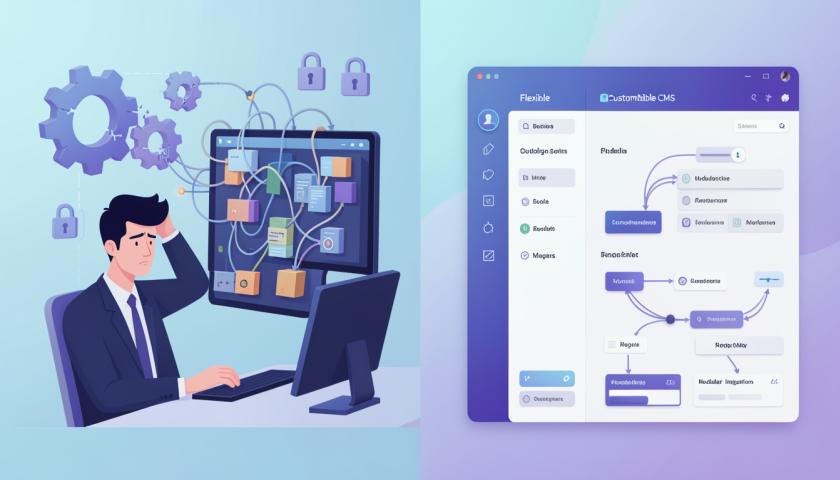
A typical content management system may work well when a company needs a relatively standard website. However, organizations with unique workflows, custom integrations, multiple content types, or specialized functionality may eventually encounter limitations.
October CMS provides developers with a foundation that can be extended according to project requirements. Its Laravel-based environment can make it easier to connect custom business logic with content management functionality.
For organizations, this can translate into a website that is easier to adapt as the business changes.
October CMS Success Stories: Turning Concepts Into Digital Experiences
The most useful way to evaluate a CMS is to look beyond its feature list. Success stories show how technology performs when it meets real business requirements.
Imagine a growing company that initially needs a simple corporate website. As the company expands, its requirements change. Marketing teams want landing pages, product teams need structured content, developers need integrations, and management wants better performance and scalability.
A rigid CMS can turn these requirements into a series of workarounds. With a flexible platform such as October CMS, developers can create custom functionality while retaining a manageable content-editing environment.
This is where many October CMS success stories become relevant. The value is not simply that a website can be launched. The real value comes from creating a platform that can continue evolving after launch.
Success Story 1: From Static Website to Flexible Business Platform
A company launching a new service may begin with a small website containing a homepage, service pages, an about section, and a contact form. At first, almost any CMS can handle these requirements.
The challenge appears when the website becomes an important part of the company's sales and marketing operation.
New landing pages need to be launched regularly. Content needs to be organized into reusable structures. Different sections require different layouts. Third-party services need to be integrated. The development team also wants the freedom to modify functionality without rebuilding the entire website.
October CMS can provide a suitable middle ground in this situation. Editors can manage content through the CMS, while developers can build custom functionality using the Laravel ecosystem.
The result is a website that starts simply but has room to become much more sophisticated.
Success Story 2: Creating a Content-Rich Digital Experience
Content-heavy organizations often face a different challenge. Their problem is not simply publishing pages; it is organizing large quantities of information in a way that remains useful for visitors and manageable for editors.
A company might have articles, case studies, resources, products, team profiles, documentation, and other structured content. Treating everything as a basic page can quickly create an administration nightmare.
October CMS can be customized around these content structures. Developers can create the underlying models and interfaces required for the project, while editors receive a more organized environment for maintaining content.
This approach can improve both the user experience and the internal publishing process.
Success Story 3: A Custom Website Without Starting From Scratch
Businesses sometimes assume that a highly customized website requires building a CMS completely from the ground up. That approach can provide maximum control, but it also creates additional responsibility for authentication, administration, content management, media handling, updates, and other common CMS functionality.
October CMS offers another route.
Developers can use an established CMS foundation while building the application-specific functionality on top of it. This can reduce the amount of repetitive infrastructure work and allow the team to concentrate on the features that actually differentiate the business.
For companies looking for customization without reinventing every CMS feature, this can be a compelling reason to consider October CMS.
Why Laravel Makes October CMS Attractive
One of the most important points in any October CMS Review 2026 is its relationship with Laravel.
Laravel is widely recognized among PHP developers for its expressive syntax, development tools, ecosystem, and conventions. Because October CMS is built around Laravel, teams familiar with the framework may find the development environment relatively approachable.
This can have commercial implications for businesses. Hiring or working with developers who already understand the underlying technology can make long-term maintenance more practical.
It also means the CMS can be considered as part of a broader Laravel development strategy rather than as an isolated website platform.
October CMS for Businesses: Where the Commercial Value Appears
Choosing a CMS is ultimately a business decision. Features matter, but so do development costs, maintenance requirements, scalability, performance, security, and the ability to make changes quickly.
October CMS can be commercially attractive when a business requires substantial customization. Instead of selecting a platform solely because it has the largest number of built-in features, companies can choose a foundation that developers can adapt to their specific requirements.
For example, a business may need a customized customer portal, API integrations, advanced forms, product management, membership functionality, or connections with internal systems. These requirements can make flexibility more valuable than having hundreds of generic features.
The commercial benefit comes from creating a website that supports the business process rather than forcing the business process into a predefined website structure.
When Should You Consider October CMS?
October CMS can be worth considering when your project requires a combination of content management and custom development.
It may be a strong candidate if your organization needs a highly customized website, has access to Laravel/PHP development expertise, expects its digital platform to evolve, or needs integrations that go beyond standard CMS functionality.
It may be less appropriate if your primary requirement is a very simple website that needs to be launched with minimal technical involvement. In that situation, a hosted website builder or simpler CMS could potentially provide a faster path to launch.
The right CMS depends on the complexity and future direction of the project.
What to Look for When Hiring an October CMS Development Team
A successful October CMS project depends heavily on implementation quality. Selecting the CMS is only one part of the equation.
When evaluating an October CMS development company or development team, look for experience with Laravel, custom CMS development, responsive interfaces, API integrations, performance optimization, security practices, and long-term maintenance.
A good development partner should also understand your business objectives. Building a technically impressive website is not enough if editors struggle to manage it or customers cannot easily complete important actions.
Before starting development, discuss the expected content structure, integrations, scalability requirements, performance goals, maintenance process, and future roadmap.
Is October CMS Worth Considering in 2026?
The answer depends on what you expect from your website.
If you want a completely standardized solution with minimal customization, there may be simpler options available. But if your project requires a flexible content management system combined with a modern PHP development framework, October CMS deserves consideration.
The platform is particularly interesting for organizations that view their website as an evolving digital product rather than a one-time marketing project.
That distinction is important. A website may begin as a relatively small project, but successful businesses often add new services, content, integrations, campaigns, customer experiences, and internal workflows over time. A flexible technical foundation can make those changes easier to accommodate.
Lessons From October CMS Success Stories
Looking across the types of projects where October CMS can provide value, several lessons stand out.
- Flexibility can become a long-term advantage. Businesses rarely remain exactly the same after a website launches, so the ability to customize the platform can be valuable.
- The development ecosystem matters. A CMS built on familiar technologies can make it easier to find suitable development expertise and maintain the project.
- Content management should support business workflows. Editors should have tools designed around the way the organization actually works.
- Customization should have a purpose. Building custom functionality is valuable when it solves a real business problem rather than simply adding complexity.
- Long-term planning matters. A successful CMS project should consider future integrations, content growth, performance, security, and maintenance from the beginning.
Final Thoughts
The strongest October CMS success stories are ultimately stories about businesses solving digital challenges, not simply stories about adopting a particular technology. October CMS can provide a flexible foundation for organizations that need a balance between content management and custom application development.
With October CMS v4.4, its Laravel-based foundation, and a development approach focused on customization, the platform remains an option worth evaluating in 2026. Its greatest strength is arguably the ability to adapt a website around specific business requirements instead of forcing every organization into the same structure.
For companies planning a new website, rebuilding an outdated platform, or creating a more sophisticated digital experience, October CMS can be a practical option when flexibility, customization, and long-term development are priorities.
Ultimately, the success of an October CMS project depends on more than the CMS itself. The right strategy, architecture, user experience, development team, and ongoing optimization are what turn an initial idea into a digital platform capable of delivering lasting business impact.