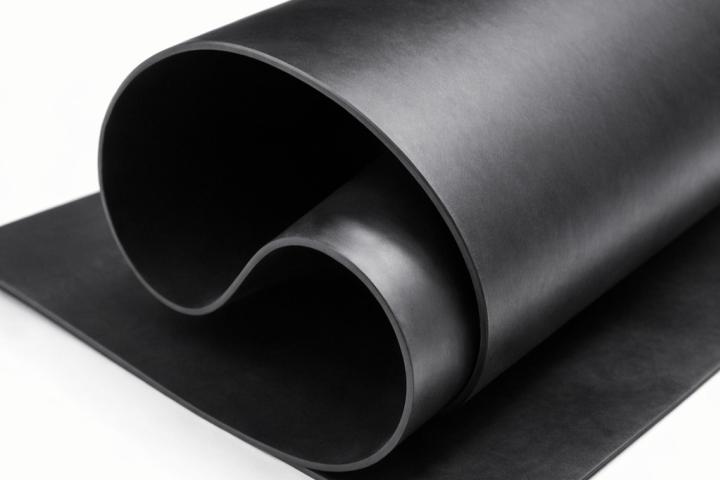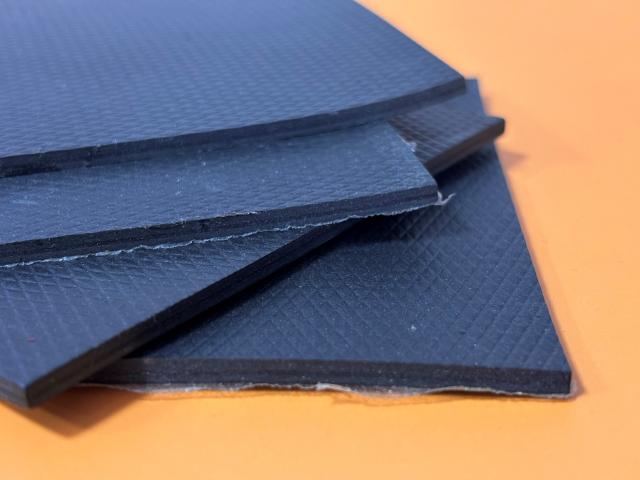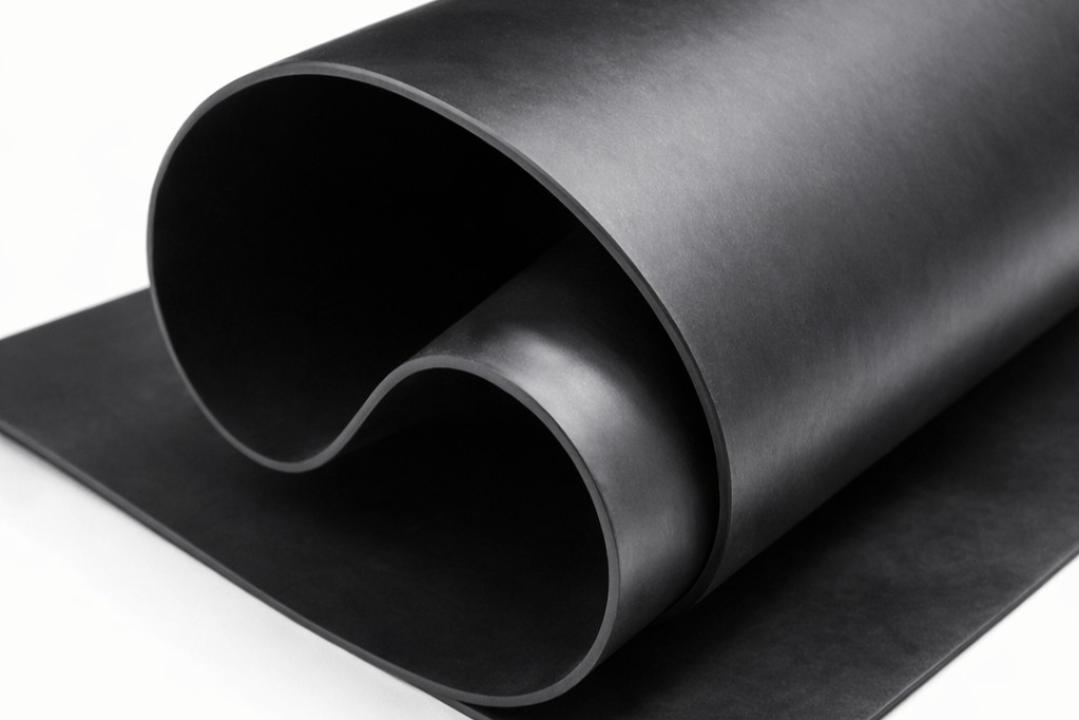
Mass Loaded Vinyl can add substantial mass to a wall, ceiling, floor, or other building assembly while remaining flexible enough to work around many construction conditions. However, even a well-specified MLV system can underperform when its continuity is interrupted by electrical boxes, pipes, ducts, conduits, outlets, lights, or other penetrations.
This is one of the less glamorous parts of sound isolation. Still, it is also one of the most important.
A sheet of MLV works as part of a continuous barrier. When installers cut openings through that barrier, the acoustic objective becomes more complicated. Every opening creates a potential path around the barrier, and an improperly sealed junction can undermine the performance of the larger assembly.
Installation guidance for MLV repeatedly emphasizes the importance of sealing penetrations and maintaining continuity around electrical boxes and other openings. One installation guide specifically notes that air-leak penetrations can compromise overall barrier performance.
For anyone specifying mass loaded vinyl sheet systems, this means penetration detailing should be considered during design, not left to the final installation stage.
MLV Performance Depends on the Complete Assembly
One of the most important principles when working with MLV mass loaded vinyl is that the material should not be viewed as an isolated soundproofing product. Its performance depends on the construction in which it is installed.
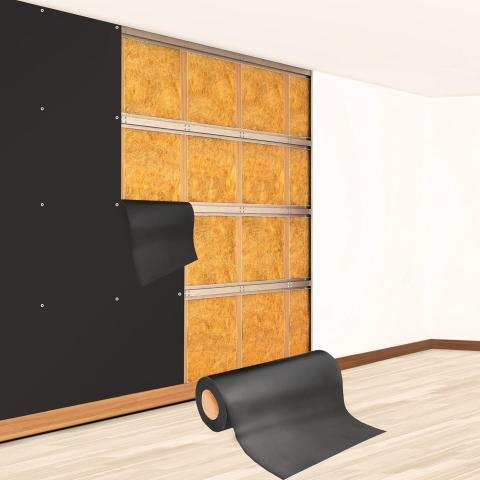
A typical wall assembly might include:
- Structural framing
- Cavity insulation
- MLV
- Drywall or another finish layer
- Acoustic sealant
- Decoupling components where required
- Properly treated penetrations
Each component addresses a different part of the sound transmission problem. MLV contributes mass and flexibility, while sealing helps maintain the continuity of the barrier.
Electrical Boxes are Common Weak Points
Electrical outlets and switches are among the most common penetrations in a finished wall.
The MLV has to be cut around the box, which means the installation requires careful detailing.
The opening should be kept as tight as practical around the box, and the junction should be sealed using an appropriate acoustical sealing method.
One MLV installation guide specifically recommends cutting the opening closely around electrical boxes and filling additional gaps with acoustical caulk.
The challenge becomes greater when multiple electrical boxes are installed within the same wall.
Back-to-back boxes can create a particularly direct pathway through the partition because the wall's acoustic layers are interrupted in nearly the same location on both sides.
For higher-performance assemblies, electrical box treatment therefore needs to be considered alongside the wall design rather than as a finishing detail.
Putty Pads can Help at Electrical Boxes
Where appropriate for the assembly, acoustic putty pads can provide another method of treating electrical boxes.
They are designed to help seal around electrical penetrations and reduce the potential for sound transmission through the box area. Some MLV installation guidance recommends acoustic putty pads around electrical boxes in addition to carefully detailing the MLV opening.
However, the correct treatment depends on the electrical box, wall construction, fire requirements, and applicable building standards.
Acoustic performance should never be achieved by compromising required fire or electrical protection.
Read to know more about MLV here: Mass Loaded Vinyl that doesn’t Absorb Sound… but BLOCK it, Know how?
HVAC Penetrations can be More Complicated
Ductwork can create particularly challenging sound paths because it may connect spaces mechanically. Simply cutting MLV around a duct and applying sealant may not address every acoustic issue associated with the duct system.
The duct itself can become a transmission path. This is why HVAC penetrations should be considered as part of the overall sound isolation strategy.
Some MLV installation systems recommend sealing around duct penetrations and using flexible or acoustically treated duct connections where appropriate. The key lesson is that sealing the visible opening is important, but the mechanical path behind the opening may also need attention.
Conduits and Cables Need the Same Attention
Electrical conduits, communication cables, data wiring, and other services can also interrupt an MLV layer. Individually, these openings may appear small. Collectively, however, multiple penetrations can make maintaining barrier continuity considerably more difficult.
This is particularly relevant in commercial interiors where walls may contain substantial quantities of electrical and communication infrastructure. A penetration schedule can therefore be useful during design coordination.
Rather than waiting for installers to discover conflicts, the project team can identify where the MLV layer will be interrupted and determine appropriate treatment in advance.
Conclusion
Penetrations are small details with potentially large consequences in MLV installations.
Every electrical box, pipe, duct, conduit, outlet, light, or service opening interrupts the continuity of the barrier. If those interruptions are not properly detailed, sound can exploit the resulting paths around the MLV.
The solution is not simply to install more material. It is to maintain continuity through accurate cutting, appropriate sealing, careful perimeter treatment, compatible penetration accessories, and coordination with other trades.
Protect Your Sound Isolation Integrity with Precision MLV Systems
A mass loaded vinyl installation is only as strong as its weakest detail, and unsealed penetrations can severely compromise acoustic ratings. At Tranquil Global, we engineer high-performance MLV solutions designed to maintain complete acoustic continuity across walls, ceilings, and complex MEP penetrations. Explore our mass loaded vinyl products today.
FAQs
Why are penetrations important in MLV installations?
Penetrations interrupt the continuity of the MLV barrier. If they are poorly sealed, they can create paths for airborne sound to bypass the barrier.
Which penetrations are most common in MLV soundproofing?
Electrical boxes, outlets, switches, pipes, conduits, HVAC ducts, lighting fixtures, sprinklers, and access panels are common examples.
Does MLV need to be sealed around electrical boxes?
Yes. The opening around an electrical box should be carefully detailed and sealed using an appropriate acoustic treatment compatible with the assembly.