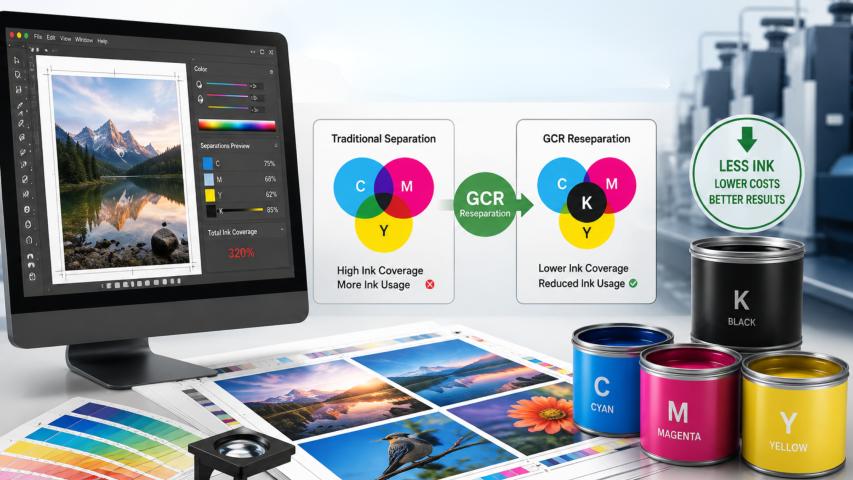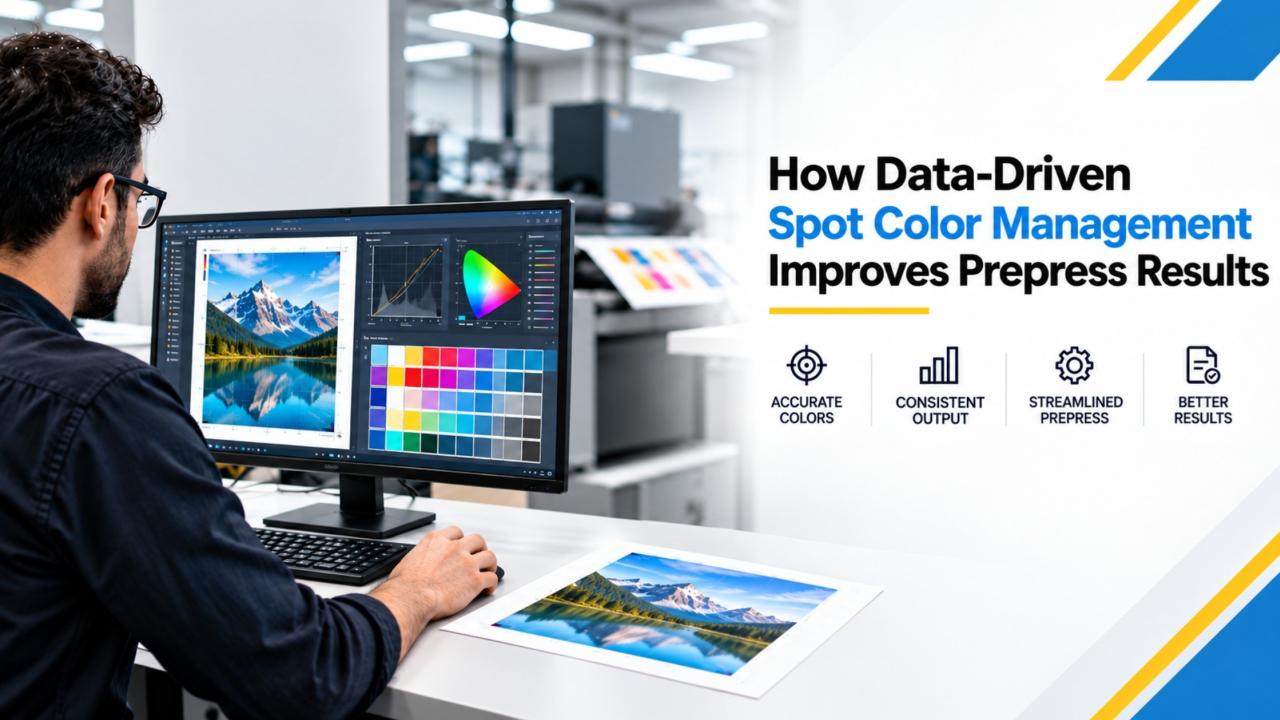
Designers use modern design tools to increase the overall quality of the printed design. Although a design may look perfect on a monitor, color may still appear differently on the printed proof. This causes work to be redone, leads to frustration due to production delays, and wastes time and paper.
Spot color management reduces these problems by introducing a better means to specify, evaluate, and control color. This technology, along with digital prepress services, makes prepress color decisions more predictable.
Color data reduces the amount of uncertainty that comes from relying solely on visual judgment. This blog examines how data-driven spot color management improves prepress results.
The Importance Of Spot Colors
The use of spot colors ensures consistency because they lock in one particular shade. Packaging, logos, letters, labels, and advertising materials all use spot colors. Since all of these items come in direct contact with the general public, the public notices any changes, no matter how small.
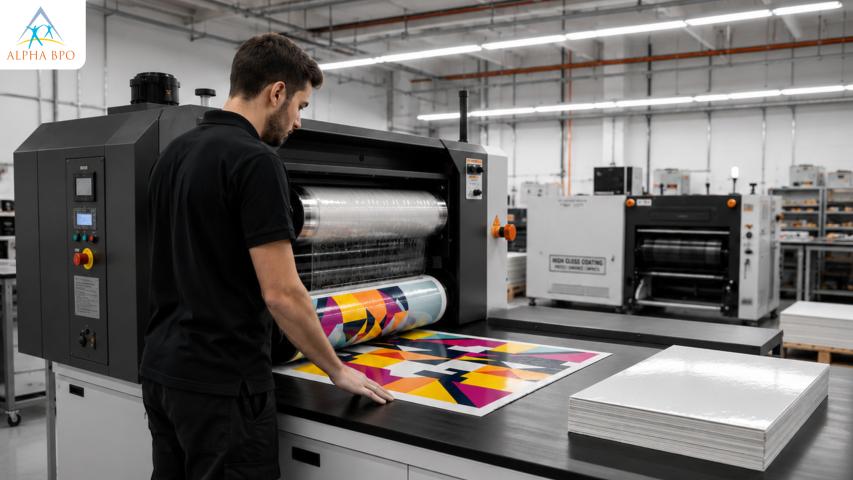
A spot color’s visible appearance is a combination of many factors, like the substrate, method of printing, ink, and the settings of the printing press.
These factors can be controlled or uncontrolled. Pantone specifies that the composition of the paper can alter the appearance of a printed color, as can the speed of production, ink metering, type of ink, and the order in which the ink is deposited.
Choosing a color from a design file is just one step in a lengthy process. With a prepress color workflow, one has to have verified data before production.
What Is Data-Driven Color Management?
In data-driven color management, there are no estimations. Instead, there are measurements. Rather than checking to see if a target is met, one can check to see if the measured value is the same as the desired value. Color profiles, spectral data, lab values, and measurement results can all help prepress teams make more accurate decisions.
Pantone explains that its Master Standards provide digital color data representing the intended characteristics of a color and help support consistent reproduction. This provides all parties involved in a project with a unified standard for color.
Clients, printers, and prepress staff can all work with and refer to the same standard instead of working with each individual’s personal monitor or physical prints, which can appear vastly different due to varying lighting and viewing conditions.
Better Spot Color Accuracy
The most significant improvement with data-driven color management is the spot color accuracy. Before printing, a prepress operator has the opportunity to look at the whole file and check how spot colors have been defined to see if they are appropriate for the printing process.
A color that looks appropriate on coated stock could look completely wrong on uncoated paper. Even the same ink can produce completely different results on substrates with different absorbencies.
As part of the prepress process, consider various factors such as the substrate and the printing conditions; they can flag potential color issues before the production of plates, proofs, and other potential collateral is incurred.
More Predictable Color Measurement
Despite print processes that still rely heavily on inspections, humans vary in how they perceive colors. When it comes to inspecting samples, printing can bring a drawn representation that can differ from actual perception due to the viewing environment as well as lighting.
Color measurement provides a more objective way to check the result. Spectrophotometers can measure a printed color and provide numerical data that can be compared with an approved target.
Pantone explains that Delta E is used to describe the visual difference between two colors. Its practical guidance notes that differences below 1 Delta E are generally not visually perceptible, while larger differences tend to become more noticeable, although color sensitivity can vary.
A dark blue spot color may be approved for use on coated stock and appear too light when printed on uncoated label stock. Typically, issues like this one are not found until after the press first run and post-production.
This offers prepress and production teams a way to discuss color differences in a measurable way using objective information instead of subjective information.
Color Matching And Proofing
Accurate color matching happens before production. With the production constraints clear, prepress teams can develop proofs that show a major informative outcome to the customers. Color proofing provides customers and designers a chance to see how a product will look before criteria are passed on to complete the production.
Issues related to the handling of color, profiles, overprinting, transparency, or spot colors are also illustrated in color proofs. Also, printer-specific LUTs, or lookup tables, provide even more control in digital workflows. Pantone indicates that calibrated printer lookup tables take into consideration the RIP, printer, color engine, ink, paper stock, and color model as they represent Pantone colors.
This level of control is most appreciated when production has to span different environments and devices.
Improved Color Consistency In Printing
Many businesses need the same brand color to look consistent across signage, packaging, brochures, labels, and other printed materials. Maintaining color consistency in printing can become difficult when these items are produced at different times or on different equipment.
Also, data-based techniques allow for documented color specifications that can be used throughout all steps of a work order. Each new work order does not require beginning the process again. Teams use previous work orders as a guide to help prepare similar work.
This has the benefit of reducing repeated adjustments. It shows printers an area where a potential color shift occurred. They, in turn, have now provided more information to their customer when a difference is found during side-by-side comparisons to previous production.
Fewer Prepress Problems and Fewer Reprints
Chances are you have been in a panic because of an issue with colored pages that was not discovered until the last minute during printing. The fix may take only a few moments during file preparation. Still, if it is discovered after printing, you may have wasted resources, including printing paper, labor, inks, and valuable time on the printing machines.
In such a case, you should definitely use professional prepress services. When checked, these services verify whether the pages comprise any spot color elements, what color space and profiles are being used, what needs to be overprinted, whether proofs have been provided, and whether all needs and requirements of the production have been met. The final result is to figure out the problems when they are still cheap to fix.
A More Efficient Digital Prepress Workflow
Adopting color management based on data helps improve the digital color management workflow and helps it become something that can be implemented at each step of the workflow, rather than a last-minute checklist item. The workflow can be layered with many steps:
Implementation of changes prior to production.
Evaluation of the results against the approved target.
Checking or measuring necessary color data.
Producing proofs and their evaluation.
Selection of appropriate profiles and methods of conversion.
Review of artwork and color specifications.
Definition of spot colors and production parameters.
Each step in the workflow has a goal and helps to decrease back-and-forth communication amongst prepress, print, and designers.
The Business Value Of Better Print Color Quality
Better color control has a far larger impact than improving a technical aspect of the workflow. For example, better color control directly impacts production efficiency and customer satisfaction. When primary colors are approved and printers reach a consistent color reproduction, the risk of a rejected proof, the need to repackage for reprint, and the cost involved are greatly diminished for the business.
Printers will build confidence when challenged to take on difficult and important color jobs. The returns are the same for brands. Consistent color reproduction across various forms of printed advertisement and runs maintains the brand’s visual identity.
Achieve Better Color Management Control In Printing With Digital Prepress Services
Accurate spot colors rely on reliable data. Measurement, standardized targets, proofing, and profiles provide the data needed for spot color management and consistency in printing, as well as reduce issues that are costly and avoidable in printing.
The benefit is control of the process prior to printing. An expert digital prepress services provider, along with reliable prepress solutions and a sound prepress color workflow, helps simplify the checking of spot color decisions and the articulation of those decisions to the client. The result is a more controlled production process and superior print color quality.