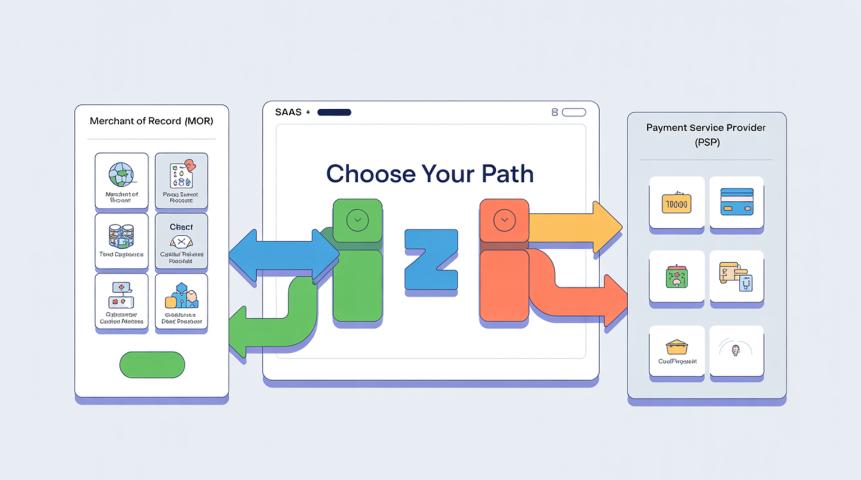

- Most well-known Merchant of Record brands, including Paddle, FastSpring, and Lemon Squeezy, are built for digital goods and explicitly exclude physical products
- Selling physical goods through an MoR requires handling customs, Importer of Record status, and product safety compliance that digital-only providers never built for
- Digital River, Reach, eBrands, Global-E, Verifone, and ExpandNow are among the providers that do support physical goods
- Some platforms specialize in physical goods only, while others support both digital and physical products under one contract
- MoR scope for physical goods changes over time, so current terms are worth verifying directly rather than assuming from older documentation
- Fulfillment and logistics support vary widely between providers, even among ones that technically "accept" physical goods
A founder selling a physical product internationally searches "merchant of record," lands on Paddle or FastSpring, and finds a payment and tax model that sounds like exactly what they need, until the fine print rules out anything physical. That gap trips people up constantly, because most MoR marketing uses similar language regardless of what kind of product they're actually built to support. The category isn't one thing. It splits cleanly between providers built for digital goods and a smaller set built, or later expanded, to handle physical products.
What Selling Physical Goods Actually Adds
A digital-only MoR handles payment processing, tax remittance, and chargeback risk for something that never has to cross a border in a box. Physical goods add several obligations digital products don't have: customs declarations and import duties, Importer of Record status in the destination country, product safety and packaging compliance, extended producer responsibility obligations in markets that require them, and some form of returns or reverse logistics handling.
That's a meaningfully different operational build than processing a software license key. It's part of why so many established MoR brands never expanded into physical goods. Their infrastructure was built around digital delivery from day one, and retrofitting customs and fulfillment logic onto that isn't a small addition.
Why the Best-Known MoR Names Stop at Digital
Paddle, FastSpring, and Lemon Squeezy are the names most people find first, and for good reason: they dominate the SaaS and software segment. Paddle's own scope of service explicitly excludes anything physical, along with fulfillment, customs, and marketplace operations. FastSpring and Lemon Squeezy follow the same pattern, built around software, digital downloads, and subscription products rather than shippable goods. None of this makes them worse providers; it just means they're solving a different problem than a company shipping physical inventory across borders.
Merchant of Record Platforms That Actually Accept Physical Goods
A smaller group of providers built their infrastructure specifically to include customs, fulfillment, and product compliance alongside standard MoR responsibilities:
- Digital River supports both B2C and B2B sales across digital goods, subscriptions, and physical products, with shipping and returns handled through its own global logistics network
- Reach offers merchant of record coverage built around product tax logic for physical goods specifically, alongside global compliance handling
- eBrands is built specifically for physical consumer goods rather than SaaS, managing customs, Importer of Record duties, fulfillment, and product safety compliance across channels like Amazon, D2C, and retail
- Global-E focuses on cross-border ecommerce for both physical and digital goods, with duties, customs, and landed-cost calculations built into checkout
- Verifone, formerly 2Checkout, covers a broad spectrum from digital goods to physical products with a long-standing global payments footprint
- ExpandNow (Connect) supports software subscriptions, digital downloads, physical goods, and online services under one integration layer, with pre-built connections to platforms like WooCommerce and BigCommerce
How These Providers Differ From Each Other
Not all of these solve the same problem. eBrands is a physical-goods specialist first, built around consumer brands and multi-channel retail rather than software. Global-E leans heavily toward cross-border ecommerce logistics, particularly duties and landed cost, which matters most for companies shipping at real international volume. Digital River, Verifone, and ExpandNow sit in a hybrid category, supporting digital and physical products under the same contract, which suits a company selling both a software product and branded merchandise or hardware. Reach positions itself as more modular, layering MoR functions onto existing payment stacks rather than replacing them outright.
What to Verify Before Choosing One
MoR scope for physical goods isn't static. Providers expand into it, narrow their focus, or change terms as their business evolves, so it's worth confirming a few things directly with any provider before assuming coverage:
- Whether the provider takes on Importer of Record status, or only processes payment while a separate entity handles customs
- Which countries and product categories are actually covered, since physical-goods support often varies significantly by region
- How returns, reverse logistics, and product liability are split between the provider and the brand
- Whether the current documentation reflects the provider's live terms, since some platforms have shifted scope since older guides and comparison pages were published
Conclusion
The honest answer to "which merchant of record for physical goods" is a shorter list than the category's marketing suggests. Most of the recognizable names built their entire model around digital delivery and were never meant to handle customs, fulfillment, or product liability. A smaller set of providers, ranging from physical-goods specialists to hybrid platforms supporting both digital and physical products, actually built for that complexity. Confirming current scope directly, rather than relying on older comparison content, is the difference between choosing a provider that fits and discovering the gap after a contract is already signed.
Frequently Asked Questions
What makes a Merchant of Record different for physical goods versus digital products? Physical goods add customs declarations, import duties, Importer of Record status, product safety compliance, and returns handling, none of which apply to purely digital delivery.
Do Paddle, FastSpring, or Lemon Squeezy support physical goods? No. All three are built for digital goods, software, and subscriptions, and explicitly exclude physical products and fulfillment from their scope of service.
Which Merchant of Record platforms accept physical goods? Digital River, Reach, eBrands, Global-E, Verifone, and ExpandNow are among the providers built or expanded to support physical products alongside standard MoR services.
Does a Merchant of Record handle customs and import duties for physical products? It depends on the provider. Some take on full Importer of Record responsibility, while others process payment and tax but leave customs and import duties to a separate party.
Is Amazon a Merchant of Record for physical goods sellers? Amazon functions similarly to an MoR for tax purposes under U.S. marketplace facilitator laws, collecting and remitting sales tax on behalf of third-party sellers, though the legal terminology differs from a dedicated MoR contract.