Barn door hardware is the track, rollers and fittings that hold a sliding barn door up and let it move smoothly. The three things that matter most are the weight rating, the door thickness the kit is designed for, and the finish. Get those right and the door will run quietly for years.
Most people choose the door first and think about the hardware later. In practice, barn door hardware affects how the door looks, how it feels to use, and how long it lasts, so it deserves the same attention.

What comes in a typical kit
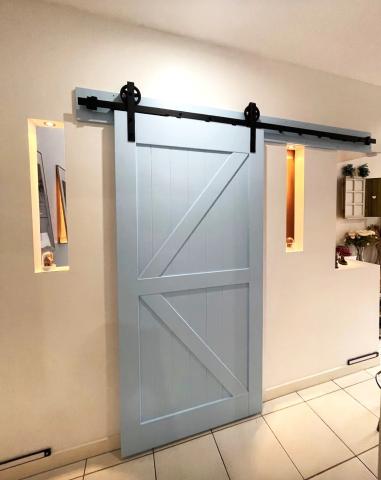
A standard kit includes a steel track that mounts above the doorway, and two hangers with rollers that attach to the top of the door. It also includes spacers that hold the track slightly off the wall, stoppers at each end, and a floor guide that keeps the bottom of the door from swinging out.
Some kits also include anti-jump pieces that stop the rollers lifting off the track, or a soft-close mechanism that slows the door before it stops. These aren't essential, but they make a noticeable difference in homes with children or heavy doors.
Weight and door thickness
Every kit has a maximum weight rating, and the door should sit comfortably below it. Solid hardwood and glass doors are much heavier than hollow or softwood doors, so they need a stronger kit. Overloading a track leads to sagging, noisy rollers and uneven movement over time.
Door thickness matters just as much. The hangers are made to fit a certain range of door thicknesses. Check that range against your door before ordering, particularly for thicker solid timber doors or glass doors, which often need specific glass clamps or brackets.
Choosing a finish
The finish sets the tone of the door. Matt black is the most common choice and suits farmhouse, industrial and modern interiors alike. Stainless steel gives a cleaner, more contemporary look and holds up well in humid rooms like bathrooms. White and brass finishes suit lighter, coastal or classic >
It helps to match the track finish to other metal details in the room, such as tapware, light fittings or cabinet handles. That way the door feels like part of the space rather than an add-on.
Handles and pulls
Because a barn door slides flat along the wall, the handle on the wall side needs to be flush or recessed. A bulky handle there will stop the door from opening fully. On the room side, a larger pull handle is fine and is often a design feature in its own right. For bathrooms and bedrooms, a simple privacy latch can be added.
Systems for wider or tighter openings
Standard single-door kits aren't the only option. Bypass systems let two doors slide past each other on parallel tracks, which suits wide wardrobes and pantries. Bifold barn door systems let the panels fold as they slide, so they need less wall space.
Buying the door and hardware from the same supplier makes compatibility easier to confirm. Ideal Barn Doors, for example, offers barn door hardware in black, stainless and brass finishes, along with bypass and bifold systems, handles and accessories. That makes it straightforward to match the kit to the door.