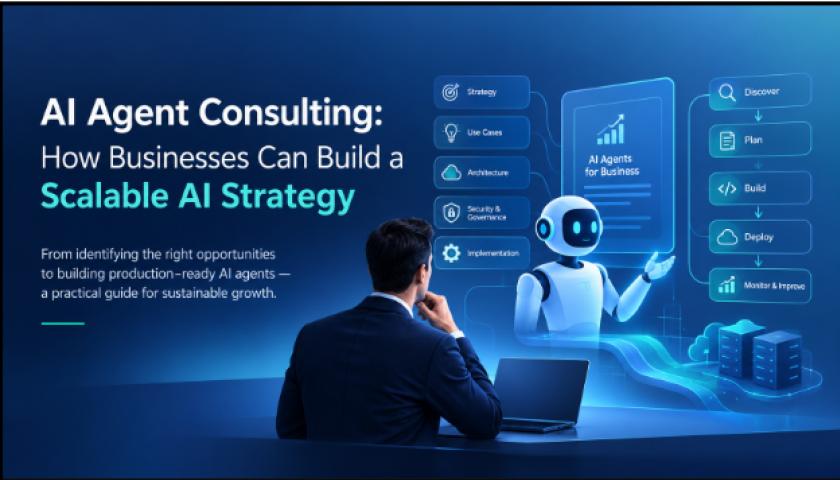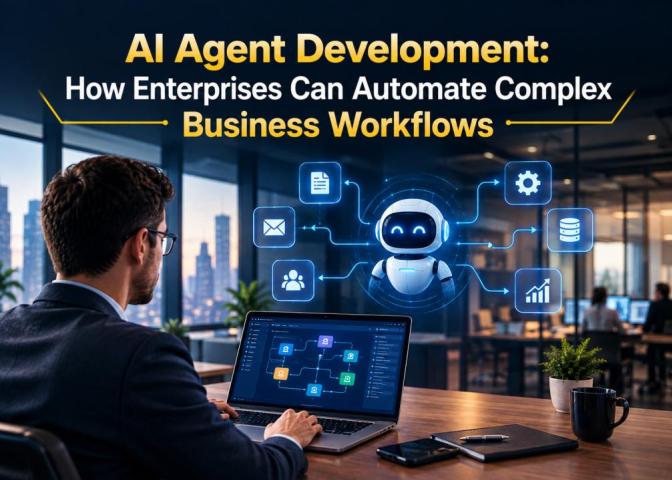

Artificial intelligence is no longer something businesses can treat as a future technology. Across Saudi Arabia, companies are looking at practical ways to use AI in their day-to-day work, from handling routine tasks and analysing data to improving customer service and supporting better business decisions.
The important part is that AI adoption does not always mean replacing existing systems or making major changes overnight. For many businesses, the starting point is much simpler: identify a process that takes too much time, involves repetitive work, or depends heavily on manual decisions, and find out whether AI can make that process easier.
Saudi Arabia's continued investment in digital transformation is also creating more opportunities for businesses to explore these technologies. As organisations modernise their operations, AI, automation, data analytics, and custom software are becoming part of broader business strategies.
CodeZal AI: Helping Saudi Businesses Put AI Into Practice
CodeZal AI is a Saudi-registered AI consultancy and software studio based in Jeddah. Its services cover AI consulting, executive workshops, custom software and AI development, AI integration, automation, machine learning, and data science. The company focuses on helping Saudi organisations understand where AI can create practical business value before moving into implementation.
One of the company's main approaches is to start with the business problem rather than the technology itself. This can include reviewing existing workflows, assessing AI readiness, creating an AI roadmap, and advising leadership teams on implementation.
CodeZal also offers an AI Executive Workshop designed around the needs of Saudi leadership teams. The workshop focuses on helping executives understand AI opportunities, evaluate potential investments, and develop practical action plans.
For businesses that need something more specific, CodeZal provides custom AI development and integration. These solutions can be built around existing workflows, company data, and operational requirements rather than relying entirely on off-the-shelf software.
Where AI Is Making a Difference in Everyday Business
For many companies, the value of AI is found in ordinary business processes rather than flashy technology demonstrations.
Automating Repetitive Work
Businesses often spend significant time handling spreadsheets, documents, emails, reports, approvals, and customer requests. These tasks may not require complex decision-making, but they can take employees away from more important work.
AI-powered automation can help extract information from documents, organise data, apply predefined rules, prepare reports, and move information between different stages of a workflow.
The goal is simple: reduce unnecessary manual work while allowing employees to focus on tasks that require judgement and experience.
Making Better Use of Business Data
Most established businesses already have large amounts of data. The problem is often not a lack of information but knowing how to use it.
AI and machine learning can help businesses identify patterns, analyse historical information, forecast demand, monitor performance, and support decision-making.
For example, a retailer could analyse purchasing patterns to improve inventory planning. A logistics company could use operational data to understand delivery performance. A financial organisation could analyse transactions and customer behaviour to identify unusual activity.
The technology is useful when it answers a real business question.
Improving Customer Service
Customers increasingly expect quick and convenient responses. AI can help businesses handle common customer questions, organise requests, assist service teams, and provide information through digital channels.
Arabic and English support is particularly relevant for organisations operating in Saudi Arabia. Custom AI systems can be designed with multilingual interfaces and connected to the company's existing information and processes.
The purpose should not simply be to add a chatbot to a website. A useful customer-service system needs access to the right information and should fit naturally into the company's existing service process.
Supporting Employees
AI can also work as an assistant for employees.
Teams can use AI to summarise documents, search internal information, prepare drafts, analyse data, organise information, and support routine administrative work.
This can be particularly useful for large organisations where employees spend considerable time looking for information across different systems.
The best implementations usually support employees rather than attempting to remove human involvement from every process.
AI Adoption Across Saudi Industries
Different industries have different reasons for adopting AI.
In healthcare, organisations can explore AI for patient analytics, administrative workflows, documentation, and operational planning.
In real estate, AI can support property analysis, predictive maintenance, energy management, and large-scale data processing.
In banking and fintech, organisations can look at areas such as fraud detection, customer analysis, compliance processes, and risk management.
In logistics and supply chain, AI can support route planning, fleet management, demand forecasting, warehouse operations, and predictive maintenance.
In retail and e-commerce, businesses can use data and AI to understand customer behaviour, improve inventory planning, and personalise digital experiences.
These are not one-size-fits-all solutions. The right application depends on the company's data, processes, systems, people, and business objectives. CodeZal's industry offering specifically covers areas including healthcare, real estate, sports technology, finance and fintech, logistics and supply chain, as well as other sectors.
The Importance of Starting With a Real Business Problem
One of the biggest mistakes businesses can make is adopting AI simply because everyone is talking about it.
A better starting point is to look at the business itself.
Which processes take too long?
Where are employees doing repetitive work?
Which decisions depend on large amounts of data?
Where do customers experience delays?
Which reports are still prepared manually?
Where are errors happening repeatedly?
These questions can reveal where AI may actually be useful.
Once a suitable opportunity has been identified, the business can then decide whether it needs automation, analytics, machine learning, generative AI, a custom application, or simply a better existing process.
Building AI Around Existing Systems
Businesses do not always need to start from scratch.
A company may already have ERP software, CRM platforms, databases, accounting systems, websites, mobile applications, or internal tools. AI can often be added as another layer that works with these existing systems.
This approach can make adoption more practical because employees continue working with familiar systems while AI handles specific tasks in the background.
Custom AI development can include data pipelines, system integration, model management, deployment, monitoring, and ongoing support.
People Still Matter
AI adoption is not only a technology project.
Employees need to understand how new systems work, managers need to know what the technology can and cannot do, and leadership needs to understand the business case behind an investment.
This is why training and executive education are becoming an important part of AI adoption. CodeZal, for example, describes an education-first approach in which leadership teams gain a clearer understanding of AI before moving into strategy and implementation.
A business may have access to excellent technology, but if nobody understands how to use it properly, the technology will not deliver much value.
Data, Security and Compliance
AI also brings questions around data protection and security.
Saudi businesses need to consider what information is being used, where it is stored, who can access it, and how it is processed. These questions become particularly important when AI systems work with customer information, employee records, financial data, or other sensitive business information.
For Saudi organisations, local regulatory requirements should be considered during the planning and development process rather than added at the end.
CodeZal states that its custom AI solutions are designed with considerations including Saudi Arabia's Personal Data Protection Law (PDPL), alongside other relevant security and compliance frameworks. The company also notes that these are frameworks it designs solutions to align with, rather than certifications it currently holds.
What the Next Stage Could Look Like
AI adoption in Saudi Arabia is moving beyond simple experimentation. Businesses are increasingly looking at how AI can become part of everyday operations.
That could mean an automated report instead of a manually prepared spreadsheet, a smarter customer-service workflow instead of a long email queue, predictive maintenance instead of waiting for equipment to fail, or a data-driven planning process instead of relying entirely on historical assumptions.
The technology will continue to change, but the basic business question remains the same: Can this help us work better, serve customers better, reduce unnecessary effort, or make better decisions?
For Saudi businesses, that practical approach can make AI adoption easier to understand and easier to connect with real operational goals.
Final Thought
AI does not need to transform every part of a business at once. In many cases, the most useful starting point is one process, one operational problem, or one area where employees are spending too much time on repetitive work.
From there, businesses can test what works, learn from the results, and gradually expand their use of technology.
For organisations across Saudi Arabia, the real opportunity is not simply adopting AI because it is a growing technology. It is finding practical ways to use it as part of everyday business operations and building systems that can grow alongside the organisation.